
Quarterly report · Pursat Province, Cambodia
CLIP2 quarterly report: April to June 2023
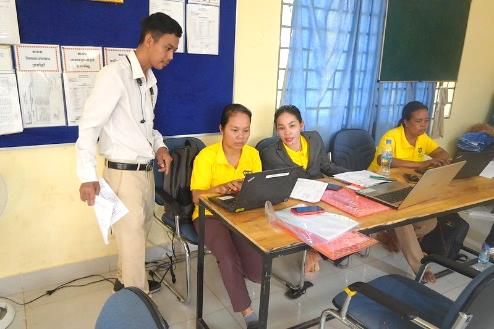
The sixth workshop on making worksheets, the second classroom decoration assessment and school visits in our Pursat preschool project, April–June 2023.
- 513preschool children in 10 target schools
- 20teachers at the 6th workshop
- 5.6points average gain in classroom decoration score
- 1,058members of the Telegram channel
Project Overview
There are 3 main objectives of this project:
- To create/prepare/distribute teacher resources for preschool teachers.
- To install technical equipment (AccessBoxes) in schools to store teacher resources for preschools; and
- To train teachers on the use of the Access Boxes as well as how to upload and download resources.
There are two main beneficiary types:
- The preschool teachers; and
- The preschool students.
Background: This project will take place in the Pursat Province of Cambodia. It will provide Early Childhood Education (preschool) support to rural schools in the Pursat area. Cambodia is still catching up after the total dissemination of its education system during the Civil War (Khmer Rouge). Recently the government has legislated that Early Childhood Education (preschool) be compulsory. There are not enough resources for teachers and many are struggling with what to do with so many children in their classrooms.
Rermork for Children (in conjunction with TukTuk Charity) has been creating resources for preschools and has been successful at delivering resources via their digital library, which is available on the internet, and the "Access Box" (computer device that acts as a Wi-Fi, so teachers download resources without being connected to the internet) and training teachers how to access, upload and download resources.
Participants
Provincial Office of Education (POE)
5 officers
- Director
- Department of early childhood education
- Department of primary education
- Department of education audit
- Department of plan
District Office of Education (DOE)
8 officers (the director and the director of dept. early childhood education of each district)
- Pursat city
- Kandieng district
- Bakan district
- Krakor district
Target Schools
10 principals and 14 preschool teachers (2 principals are counted as preschool teachers too)
| No. | District | School Name | No. of Target Teachers (Number of Females) | Number of Class | Age group | Number of Students (Number of girls) | Remarks |
|---|---|---|---|---|---|---|---|
| 1 | Pursat | State school | 2 (2) | 2 | 3 years old | 30 (16) | Independent school*1 |
| 5 years old | 25 (8) | ||||||
| 2 | Prey Ny school | 1 (1) | 1 | 3 years old | 5 (3) | ||
| 4 years old | 19 (6) | ||||||
| 5 years old | 20 (10) | ||||||
| 3 | Lolok So school | 1 (1) | 1 | 5 years old | 34 (23) | ||
| 6 years old | 1 (0) | ||||||
| 4 | Kandieng | Kandieng school | 4 (3) * One is principal | 3 | 3 years old | 26 (14) | Independent school |
| 4 years old | 45 (21) | ||||||
| 5 years old | 33 (17) | ||||||
| 5 | Bong Chhuk school | 1 (1) | 1 | 4 years old | 6 (3) | ||
| 5 years old | 48 (24) | ||||||
| 6 | Kaev Chey school | 1 (1) | 1 | 4 years old | 16 (7) | ||
| 5 years old | 17 (10) | ||||||
| 7 | Bakan | Snam Preah school | 1 (1) | 1 | 5 years old | 1 (1) | |
| 6 years old | 62 (25) | ||||||
| 8 | Phnow school | 1 (1) | 1 | 3 years old | 0 (0) | Community school*2 | |
| 4 years old | 1 (0) | ||||||
| 5 years old | 11 (6) | ||||||
| 6,7 years old | 17 (8) | ||||||
| 9 | Tram Pair school | 1 (1) | 1 | 3 years old | 5 (2) | Community school | |
| 4 years old | 10 (5) | ||||||
| 5 years old | 12 (10) | ||||||
| 6,7 years old | 7 (0) | ||||||
| 10 | Krakor | Onlong Tnaot school | 1 (1) *She is principal | 1 | 3 years old | 20 (10) | Independent school |
| 4 years old | 15 (8) | ||||||
| 5 years old | 27 (14) | ||||||
| Total: 10 schools | 14 (13) teachers | 13 classes | 513 (251) | ||||
*1 The school that was independent of the primary school.
*2 Managed by the commune and the schools were built by the Rotary Club of Pursat.
Project Implementation
| Project | Duration | Status | Start date | Completion date |
|---|---|---|---|---|
| Conduct 7 times workshop | ||||
| The 6th workshop | 1 day | Completed | 11/05/2023 | 11/05/2023 |
| Conduct 7 times follow-up visits | ||||
| The 6th follow-up visit | 10 days | Completed | 18/05/2023 | 31/05/2023 |
Detailed Activity Report
Training teachers how to access and use the resources
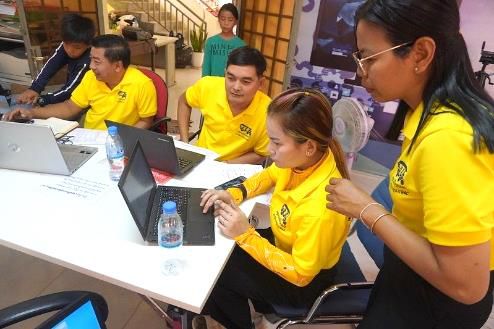
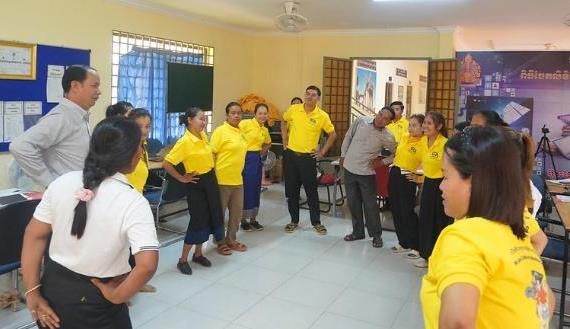
In May, the 6th workshop was conducted and the participants explored the 8th resource package for ‘We Can – Just Differently’ and learned to make four kinds of worksheets with their computers.
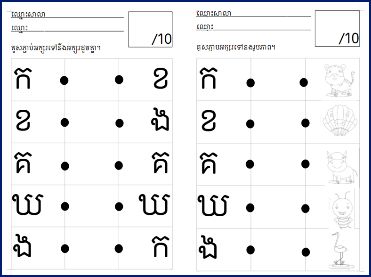
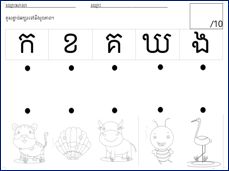
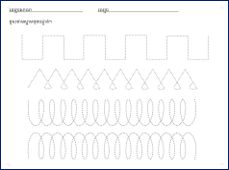
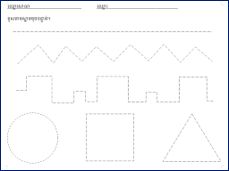
The teacher’s computer skills have improved noticeably since the previous workshop. Some of them were practicing and they created worksheets which they used them in their lessons. However, mastering four types of worksheets at once was hard and confusing for them. We discovered that making at most three worksheets is sufficient in a workshop.
We will ask some of the more advanced teachers to help train other teachers in their free time. We also learned some additional learning points we need to add for future computer classes from the Rotary Club of Pursat (RCP) members who assisted the teachers on the day. We specifically discussed the importance of preparing and using the mouse, instructions on typing, moving a cursor, and saving files.
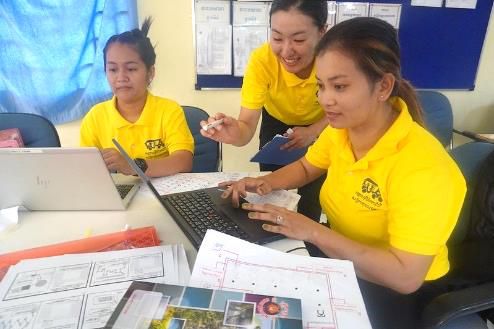
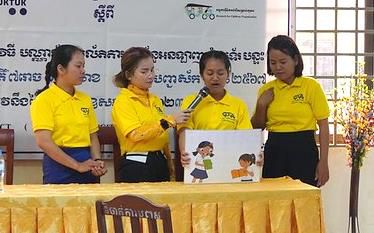
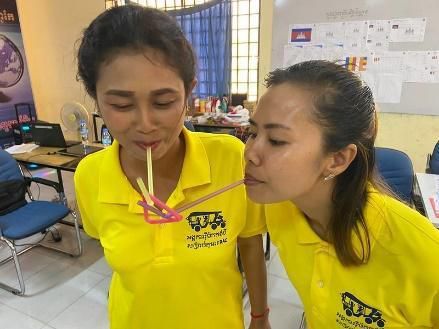
As stated in the feedback, some participants desired more time to demonstrate and play with our teaching resources. In the workshop, we were proud to play a game that came from a teacher who shared the idea with other participants. They appeared to be having fun with the game, which could be a trigger for them to consider playing it in their classroom as well. We thought the case was a fantastic example of teachers sharing their views.
Our workshop’s purpose is not only to provide information on our educational tools but also to exchange teaching ideas with everyone. There was no such voice that requested to have time for resource introduction before, but the enjoyable time inspired them to want to know more about resources. We would like to make a program that reflects their requests and encourage as much communication among participants as possible.
Assess the teachers to choose a model teacher with DoE
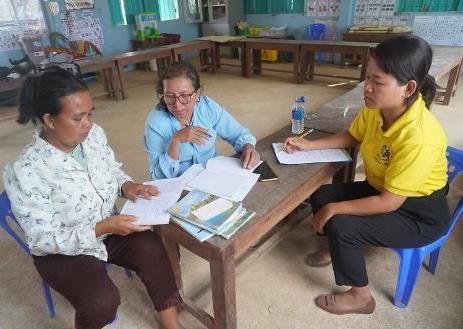
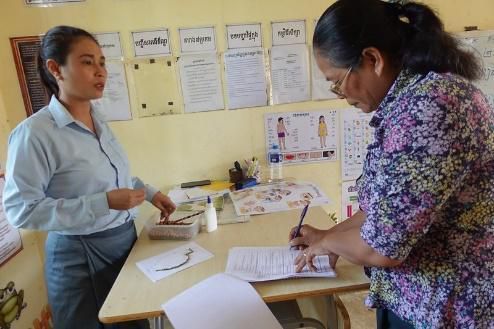
The purpose of this assessment is to clarify the status of classroom decoration in the target classrooms and then reflect on the result to create appropriate resources. We are aiming to improve the classroom decorations in all target schools in this two-year project.
The POE and DOE staff conducted the 2nd assessment of the schools within their jurisdiction, using the same assessment sheet as the 1st assessment. This sheet incorporates relevant indicators set by the Ministry of Education.
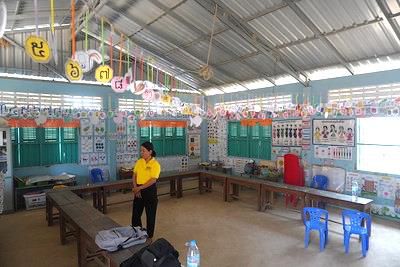
Overall, all target classrooms improved the score for classroom decoration by about 5.6 points on average (Table 1). We believe that the improvement is a direct result of our previous workshop on classroom preparation and the additional resources we provided them. We got the impression that all teachers’ interest in classroom organization increased much more than at the beginning of the project. Some teachers began to display their hand-made teaching tools positively and strive to keep organized and keep the classroom clean. Compared with the 1st assessment, this activity was meaningful in the term to be able to update their recognition against the classroom environment.
In some classes, teachers were placing actual objects, such as musical instruments, and objects for hygiene and exercise. It is difficult to supply these resources directly, but we can provide instruction on how to craft them through resource creation.
| School | The score of the 1st assessment | The score of the 2nd assessment | Difference |
|---|---|---|---|
| State school (3-year-old) △ | 20 | 23 | + 3 |
| State school (5-year-old) △ | 20 | 25 | + 5 |
| Prey Ny school ○ | 20 | 23 | + 3 |
| Lolok So school ○ | 16 | 23 | + 7 |
| Kandieng school (3-year-old) △ | 17 | 19 | + 2 |
| Kandieng school (4-year-old) △ | 13 | 21 | + 8 |
| Kandieng school (5-year-old) △ | 17 | 19 | + 2 |
| Bong Chhuk school ○ | 16 | 23 | + 7 |
| Kaev Chey school ○ | 13 | 19 | + 6 |
| Snam Preah school ○ | 18 | 23 | + 5 |
| Phnow school □ | 17 | 24 | + 7 |
| Tram Pair school □ | 19 | 26 | + 7 |
| Onlong Tnaot school △ | 20 | 29 | + 9 |
* △… Independent school, ○… Preschool class in primary school, □… Community school
* The total score is 30 points.
Unfortunately, we found there were differences in the evaluation criteria, especially detailed discretionary points, between each assessor. Next time we believe that we should run pre-evaluation training for POE and DOE staff before conducting the assessment to ensure a more consistent result. Also, we should provide the teachers with a complete set of classroom decorations all at the same time, instead of piece by piece over several workshops. This way, they will have a clear understanding of the criteria that they need to follow when displaying them.
Project field visits
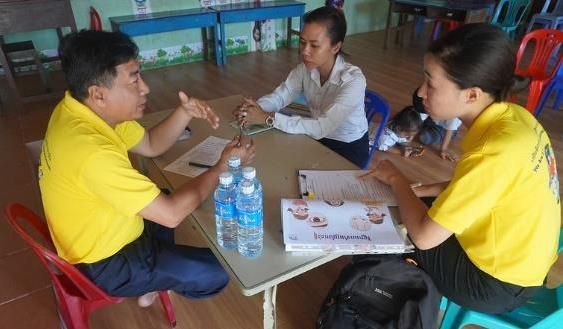
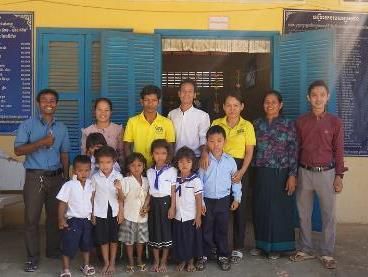
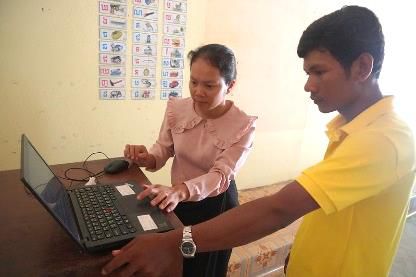
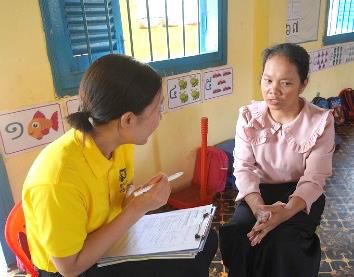
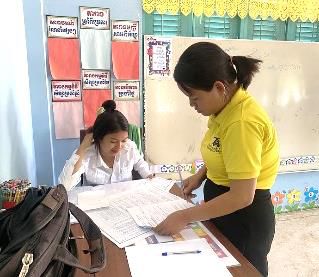
We visited all 10 schools to interview the teachers about the intended and frequent use of computers, tablets and teaching resources in the Digital Library after the 6th workshop.
Since, in April and May, there were school vacations, it was difficult to understand how our resources were being utilized by the teachers. However, according to one teacher, her students have different preferences between animations and Kamishibai. They prefer watching animations from other channels than ours but enjoy our Kamishibai, speaking of storytelling. She considered that the animations are more engaging because they have more motions, which makes them more entertaining for children. However, Kamishibai’s illustrations are bigger, which makes them more visually appealing to the students.
In addition, some teachers used worksheets they made themselves by innovating techniques they learned in the 6th workshop after starting the new semester. We also interviewed about the types of worksheets they would like to create for the upcoming workshop. We are now working to include their new ideas as much as possible in the next program.
Other Activities
Resource Package Creation
We will create 4 new resource packages during the project’s two years, with 3 packages completed by this quarter (the 7th storybook ‘Being Good’ the 8th storybook ‘We Can – Just Differently’ and classroom decorations). We have been working on the 9th storybook to introduce in the last workshop in September.
| Category | Resources will be published | Status | Due date | Remarks |
|---|---|---|---|---|
| Book8. ‘We can – Just Differently’ (New resource package) | ||||
| Completed | ||||
| Book9. ‘Which Sport Is It?’ (New resource package) | ||||
| Book | Kamishibai (Front/Back) | In progress | By July | |
| Printable version (Black and white) | In progress | By August | ||
| Printable version (Color) | In progress | By August | ||
| Digital version | In progress | By August | ||
| Animation | In progress | By July | ||
| Song | 1 song | In progress | By July | |
| Activity | 9 activities | In progress | By July | |
| Printable game | 1 board game | Completed | ||
| Worksheet | 9 worksheets | Completed | ||
Information Dissemination Via Social Media
We run three open social media (Facebook, Telegram and YouTube) to share teaching resources for preschool teachers and parents.
- Those posts include daily activity reports, animations, songs, activities, worksheets, and workshop videos.
| Quarter | Posts | Reach* | New followers | Total Follows |
|---|---|---|---|---|
| Q4-2022 | 42 | 47,675 | 308 | 3,388 |
| Q1-2023 | 34 | 104,667 | 643 | 4,031 |
| Q2-2023 | 34 | 75,085 | 235 | 4,266 |
*Reach…The number of people who saw any content from the Page or about our Page, including posts, stories, ads, social information from people who interact with our Page and more. Reach is different from impressions, which may include multiple views of the posts by the same people. This metric is estimated.
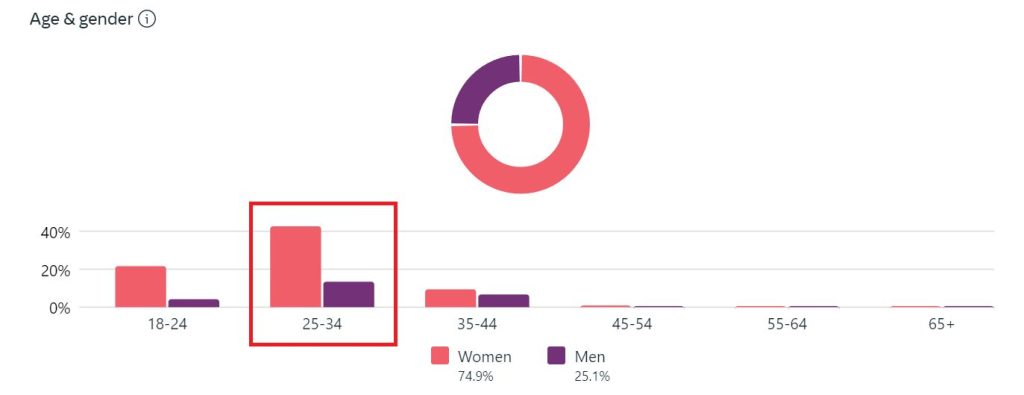
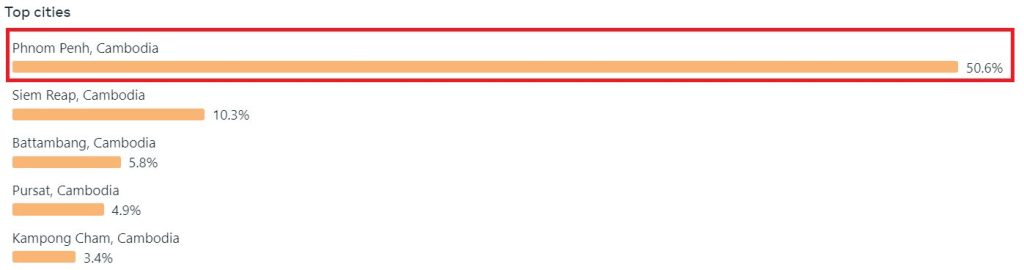
- Followers’ information
| Quarter | R4C Posts | Community Posts | New Members | Total Members |
|---|---|---|---|---|
| Q4-2022 | 51 | 24 | 75 | 1,327 |
| Q1-2023 | 27 | 48 | 90 | 1,417 |
| Q2-2023 | 27 | 41 | 79 | 1,496 |
- Members’ information
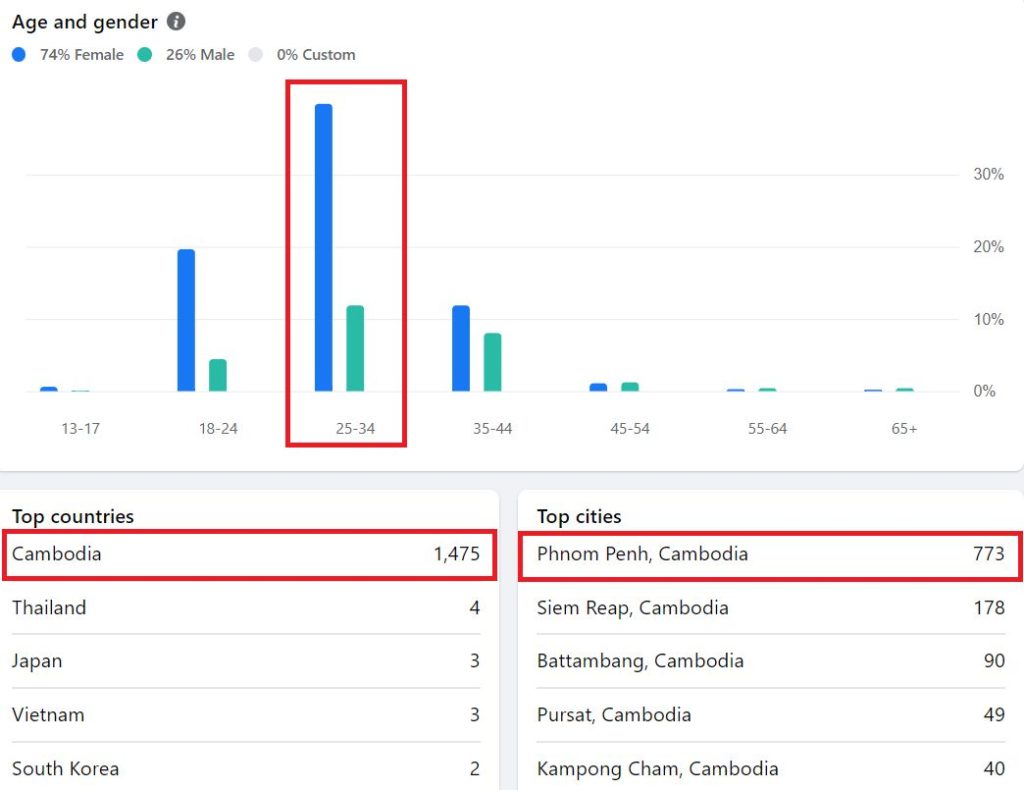
Telegram (messaging app)
- The members can see the R4C’s teaching resources, such as storybooks, music, worksheet, etc., in it regularly. And other information related to education for preschool children is posted. As of June, 1,058 members have joined and the number has increased by 213 since March.
- If You Are Happy And You Know It Song was the most viewed (25,655 views).
- 85% of views ratioed song videos
| Quarter | Published Videos | New Subscribers | Total Subscribers | Total Views (all videos) |
|---|---|---|---|---|
| Q4-2022 | 47 | 617 | 2,394 | 196,935 |
| Q1-2023 | 40 | 782 | 3,176 | 255,720 |
| Q2-2023 | 43 | 547 | 3,723 | 221,577 |
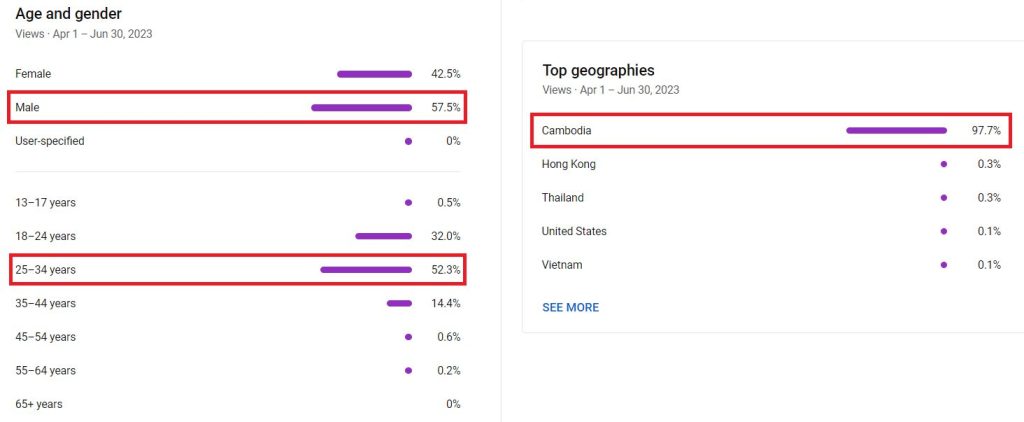
* Note that the YouTube data for gender may be skewed due to sharing phones and not having individual accounts.
- Followers’ information
Free Educational Material Distribution Website
We launched this website in August, 2022. The viewers can download those teaching tools with free and without royalty. The AccessBoxes provided to the target schools lead to access the website despite the unstable internet place. This website access record shows access of people who visit the page from their device, not from the AccessBox. In other words, people are included, not only non-target teachers and parents but also foreigners.
| Quarter | Number of Visits | Number of Pageviews | Number of Downloads |
|---|---|---|---|
| Q4-2022 | 9,949 | 34,230 | 10,904 |
| Q1-2023 | 15,430 | 49,828 | 16,962 |
| Q2-2023 | 14,868 | 52,182 | 10,188 |
The top 10 resources that were downloaded were worksheets for Khmer letters. Most searched categories were also ‘worksheet’ in the activity type and ‘Khmer’ in the curriculum. As we can see from the data, it appears that our users are particularly interested in educational materials related to Khmer studies, with a preference for worksheets. Besides, the most viewed activity types were, from most to least, worksheets, classroom decorations, images/illustrations, storybooks, songs, activity games, and art and crafts.
84% of visitors came from the Facebook page, 12% from Telegram and 4% from the YouTube channel.
Measuring Success
| Project | Collection method | Frequency | Beneficiaries |
|---|---|---|---|
| Number of beneficiaries of the project | |||
| Number of benefiting school-age children | Public records | Every three month | 513 |
| Number of teachers who took workshops | |||
| The 6th workshop | Direct observation | Once conducted | 20 |
| Number of teachers who took regular interviews | |||
| The 6th follow-up visit | Focus groups/interviews | Once conducted | 13 |
| Information dissemination via social media | |||
| Number of people who reached the posts | Focus groups/interviews | Every month | 75,085 |
| Number of people who viewed the resources on the ‘Telegram’ group | Focus groups/interviews | Every month | 1,058 |
| Number of people who viewed the YouTube videos | Focus groups/interviews | Every month | 221,577 |
| Number of people who visited the Digital Library website | Focus groups/interviews | Every month | 14,868 |
Next Schedule (July – September 2023)
- Complete resource package of the 9th storybooks (By August)
- Conduct the 7th workshop (September)
- Conduct the 7th follow-up visit and end-line survey (September)
Help us keep TukTuk rolling
Your gift pays for workshops, books and the free Rermork Digital Library.