
Quarterly report · Pursat Province, Cambodia
CLIP3 quarterly report: April to June 2025
The 6th workshop, school visits, the second classroom assessment and online results from our Pursat preschool teacher project, April to June 2025.
- 26preschool classes in 15 partner schools
- 1,079children in the partner classes
- 34.07average classroom assessment score out of 37
- 38,917unique visitors to the Rermork Digital Library
Project Overview
Cambodia is still in the process of rebuilding its education system, which failed during the civil war of the 1970s. In the field of early childhood education, the country faces the following challenges;
- Lack of teaching resources in Khmer to use in classrooms.
- Teachers lack the computer skills to create resources.
- Teachers lack experience in some teaching techniques to perform efficient online research.
- Available Khmer resources can be expensive, and schools, especially in rural areas, cannot afford to purchase them.
- Many of the available teaching materials may not align with the curriculum.
- Schools have very small or no budget for preschool teachers.
These issues occurring in the early childhood education stage, which is the foundation for a child's development, will affect the child's future growth process. Teachers are faced with these issues on a daily basis and wonder how to deal with them.
This project covers five regions in Pursat Province, located in the northwestern part of Cambodia. We at Rermork for Children (R4C) (in conjunction with TukTuk Charity), with 26 classes of 15 schools as partner schools, are working with provincial and district education department staff, preschool teachers, and members of the Rotary Club of Pursat (RCP) to empower teachers and parents, and increase educational opportunities for disadvantaged communities in early childhood education. The following activities will be undertaken over a two-year period to achieve the goal.
CLIP Project Goals
Empower teachers and parents, and increase educational opportunities for disadvantaged communities in early childhood education.
Five steps to achieve the goal
- Create teaching resources (storybooks, songs, activity games, board games, worksheets, etc.) in Khmer language, using local Cambodian artists, and aligning the government curriculum and Cambodian culture include options that require no printing or materials to remove economic boundaries. And distribute them to the target education offices and teachers.
- Enhance the “Rermork Digital Library”, a free educational material website for preschools developed by R4C (TukTuk Charity), to make it easier to use and to enrich its contents.
- Train teachers in seven workshops, not only on how to use the resources but also how to create their own resources. Laptops are supplied, and computer skills training will be conducted by the RCP.
- Make a platform for sharing teaching materials by uploading resources created by the teachers themselves on the "Rermork Digital Library", so that teachers nationwide can access these materials.
- Engage education bureau staff from the targeted provinces and districts to disseminate materials to schools beyond the project scope, as well as encourage educators to share materials with parents of the children, we aim to increase access to educational materials for a wider audience beyond the project's reach.
Through this project, we aim to ultimately have the targeted educators give back what they have learned to their respective communities, becoming leaders in further enhancing early childhood education nationwide. However, it is crucial not to forget that the primary beneficiaries of this project are the children. We hope that through the lessons of the educators who have undergone the project activities, children will find school an engaging place, leading to increased attendance and nurturing them into future leaders who actively engage in all endeavors.
About Project
The name of the project
Cambodia Literacy Integrative Project (CLIP)
- January - December 2021: CLIP1
- January 2022 - December 2023: CLIP2
- December 2023 - December 2025: CLIP3
Project implementing organization
Rermork For Children (R4C) (in conjunction with TukTuk Charity), Rotary Club of Pursat (RCP) (managed and funded by Rotary Club of Calgary Downtown)
Target areas
Pursat Province, Cambodia (Pursat City, Kandieng District, Bakan District, Krakor District, and Kravanh District)
Participants
Total 67 members
- Provincial and district education officials: 6 officers
- Provincial Office of Education (POE): 5 officers
- Director
- Department of Early Childhood Education
- Department of Primary Education
- Department of Education Audit
- Department of Plan
- District Office of Education (DOE): 15 officers
- Three people from the five target regions participated; the director of the DOE, the school education division staff, and the early childhood education division staff
- Principals: 15 teachers
- Preschool teachers: 26 teachers
Target Schools
There are a total of 26 classes in 15 schools (26 teachers, 1,079 students)
*There are three types of preschools in Cambodia: independent preschools, preschool classes attached to primary schools, and community schools overseen by the Ministry of Education but operated by the local community.
The CLIP3 covers a total of 15 schools: 7 independent preschools, 6 preschool classes, and 2 community schools.
| No. | Area | School | No. of Teachers | No. of Classes | Age | No. of Students (No. of Girls) |
|---|---|---|---|---|---|---|
| 1 | Pursat | Pursat school (independent preschool) | 4 | 4 | 3 years old | 39 (26) |
| 4 years old | 36 (17) | |||||
| 5 years old | 40 (17) | |||||
| 5 years old | 44 (19) | |||||
| 2 | Stung Toch school (preschool class) | 1 | 1 | 3 years old | 2 (2) | |
| 4 years old | 14 (7) | |||||
| 5 years old | 18 (8) | |||||
| 3 | Sokha Rum school (preschool class) | 1 | 1 | 5 years old | 28 (14) | |
| 4 | Kandieng | Preah Teat school (independent preschool) | 2 | 2 | 4 years old | 48 (18) |
| 5 years old | 58 (26) | |||||
| 5 | Toul Taprom school (preschool class) | 1 | 1 | 4 years old | 27 (16) | |
| 5 years old | 24 (16) | |||||
| 6 | Kbal Chheupok school (community school) | 1 | 1 | 3 years old | 6 (2) | |
| 4 years old | 8 (4) | |||||
| 5 years old | 10 (6) | |||||
| 7 | Bakan | Tropeang Chong school (independent preschool) | 3 | 3 | 3 years old | 42 (16) |
| 4 years old | 69 (35) | |||||
| 5 years old | 33 (11) | |||||
| 8 | Bong Knah school (preschool class) | 2 | 2 | 3 years old | 31 (15) | |
| 4 years old | 37 (24) | |||||
| 5 years old | 68 (34) | |||||
| 9 | Ohta Paong school (independent preschool) | 1 | 1 | 5 years old | 65 (24) | |
| 10 | Krakor | Bong Kontuot school (independent preschool) | 2 | 2 | 3 years old | 25 (11) |
| 5 years old | 34 (14) | |||||
| 11 | Po Tream school (preschool class) | 2 | 2 | 5 years old | 29 (11) | |
| 5 years old | 29 (16) | |||||
| 12 | Kbal Trach school (preschool class) | 1 | 1 | 5 years old | 37 (22) | |
| 13 | Kravanh | Lea Ch school (independent preschool) | 2 | 2 | 4 years old | 23 (11) |
| 5 years old | 34 (13) | |||||
| 14 | Ro Kat school (independent preschool) | 2 | 2 | 4 years old | 26 (10) | |
| 5 years old | 50 (25) | |||||
| 15 | Kom Peang school (community school) | 1 | 1 | 3 years old | 16 (10) | |
| 4 years old | 20 (12) | |||||
| 5 years old | 10 (7) | |||||
| Total | 26 | 26 | Total | 1,079 (519) | ||
| 3 years old | 161 (82) | |||||
| 4 years old | 345 (176) | |||||
| 5 years old | 573 (261) | |||||
Project Implementation
Main activities
| No. | Activity | Duration | Start Date | Completion Date |
|---|---|---|---|---|
| 1 | The 6th workshop | 1 day | May/22/2025 | May/22/2025 |
| 2 | The 6th follow-up visit | 10 days | Jun/2/2025 | Jun/13/2025 |
| 3 | The 2nd classroom assessment | 10 days | Jun/2/2025 | Jun/13/2025 |
The 6th workshop
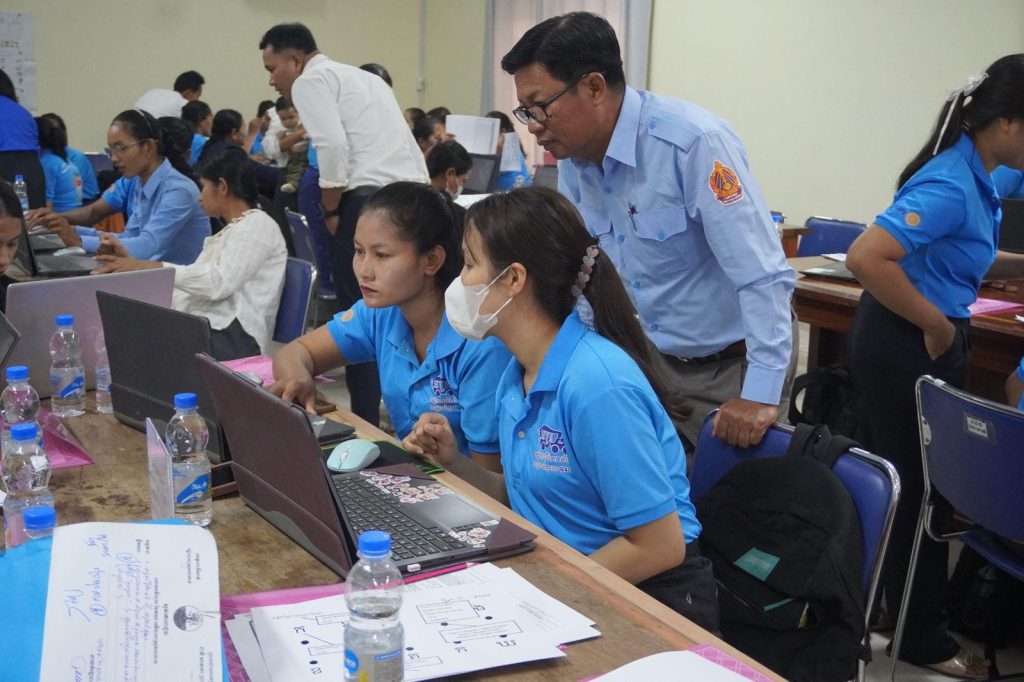
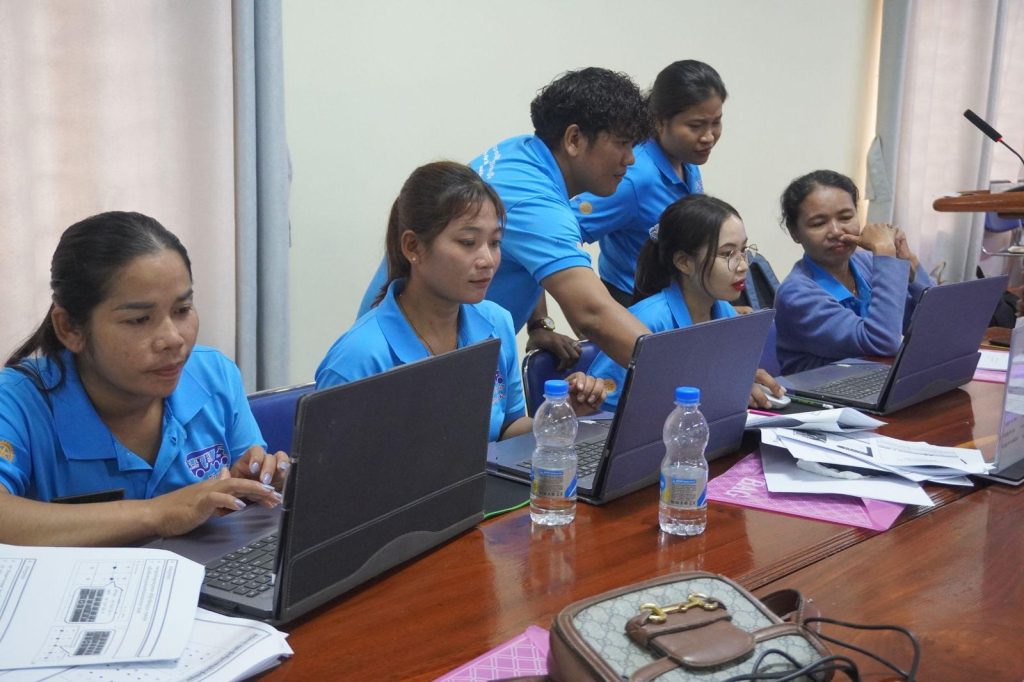
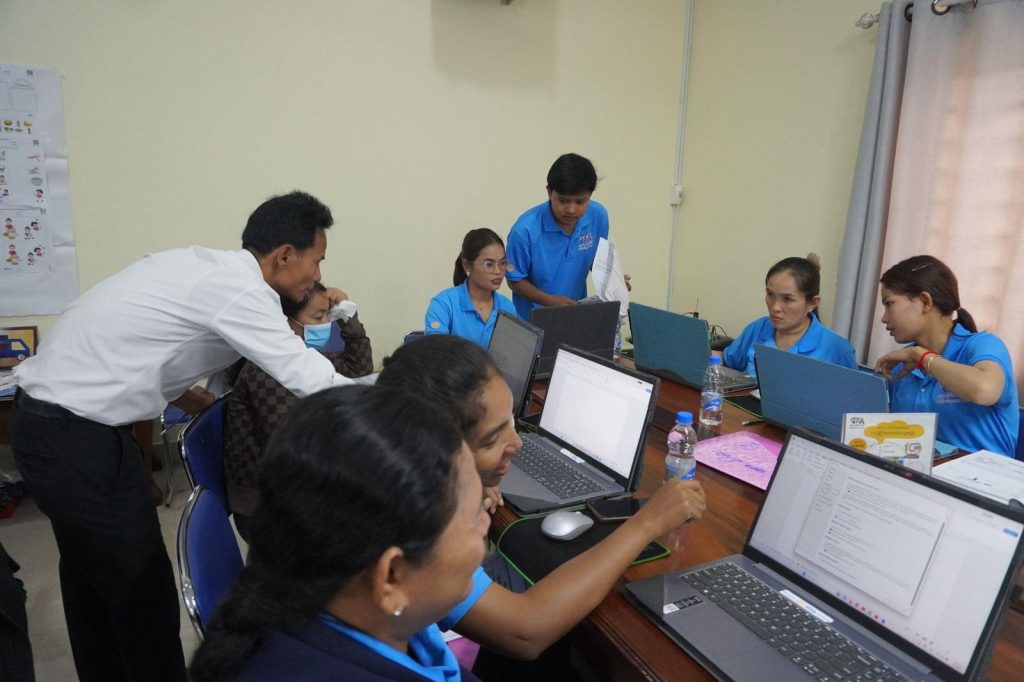
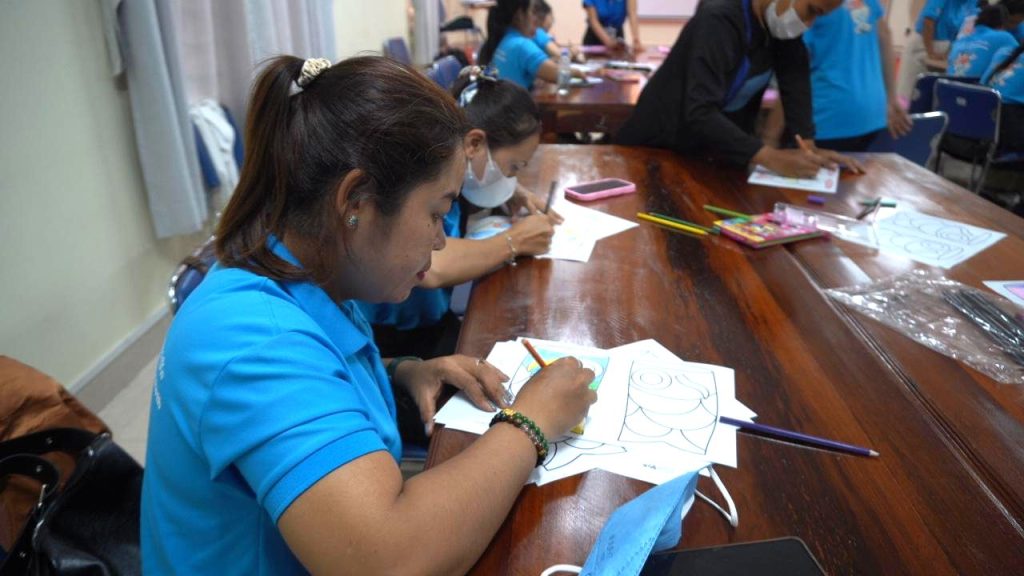
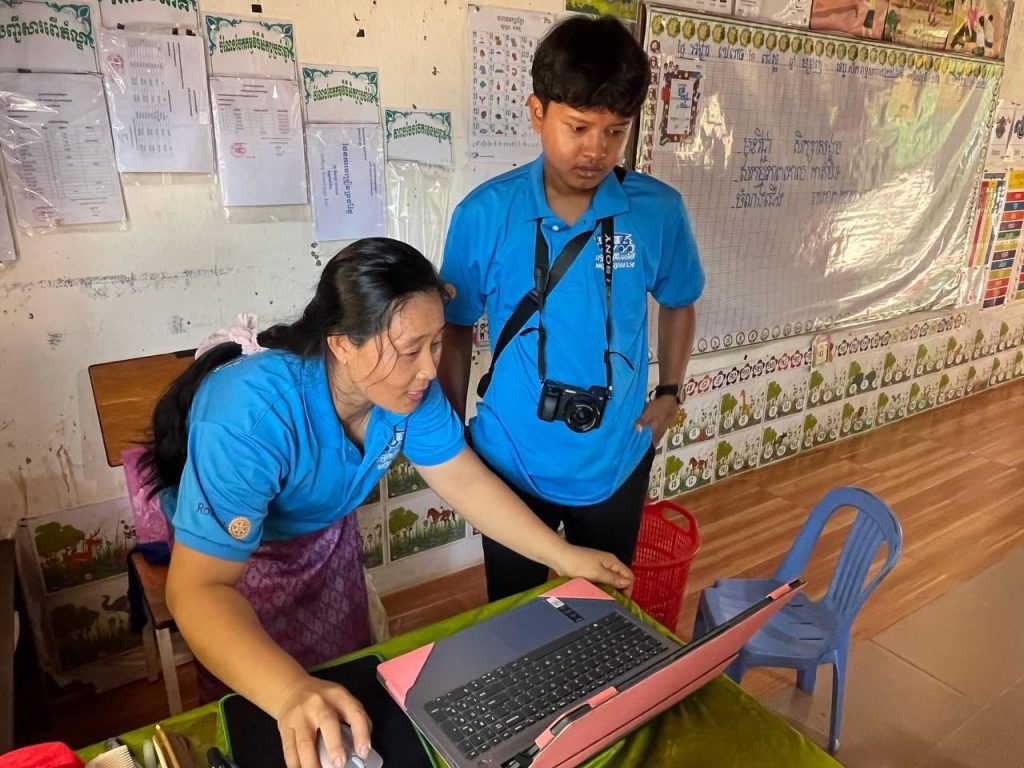
In this workshop, we once again conducted a session on creating worksheets using Microsoft Word. This time, we introduced a new function, such as table insertion, and the participants created matching worksheets that paired text with text or images with images. Compared to the previous workshop, many teachers have clearly improved their computer skills. More participants were able to complete the tasks independently or solve problems collaboratively with peers, without needing support from the staff.
On the other hand, the gap between those who can work independently and those who still require one-on-one support has become more noticeable. This highlighted the need to reconsider our support system—for example, by providing more personalized assistance during follow-up visits, and by grouping participants according to skill level in the next computer lesson.
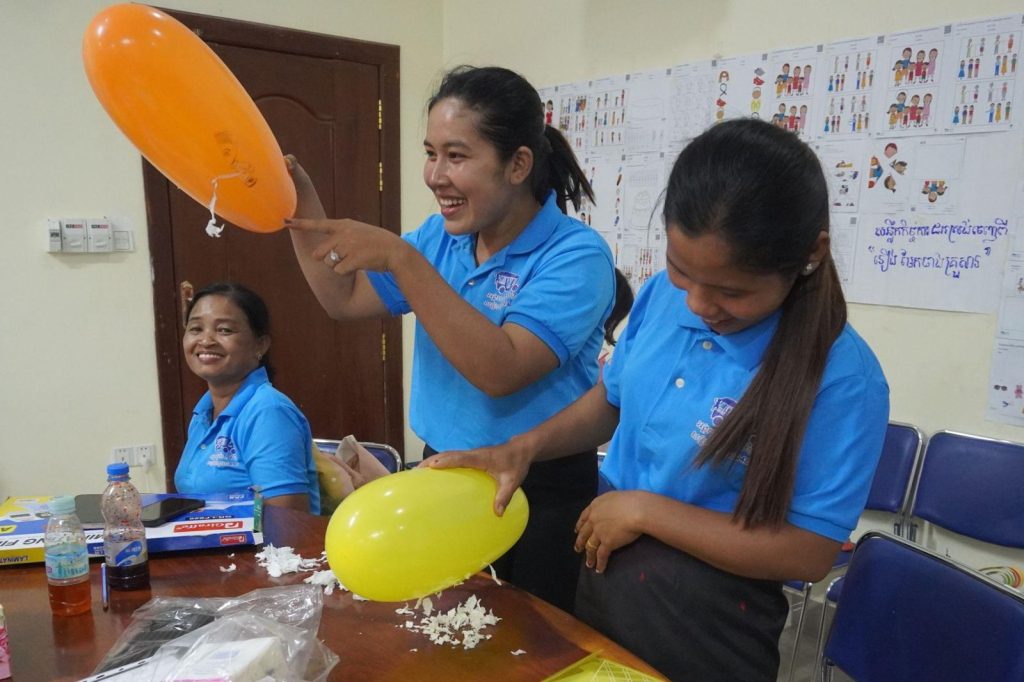
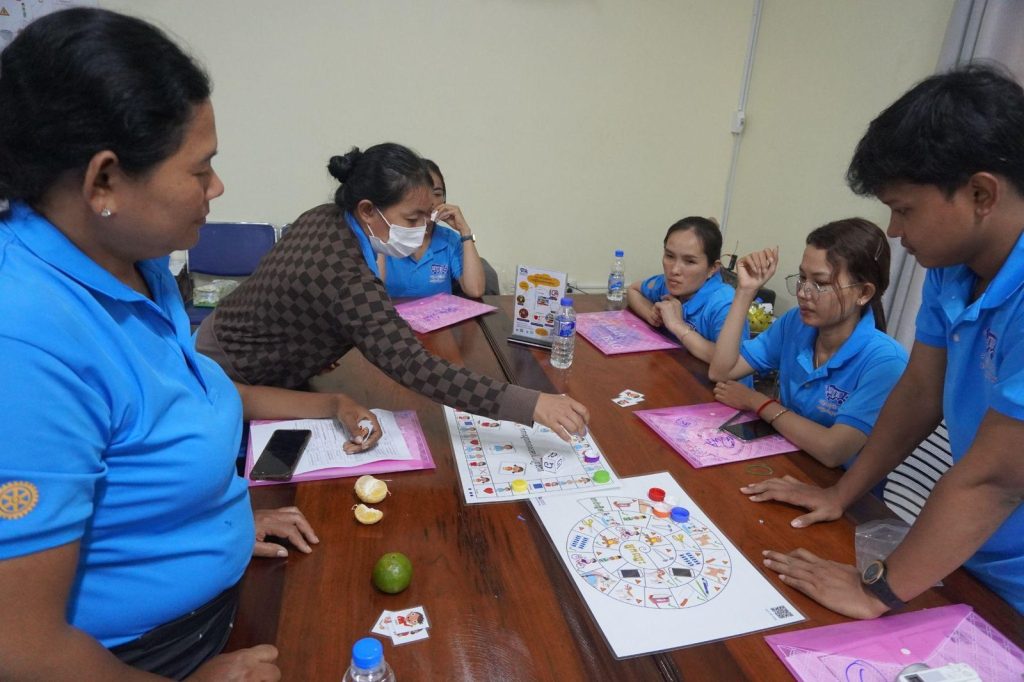
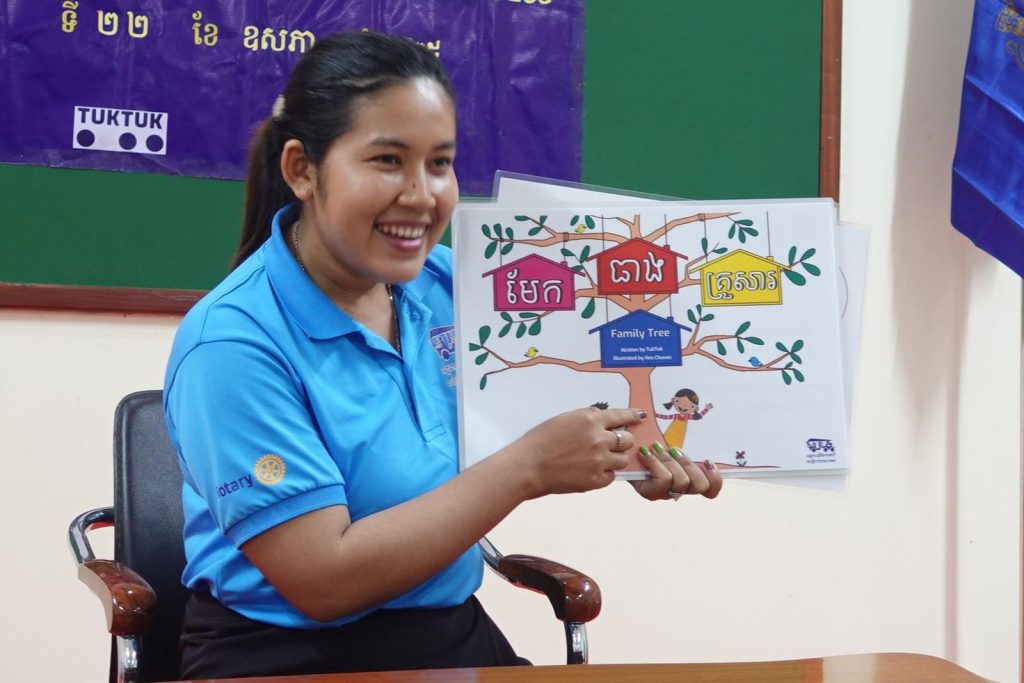
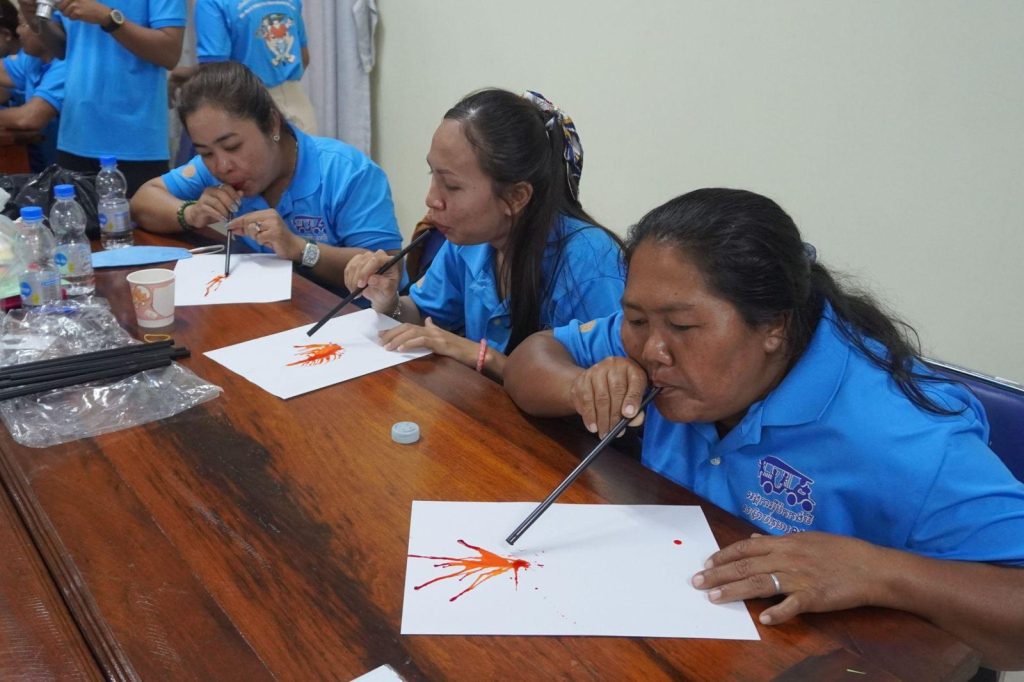
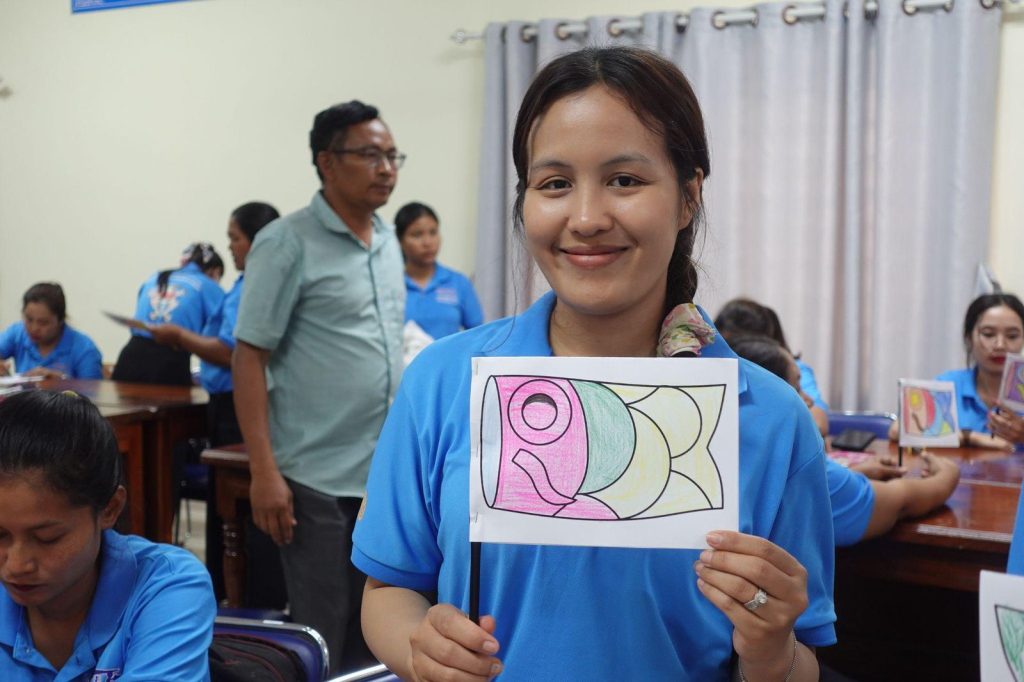
During the teaching materials introduction session, we presented two storybooks—‘Family Tree’ and ‘Be Careful, Be Safe’—along with their accompanying materials. Among the materials introduced, several activities in particular generated a lot of excitement among the teachers. One was the ‘Collecting Family Cards Game,’ a board game in which players roll dice to collect family member cards. Another was ‘Blow Painting a Fire,’ where children use straws to blow watercolor paint on paper, creating flame-like shapes. Additionally, the ‘Static Electricity’ experiment—where balloons are rubbed on hair or clothing to create static electricity and then used to pick up tissue paper—was also very popular.
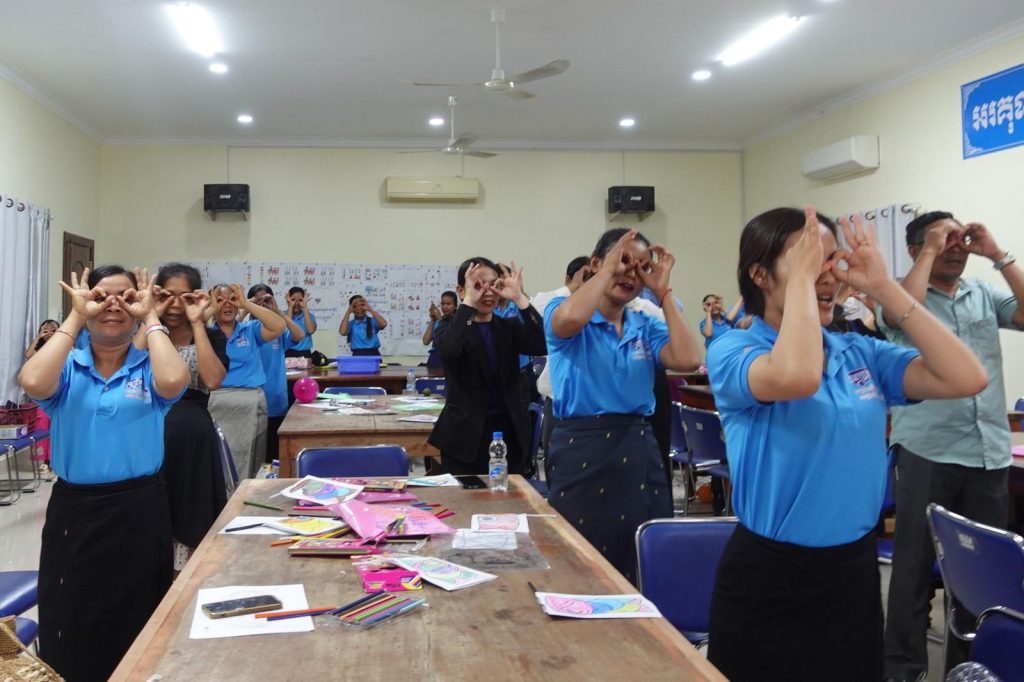
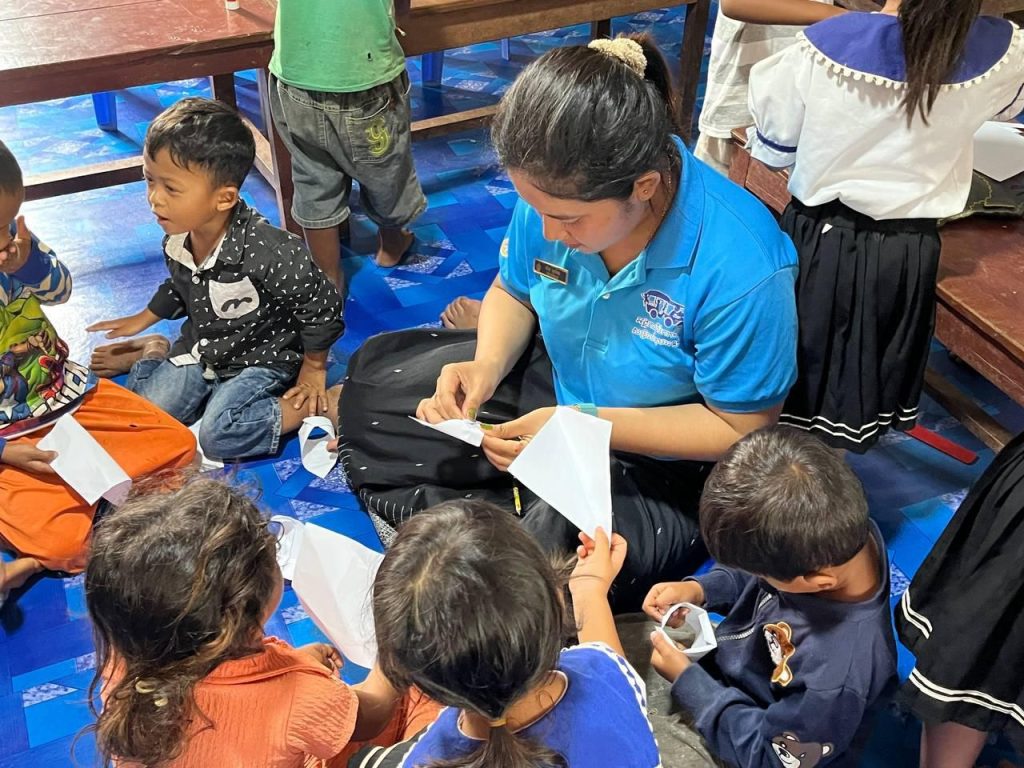
Once again, a JICA volunteer working at a Cambodian preschool joined the workshop and shared insights about Japanese kindergartens, including hand-play songs and craft ideas. Many teachers said they were glad to learn new lesson ideas and appreciated the opportunity to see the differences between Cambodia and Japan. Some teachers even implemented what they learned right away in their classes.
The 6th follow-up visit
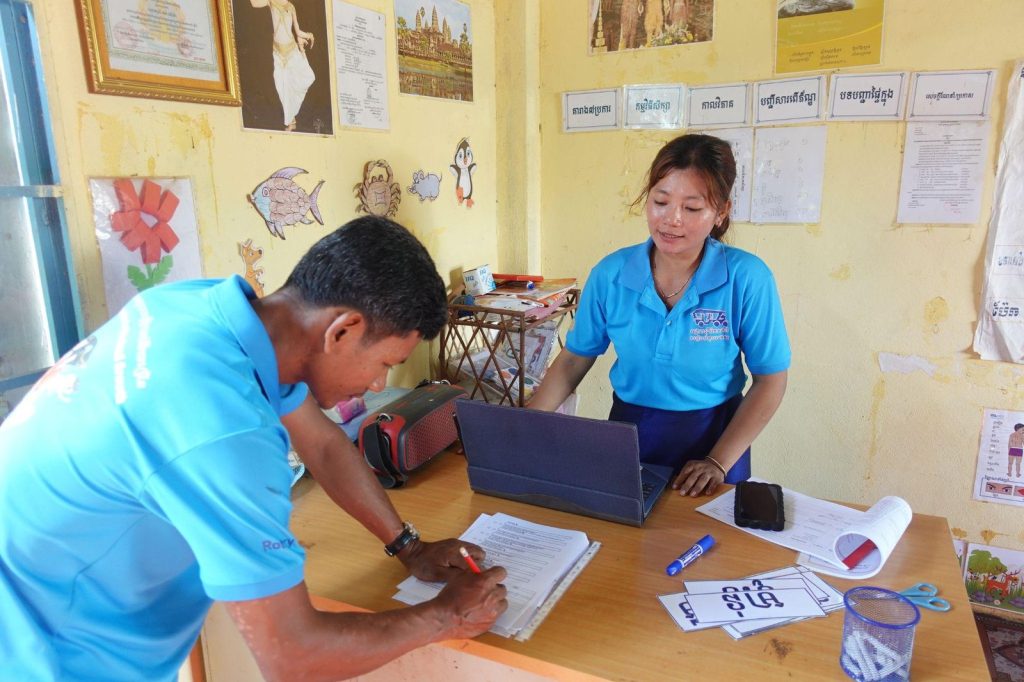
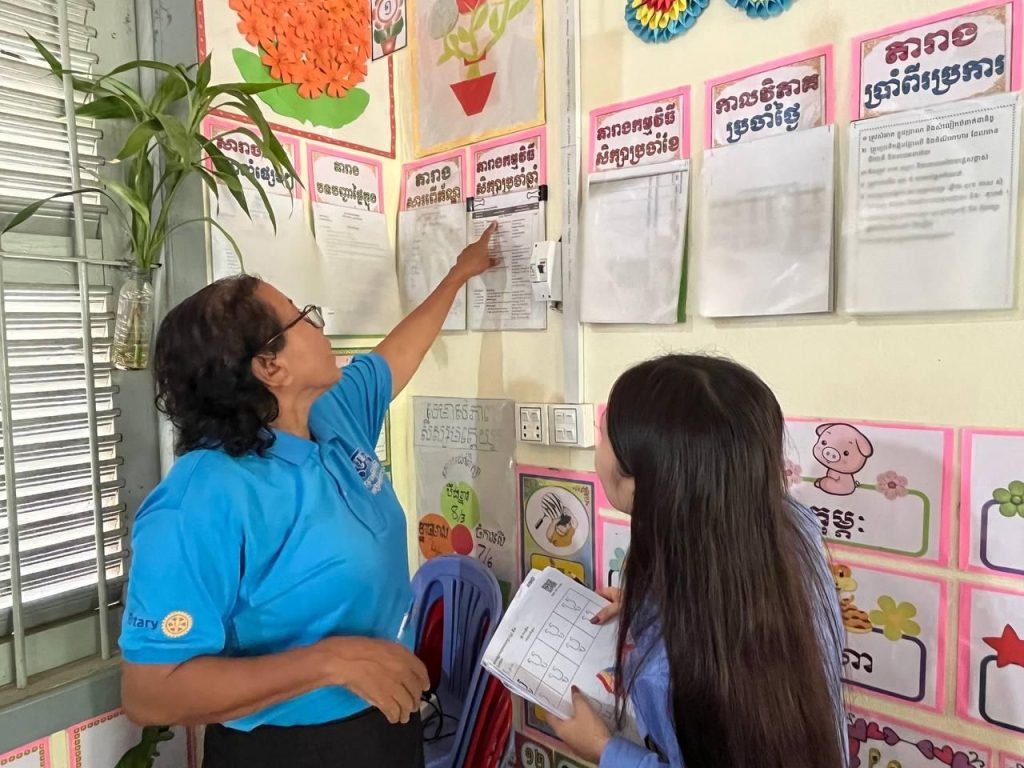
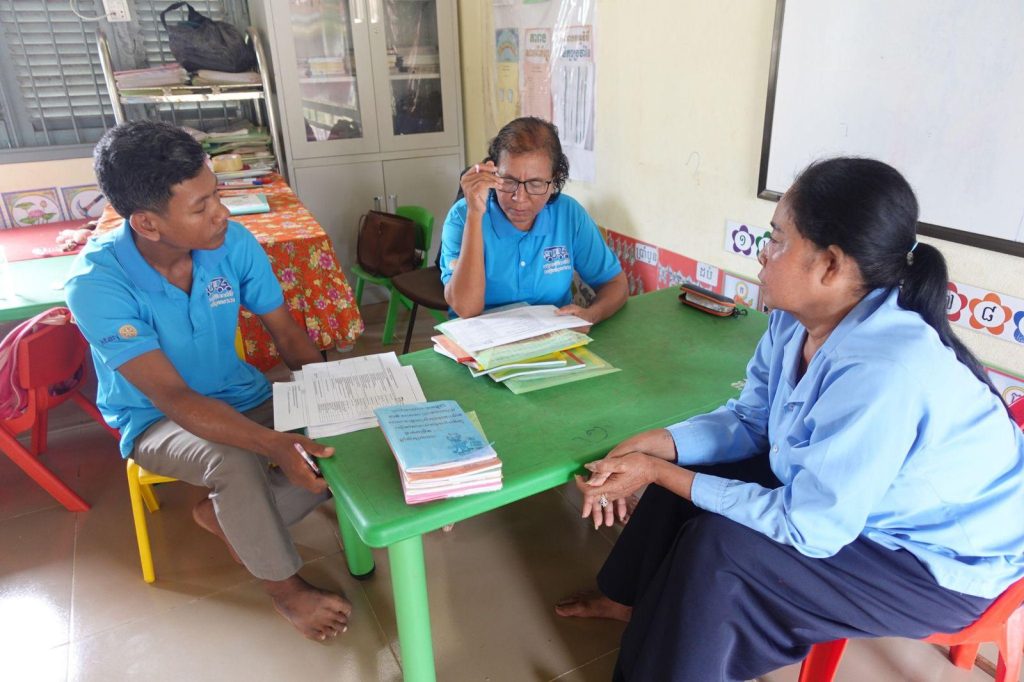
As part of the project, we follow up with visits to the target schools after each workshop to review the workshop content. During this follow-up visit, we asked additional questions to the pre-visit survey and observed the classes.
First, in the pre-visit survey, we asked the teachers about their situation one to two weeks after the second workshop. We inquired about their use of computers, their utilization of the ‘Rermork Digital Library,’ and their use of R4C materials in their lessons. Please see here for detailed survey results.
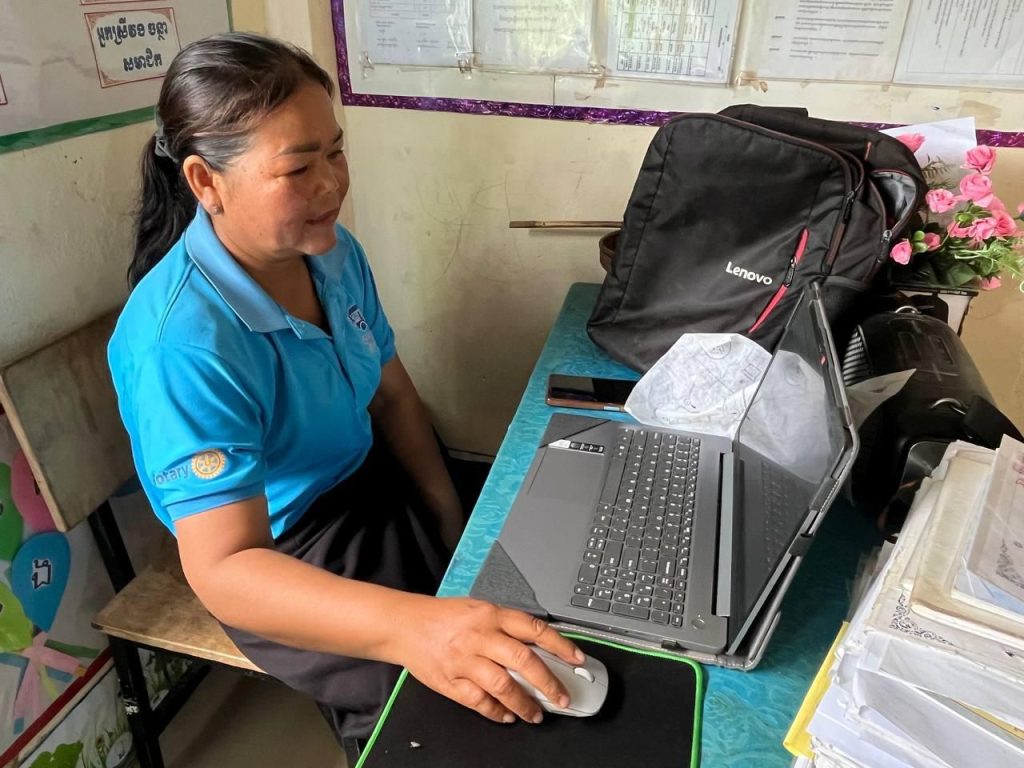
Regarding computer usage, the most common frequency this time was 1–3 times per week. However, compared to the previous period, the number of teachers using computers 7–9 times or even more than 10 times per week has increased. Many of these teachers reported using the ‘Rermork Digital Library’ to search for teaching materials and to play animations or music videos during class activities.
As in the previous report, the most viewed content on the ‘Rermork Digital Library’ was songs. The most frequently accessed learning area was society, and the most downloaded materials were worksheets. Compared to the previous period, the download frequency increased across nearly all types of materials, indicating that the target teachers are actively using the teaching resources on a regular basis.
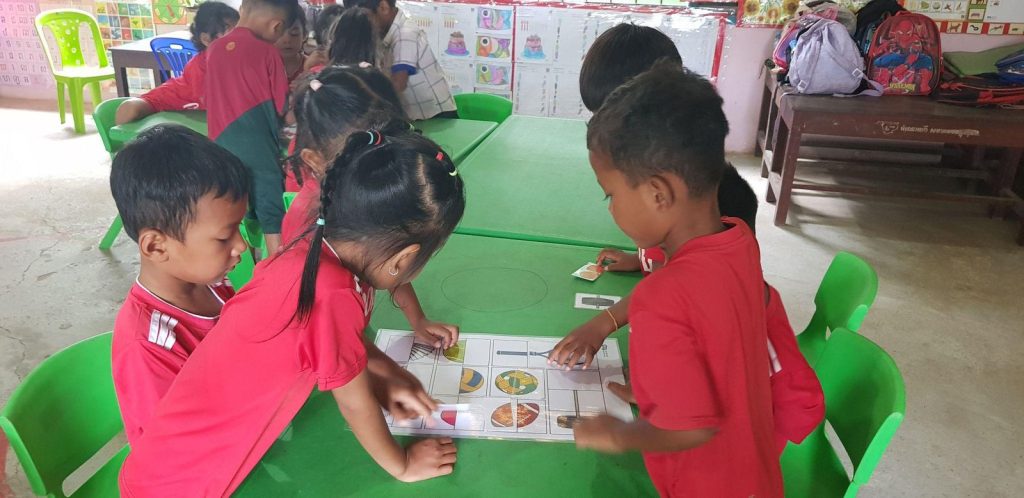
Regarding the use of TukTuk teaching materials across the five learning areas, songs were most frequently used in the areas of psychomotor skills and society, while worksheets were used most often in science, mathematics, and Khmer. The supplemental materials for ‘Be Careful, Be Safe’, introduced during the 6th workshop, were particularly suitable for use in the science area. This may have contributed to the overall increase in the frequency of material use in that area compared to the previous period.
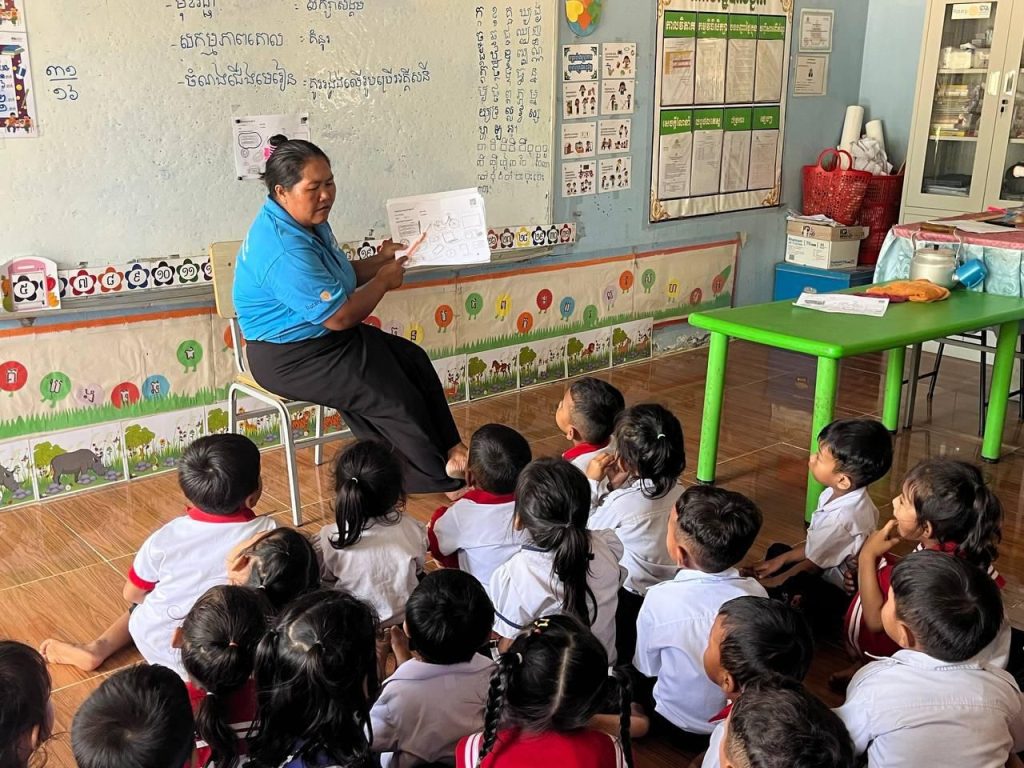
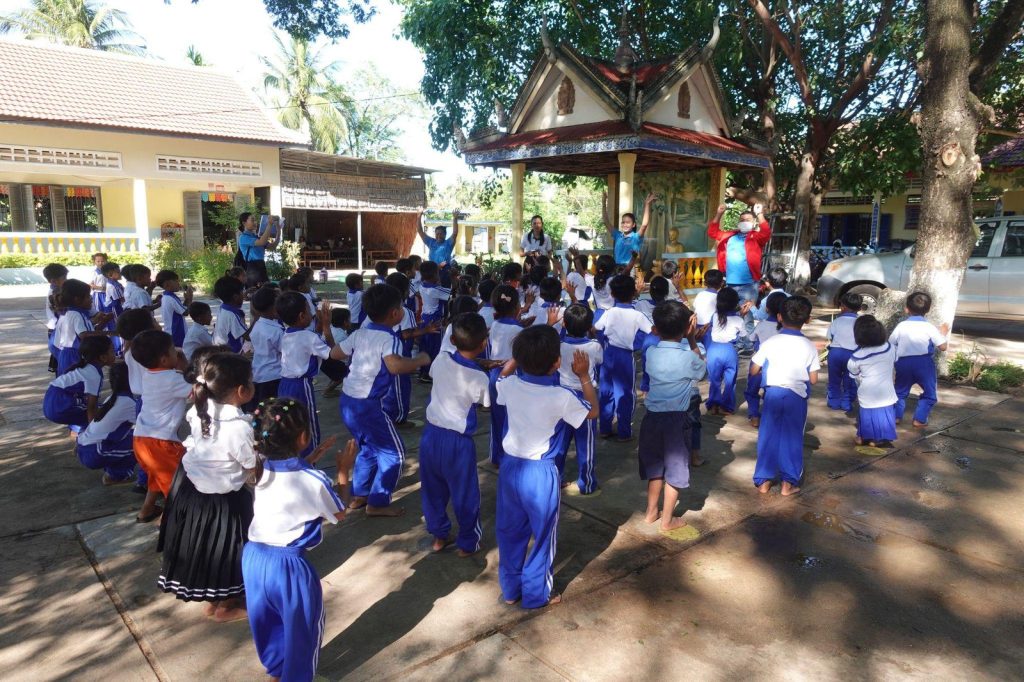
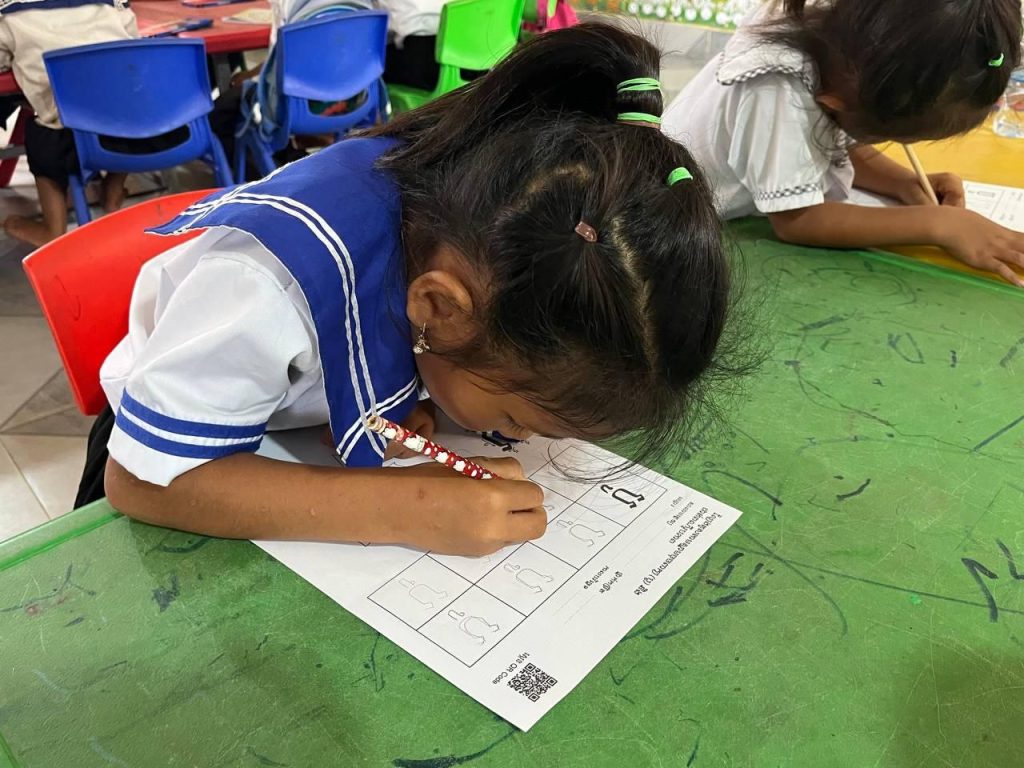
During our recent class observations, we gained some new insights. One of the most notable findings was that some teachers do not have enough time to properly prepare their lessons. For example, during this school visit, some teachers conducted science experiments introduced on our website. However, because they only had experience trying these experiments once during the workshop, their classroom implementation was unsuccessful. In some cases, the experiment didn’t work, and the lesson ended without meaningful learning. This was unfortunate, as the experiment could have provided great learning opportunities for the children if done successfully.
To address this, we believe our support should include providing instructional videos and using workshops to share both successful and unsuccessful examples, along with practical tips to ensure better results in the classroom.
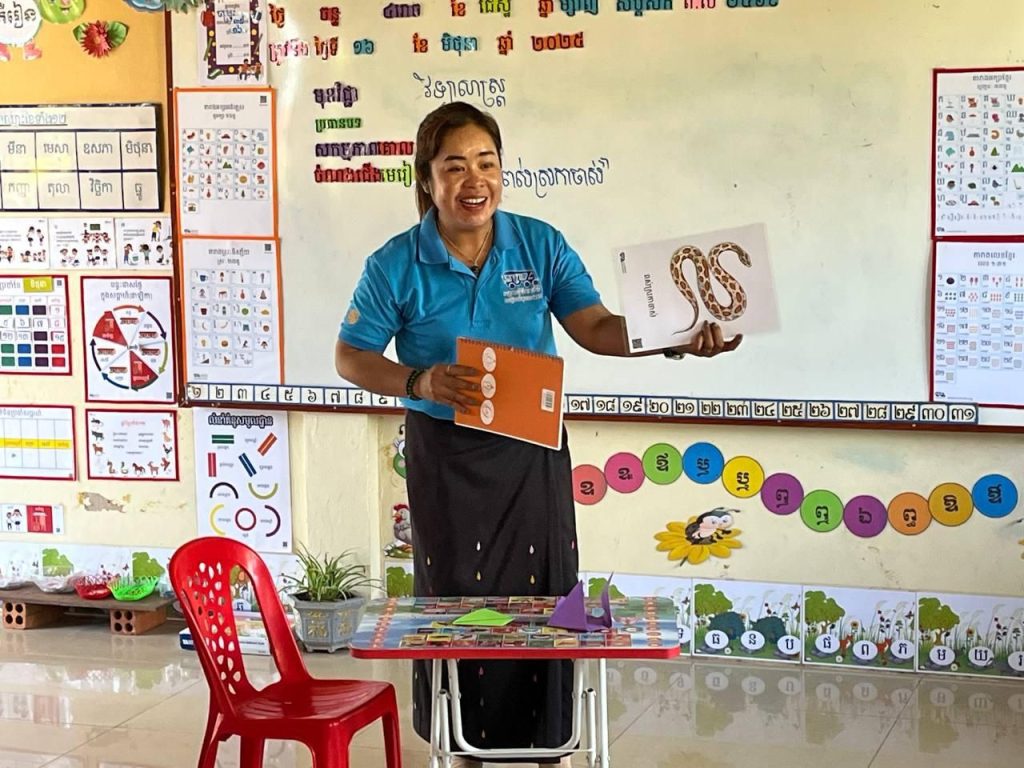
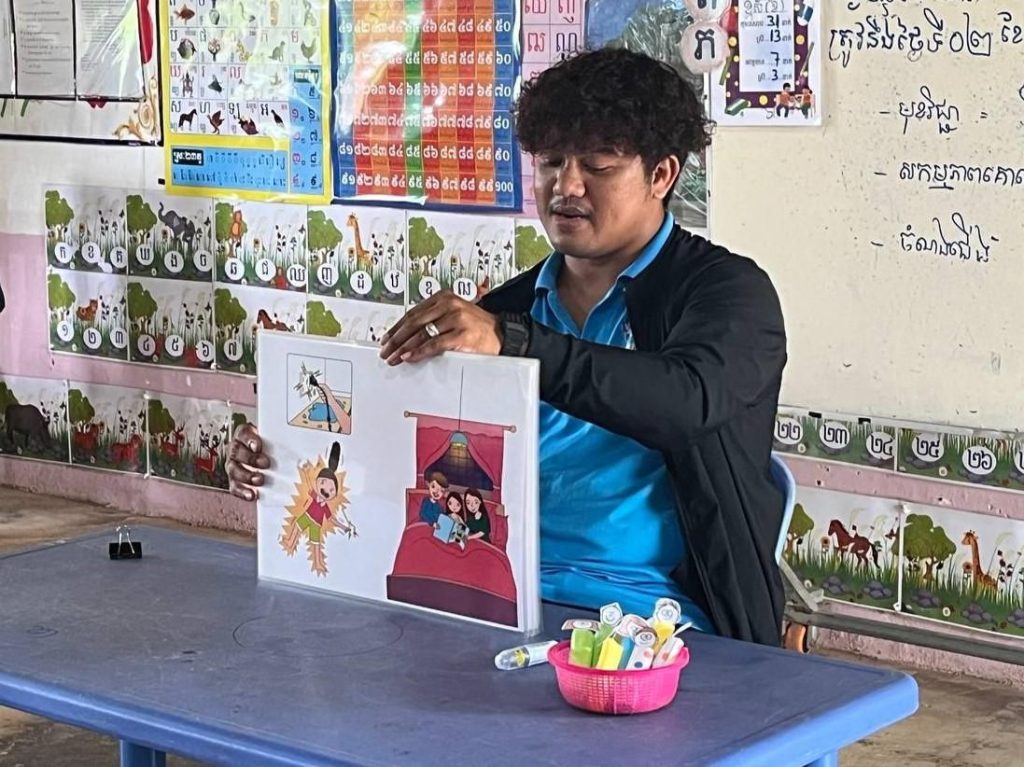
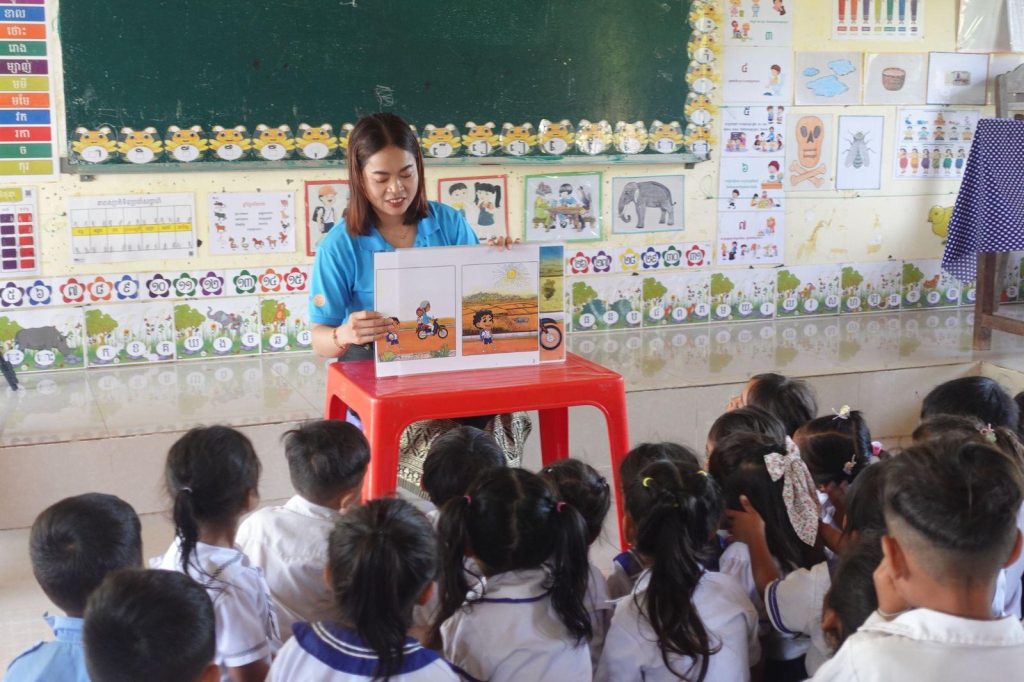
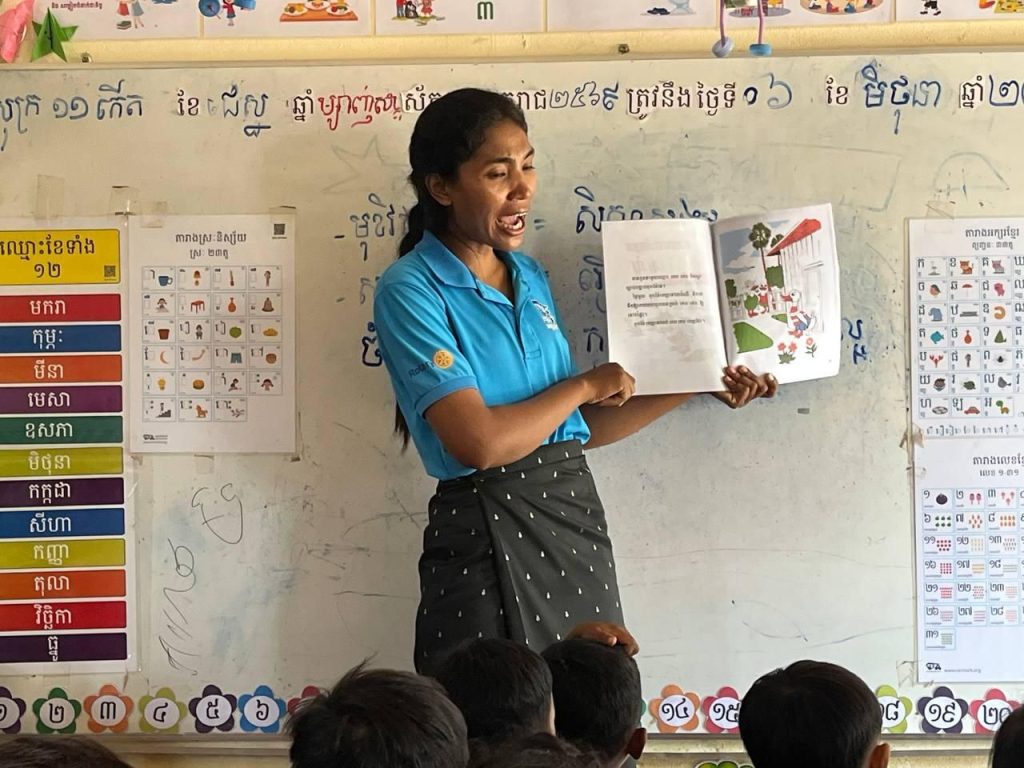
In addition, we found that many teachers still feel unsure about how to conduct kamishibai reading sessions. During our school visit, one teacher even asked our staff to read a kamishibai story in front of the children so that she could observe and learn the technique. While listening and watching with the children, the teacher seemed to gain some confidence. It appears that many teachers believe that kamishibai reading requires dramatic performance with exaggerated voice changes, which leads them to think that special skills are necessary and feel they lack the confidence to do it themselves.
In the next workshop, we plan to review kamishibai reading again by having staff demonstrate it. We would like to emphasize that “there is no single correct way to read kamishibai,” and that “dramatic acting is not required — even subtle changes in voice tone can help children use their imagination and enjoy the story.”
The 2nd classroom assessment
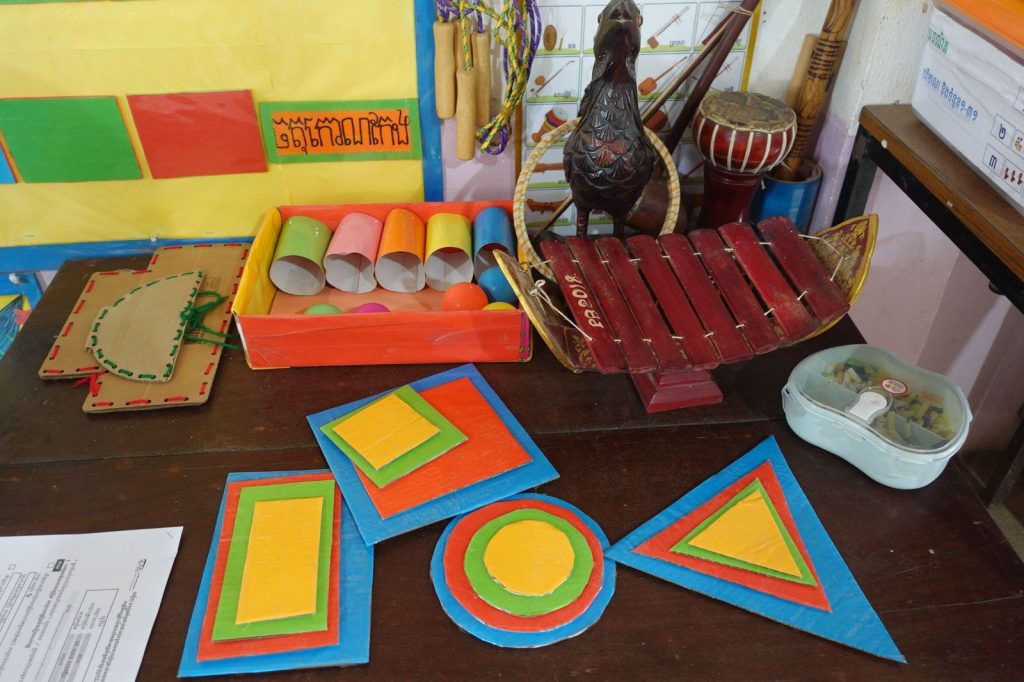
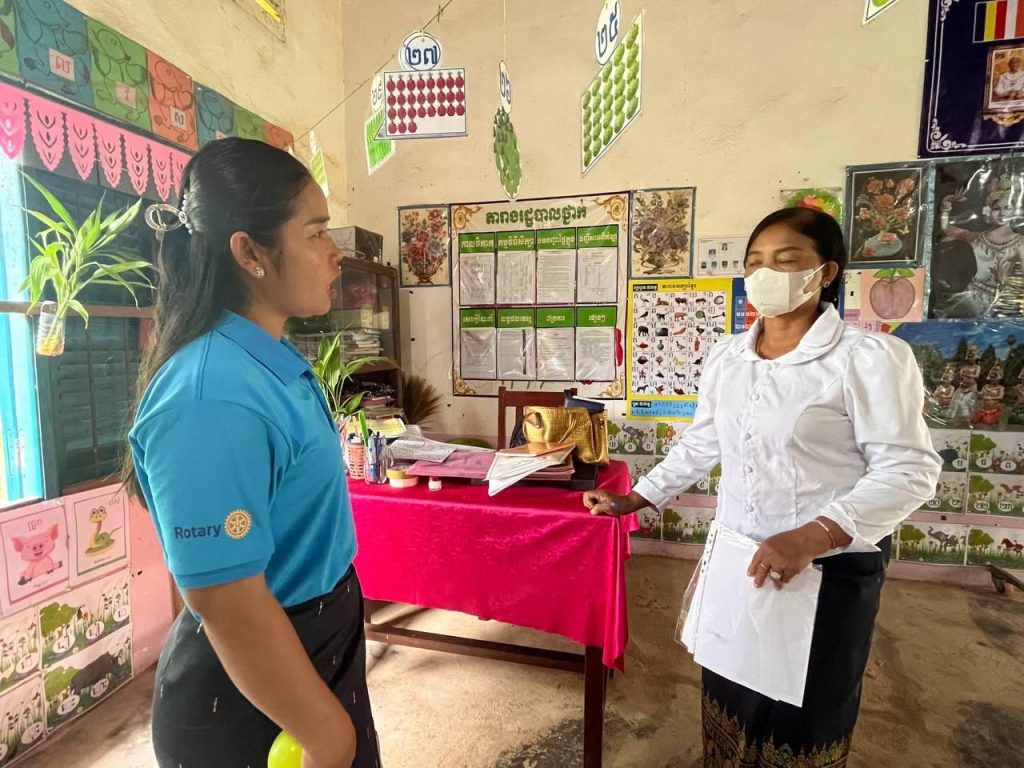
Conducted in parallel with the follow-up visits, we also conducted classroom assessments. The Cambodian Ministry of Education has set standards for classroom decorative teaching tools for all preschool classes. Specifically, this involves setting up five corners within the classroom for ‘Science,’ ‘Hygiene,’ ‘Learning,’ ‘Art,’ and ‘Play,’ as well as decorating the ceiling, window frames, and walls. Although the specific items and classroom decorative teaching tools are prescribed, there has been no training provided on this matter, and it has not been widely communicated to all teachers.
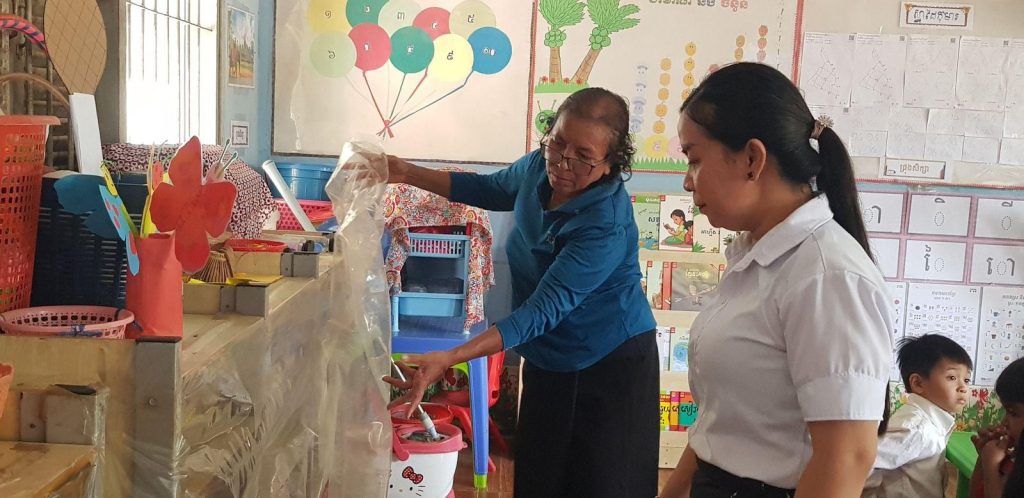
Following a request from PoE and DoE staff during the previous CLIP2 project, we worked together to create an evaluation sheet based on the government's existing criteria. We then conducted assessments in targeted classrooms based on this sheet. Positive feedback from teachers who appreciated learning about classroom decorative teaching tools through the project, along with significant improvements in classroom environments over the two-year period, prompted us to include a classroom decorative teaching tool program (comprising two evaluations and workshops) in CLIP3.
The first round of classroom assessments was conducted in December 2023, when the project began. Now, approximately a year and a half later, we carried out the second round to examine how much the situation in each target classroom has improved compared to the first visit and to what extent participation in the project has contributed to the enhancement of the classroom environment.
All classrooms showed improvement in their scores compared to the first evaluation. The overall average score this time was 34.07 out of a possible 37 points, which is 10.24 points higher than the previous average.
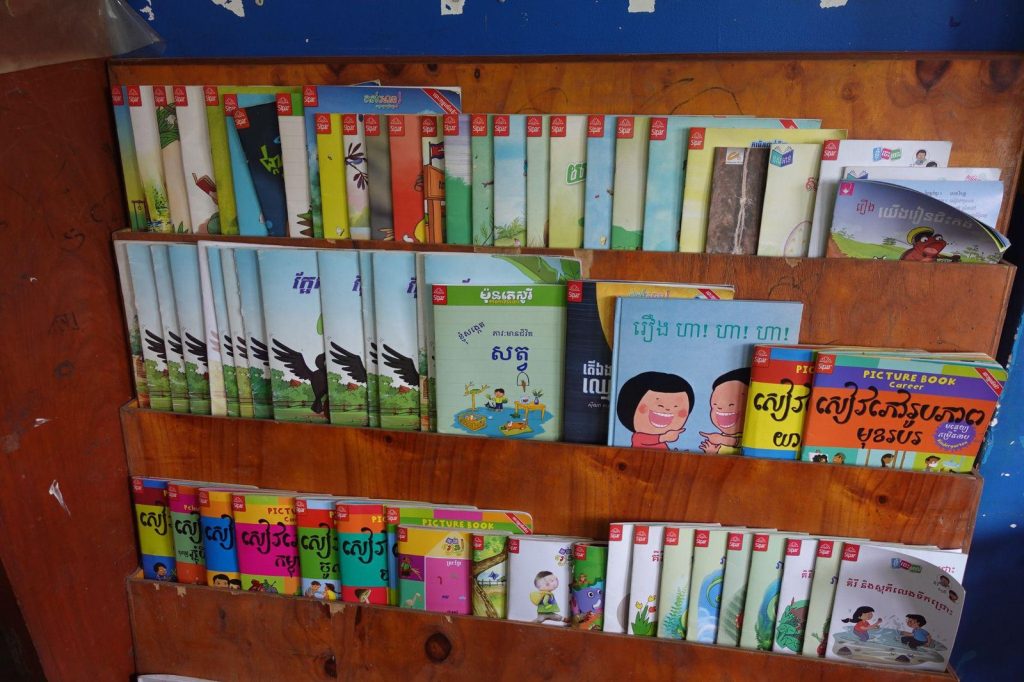
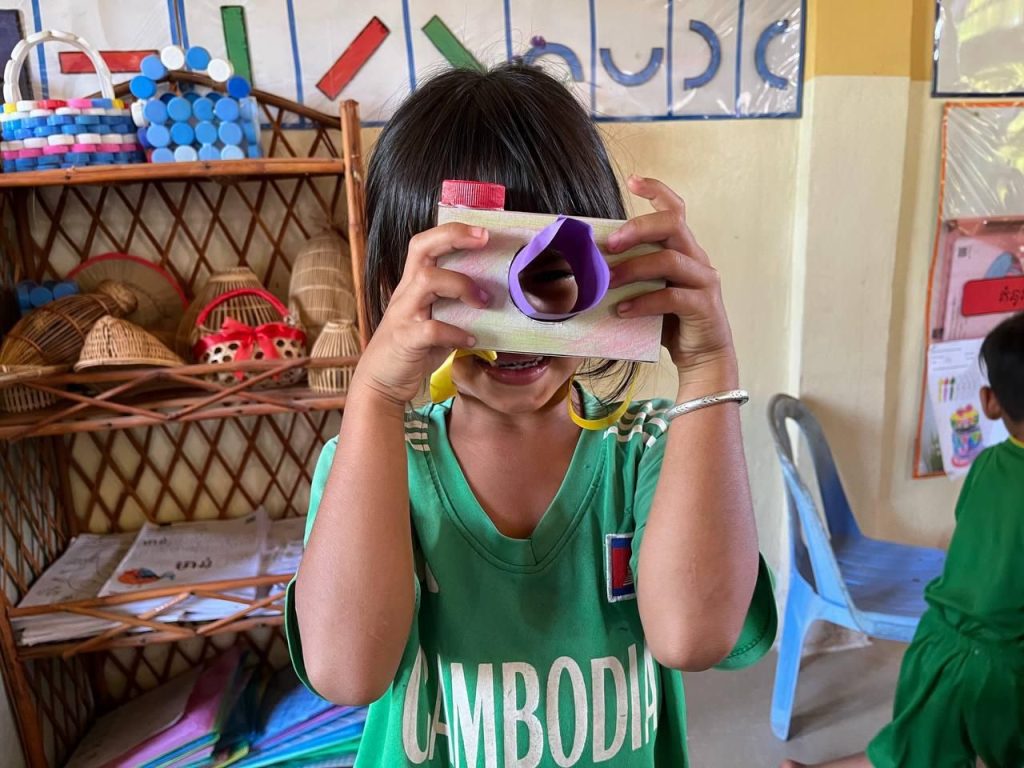
One particularly noteworthy area of improvement was in the evaluation points related to classroom decorations—an area the project was able to directly support. In the first evaluation, many classrooms lacked key items such as aquariums or plants for the ‘Science’ corner, storybooks for the ‘Learning’ corner, musical instruments for the ‘Arts’ corner, health-related tools, and toys for the ‘Play’ corner. As a result, scores in these areas were low. However, since the project began, classrooms have become noticeably more enriched. The availability of storybooks has increased, and many teachers who previously said things like "I'm not good at crafts" or "We don't have a budget" began creating materials after learning in the workshops how to make teaching tools using affordable and accessible materials. This has contributed significantly to improving the overall classroom atmosphere.
On the other hand, we noticed a challenge in the consistency of evaluations. Officers from the DOE who conducted the assessments had slightly different interpretations of the evaluation criteria, which resulted in variations in scoring across regions. As a reflection point, we believe it would have been necessary to review and standardize the evaluation criteria among all evaluators before implementation.
The results of the 2nd classroom assessment (by region);
| School | The 1st results | The 2nd results | Difference from last time |
|---|---|---|---|
| Pursat school-1 (Independent preschool) | 33.59 | 34.00 | 0.41 up |
| Pursat school-2 (Independent preschool) | 33.00 | 35.67 | 2.67 up |
| Pursat school-3 (Independent preschool) | 16.75 | 33.67 | 16.92 up |
| Pursat school-4 (Independent preschool) | 16.32 | 32.00 | 15.68 up |
| Sokha Rum school (Preschool class) | 24.51 | 33.34 | 16.92 up |
| Stung Toch school (Preschool class) | 25.34 | 33.02 | 7.68 up |
| School | The 1st results | The 2nd results | Difference from last time |
|---|---|---|---|
| Preah Teat school-1 (Independent preschool) | 28.08 | 36.00 | 7.92 up |
| Preah Teat school-2 (Independent preschool) | 28.83 | 36.00 | 7.17 up |
| Toul Taprom school (Preschool class) | 26.08 | 35.00 | 8.92 up |
| Kbal Chheupok school (Community school) | 33.50 | 34.50 | 1.00 up |
| School | The 1st results | The 2nd results | Difference from last time |
|---|---|---|---|
| Tropeang Chong school-1 (Independent preschool) | 19.27 | 35.34 | 16.07 up |
| Tropeang Chong school-2 (Independent preschool) | 18.68 | 34.84 | 16.16 up |
| Tropeang Chong school-3 (Independent preschool) | 18.18 | 31.84 | 13.66 up |
| Bong Knah school-1 (Preschool class) | 21.36 | 34.34 | 12.98 up |
| Bong Knah school-2 (Preschool class) | 21.11 | 29.77 | 8.66 up |
| Ohta Paong school (Independent preschool) | 26.86 | 33.27 | 6.41 up |
| School | The 1st results | The 2nd results | Difference from last time |
|---|---|---|---|
| Bong Kontuot school-1 (Independent preschool) | 16.75 | 35.00 | 18.25 up |
| Bong Kontuot school-2 (Independent preschool) | 18.75 | 34.00 | 15.25 up |
| Po Tream school-1 (Independent preschool) | 12.36 | 35.00 | 22.64 up |
| Po Tream school-2 (Independent preschool) | 16.86 | 34.68 | 17.82 up |
| Kbal Trach school (Preschool class) | 18.84 | 27.44 | 8.60 up |
| School | The 1st results | The 2nd results | Difference from last time |
|---|---|---|---|
| Lea Ch school-1 (Independent preschool) | 32.18 | 35.75 | 3.57 up |
| Lea Ch school-2 (Independent preschool) | 29.68 | 35.75 | 6.07 up |
| Ro Kat school-1 (Independent preschool) | 25.00 | 35.75 | 10.75 up |
| Ro Kat school-2 (Independent preschool) | 27.18 | 35.09 | 7.91 up |
| Kom Peang school (Community school) | 30.61 | 34.75 | 4.14 up |
Resource Package Creation Status
CLIP3 includes the creation of four new original storybooks and their ‘Resource Packages*’. Currently, we are in the process of creating the 12th and 13th books.
*Resource Package… A package of teaching materials that includes songs, activity games, board games, and worksheets related to the content of the picture book.
| Category | Resource | Status | Due Date |
|---|---|---|---|
| The 12th storybook “I’m Not Just Rubbish” | |||
| Story Materials | Kamishibai | Complete | |
| Animation | Complete | ||
| A4 printable (Color, Black/White) | Complete | ||
| Digital version | Complete | ||
| A5 size book | Complete | ||
| Song | MP3 | Complete | |
| MP4 | In progress | Jul. 2025 | |
| Activity Game | Instruction sheet | Complete | |
| Supplemental resource | Complete | ||
| Instruction video | In progress | Jul. 2025 | |
| Board Game | Game board | Complete | |
| Instruction video | In progress | Jul. 2025 | |
| Worksheet | Worksheet | Complete | |
| Instruction video | In progress | Jul. 2025 | |
| The 13th storybook | |||
| Story Materials | Storyboard | In progress | Jul. 2025 |
Measuring Success
| Project | Collection method | Frequency | Beneficiaries |
|---|---|---|---|
| Number of beneficiaries of the project | |||
| Number of institutions participating in the program | Direct observation | Every three month | 15 |
| Number of education officials | Direct observation | Every three month | 26 (Provincial officer) 1, (District officer) 5, (POE) 5, (DOE) 15 |
| Number of teachers receive direct coaching and access to the digital library via technology solutions | Direct observation | Every three month | 26 |
| Number of benefiting school-age children | Direct observation | Every three month | 1,079 |
| Number of teachers who took surveys | |||
| Baseline survey | Direct observation | Once conducted | 26 |
| Annual survey | Direct observation | Once conducted | 26 |
| Number of teachers who took classroom assessments | |||
| The 1st classroom assessment | Direct observation | Once conducted | 26 |
| The 2nd classroom assessment | Direct observation | Once conducted | 26 |
| Number of teachers who took workshops | |||
| The pre-project workshop | Direct observation | Once conducted | 40 (POE) 2, (DOE) 10, (Preschool teacher) 26, (Volunteer teacher) 2 |
| The 1st workshop | Direct observation | Once conducted | 40 (POE) 2, (DOE) 10, (Preschool teacher) 26, (Volunteer teacher) 2 |
| The 2nd workshop | Direct observation | Once conducted | 41 (POE) 2, (DOE) 10, (Preschool teacher) 26, (Volunteer teacher) 3 |
| The 3rd workshop | Direct observation | Once conducted | 41 (POE) 2, (DOE) 10, (Preschool teacher) 26, (Volunteer teacher) 3 |
| The 4th workshop | Direct observation | Once conducted | 41 (POE) 2, (DOE) 10, (Preschool teacher) 26, (Volunteer teacher) 3 |
| The 5th workshop | Direct observation | Once conducted | 41 (POE) 2, (DOE) 10, (Preschool teacher) 26, (Volunteer teacher) 3 |
| The 6th workshop | Direct observation | Once conducted | 41 (POE) 2, (DOE) 10, (Preschool teacher) 26, (Volunteer teacher) 3 |
| Number of teachers who took regular interviews | |||
| The 1st follow-up visit | Direct observation | Once conducted | 26 |
| The 2nd follow-up visit | Direct observation | Once conducted | 26 |
| The 3rd follow-up visit | Direct observation | Once conducted | 26 |
| The 4th follow-up visit | Direct observation | Once conducted | 26 |
| The 5th follow-up visit | Direct observation | Once conducted | 25 |
| The 6th follow-up visit | Direct observation | Once conducted | 26 |
| Information dissemination via social media | |||
| Number of Facebook followers | Direct observation | Every month | 7,761 |
| Number of teachers in a private Facebook group | Direct observation | Every month | 6,305 |
| Number of teachers in a private Telegram group | Direct observation | Every month | 3,879 |
| Number of subscribers to the YouTube channel | Direct observation | Every month | 9,865 |
| Number of unique visitors to the Rermork Digital Library website | Direct observation | Every month | 38,917 |
Next Schedule (July - September 2025)
- Publish the 12th storybook and the resource package
- Publish the 13th storybook and the resource package
- The 7th workshop (July)
- The 7th follow-up visits (August)
Help us keep TukTuk rolling
Your gift pays for workshops, books and the free Rermork Digital Library.
Achievement in Social Media Service and ‘Rermork Digital Library’
We run three open social media (Facebook, Telegram and YouTube) to share teaching resources for preschool teachers and parents.
R4C Facebook
We are sharing updates on R4C's materials and activities three times a week. Visitors can download materials from here or browse the "Rermork Digital Library." Not only educators but also parents can access it.
The most shared item this term was vegetable illustrations (368 shares, reaching 59,222 people*). We were also able to post the most since the project began, actively disseminating the teaching materials and the activities of the target teachers.
*Reach… The number of people who saw any content from the Page or about our Page, including posts, stories, ads, social information from people who interact with our Page and more. Reach is different from impressions, which may include multiple views of the posts by the same people. This metric is estimated.
Public Facebook Group for Preschool Teachers
This is a Facebook group for educators. It serves as a platform where not only posts from R4C are shared, but also where teachers themselves can disseminate teaching material ideas and educational information.
The most shared post this season was បន្ទះថាសថ្ងៃក្នុងសប្តហ៍ (Day Disk Of The Week) (51 shares, reaching 657 people).
Telegram Channel
Similar to the Facebook page, we post R4C teaching materials and early childhood education information almost every day. Followers can download materials from here or browse the "Rermork Digital Library." Channel participants are not limited to teachers; parents can also join.
The most viewed post this season was fruit illustrations with 1,946 views.
YouTube
We are posting video teaching materials created by R4C. Many of them include animations, song videos, and instructional videos on activity games, worksheets, and crafts.
The most viewed video in every month was a song video titled "បទចម្រៀៀង ពេលសប្បាយ (If You Are Happy And You Know It Song)" with 27,854 views in these three months.
Rermork Digital Library
This is a free educational resource site for early childhood education launched in August 2022 by R4C. All materials can be downloaded free of charge without copyright restrictions. Teachers' own materials are also uploaded to this platform, aimed at empowering Cambodian early childhood education by Cambodian teachers themselves.
The top three most viewed materials this term were worksheets, storybooks, and classroom decorative teaching tools. Additionally, the most downloaded material was classroom decorative teaching tools ‘សិទ្ធិកុមារ (Children's-Rights)’ (122 downloads).