TukTalk 90: Staff trip, Fy’s picture book, JICA video
May 23, 2025
TukTalk 92: 6th school visits, 2nd classroom assessment
July 22, 2025TukTalk · Issue 91 · June 2025
6th workshop, Sarin's picture book, teacher trainers
The 6th workshop on two picture books, Sarin's new book about vegetables, and a teacher trainers' workshop in Phnom Penh using TukTuk materials.
Rainy Cambodia ☔
Hello everyone! How are you doing? Japan is now in the rainy season as well. The last part of our stay in Japan has been full of rain, which is a bit of a downer. But, as expected from the Japanese kindergarten, the kids—including Milly—are happily running around the classrooms and doing crafts like the rain doesn’t bother them at all, plus, they still play outside in the rain!
Last month, Keiko had a chance to join a workshop at a preschool in Phnom Penh (more about that below 👇). One of the highlights was “rhythmic exercises,” which happen to be something Milly does every day at her Japanese kindergarten. Since there seems to be growing interest in rhythmic movement in Cambodia, we’re thinking of making a demo video with Milly as our little role model!
The rainy season in Japan and Cambodia may sound similar, but they’re really quite different. While Japan’s rainy days can feel a bit gloomy, the sudden downpours—or squalls—in Cambodia are kind of refreshing and fun to watch. Or maybe that’s just us?
We’re still struggling with some office flooding issues during the rainy season, but thankfully, now that we have a car, visiting preschools even in the rain isn’t a problem. So we’re hopeful we can get through this season smoothly!
Warm regards,
Adrian, Mayu & Milly 🦘👘🧒
The 6th workshop 👩🏫
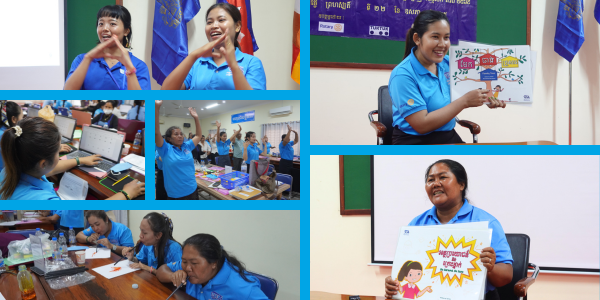
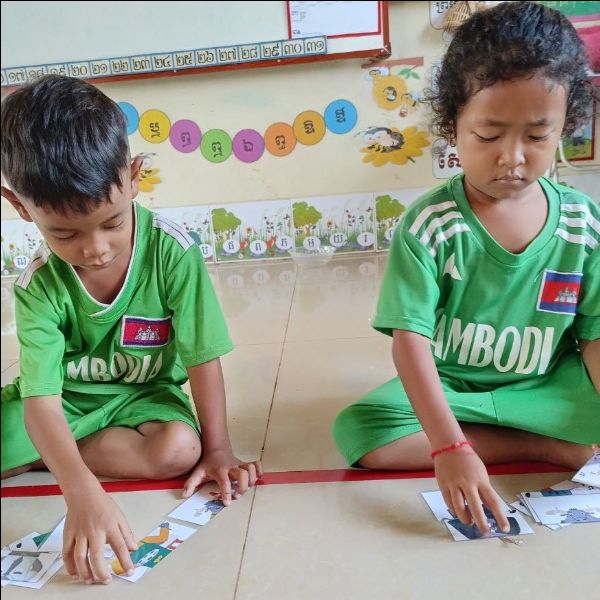
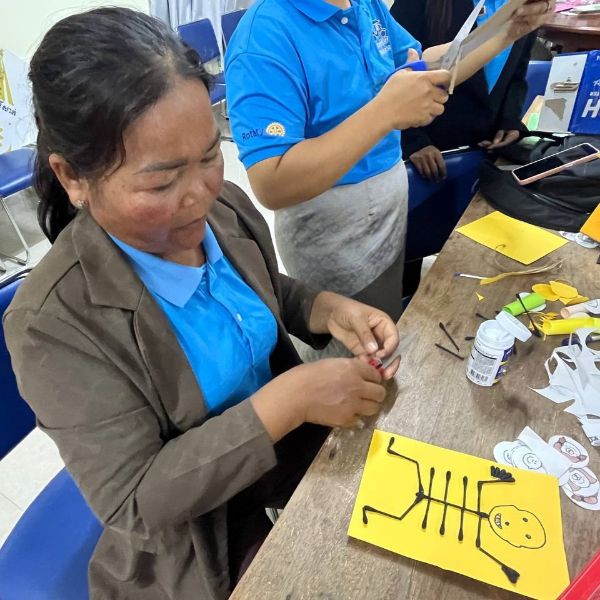
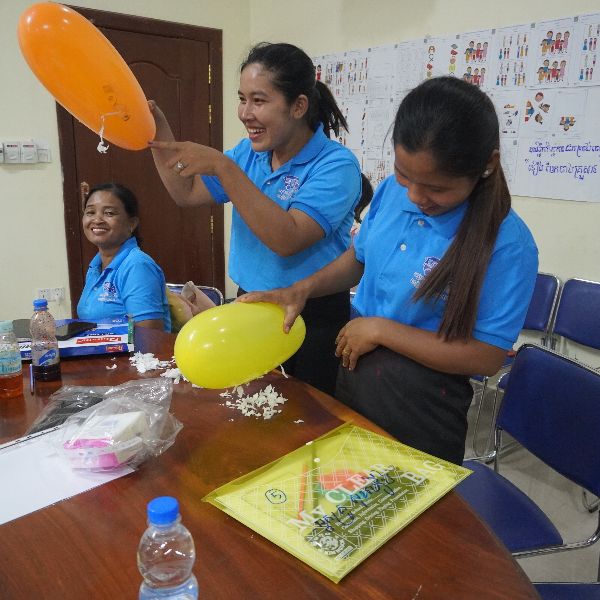
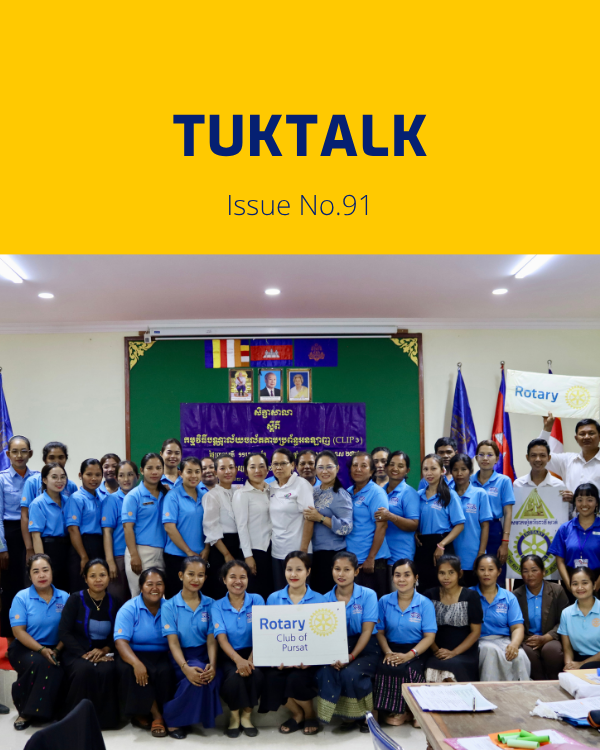
In the second half of last month, we successfully held our 6th workshop! This time, we focused on two picture books: “Family Tree” and “Be Careful, Be Safe”, along with a range of related teaching materials. As always, we packed the session with activities, making full use of the time to let teachers try as many materials as possible. “Family Tree” especially resonated with many teachers, who said they could easily picture using it in their classes and were eager to try it right away.
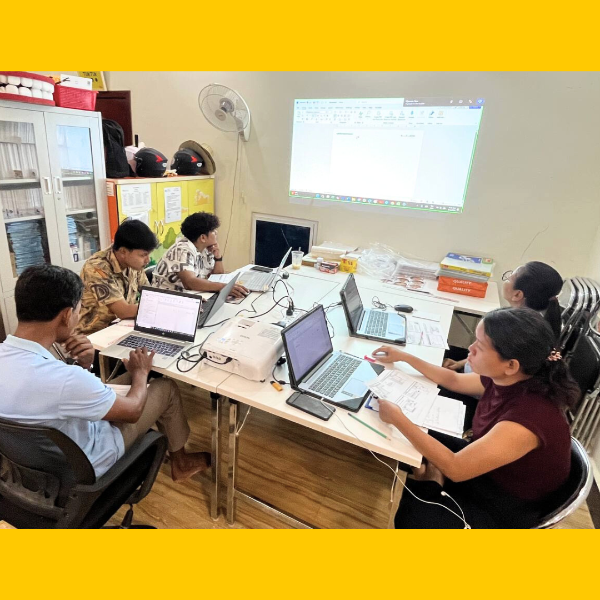
We also held a worksheet-making session using computers. This time, the challenge was to create a matching worksheet by connecting images or words on both sides with dotted lines. The teachers’ computer skills have clearly improved since the last session—while we still heard some say it was 'difficult,' we also saw more teachers helping each other and working things out together. Our workshops introduce worksheet-making as a way to teach basic computer operations, so teachers can eventually create their own materials even after the project ends. It was great to see more independent engagement this time.
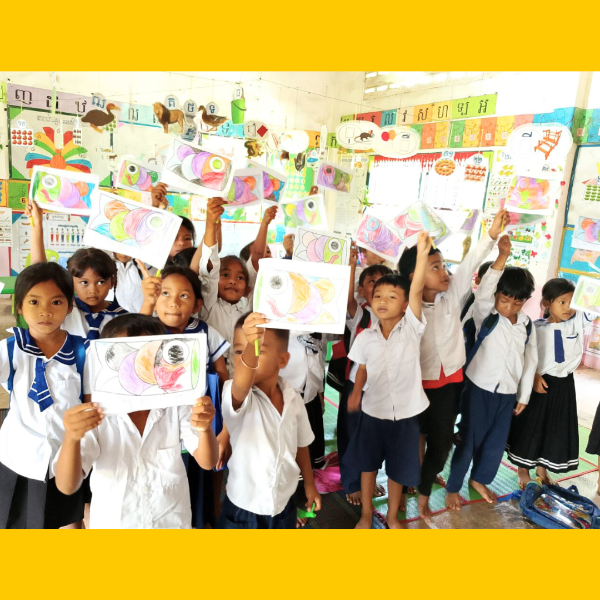
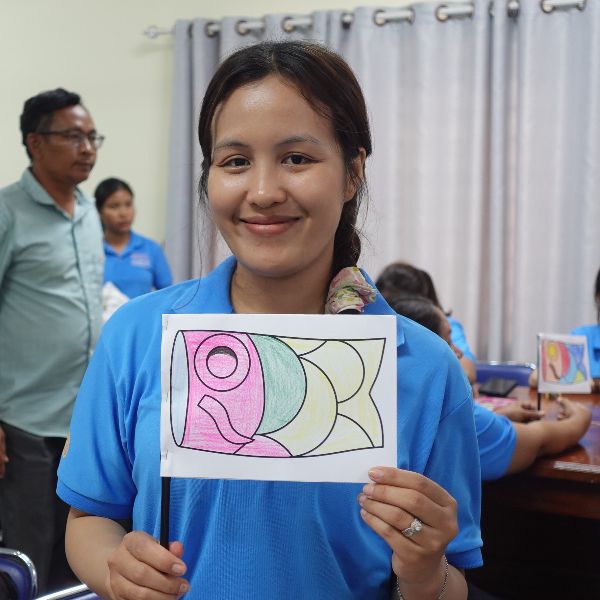
As in the previous workshop, we were again joined by a JICA volunteer who shared insights about Japanese kindergartens, introduced a simple craft, and taught a hand-play song. The craft was especially popular—simple to make and easy to prepare materials for—and some teachers had already tried it with their students by the following week.
The next workshop will be our final one! We're working hard to make it a fun, meaningful session so the teachers can continue learning and gaining inspiration to the very end.
Sarin's new picture book is here! 🥕
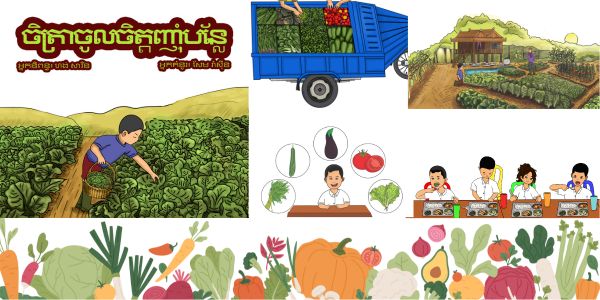
We’re excited to announce the completion of our third original picture book by a Tukstaff member—“Chitra Likes To Eat Vegetables”, written by Sarin!
Sarin leads a life close to nature—he grows rice in his own field and raises cows. Inspired by this lifestyle, he created this story with the hope that children will eat a variety of nutritious vegetables and grow up healthy, without being picky eaters.
In the story, Chitra, who takes care of vegetables in his home farm, teaches his classmates about the benefits of different veggies. Thanks to his efforts, the whole class starts eating vegetables without fuss.
The book is filled with colorful illustrations of vegetables, making it easy for teachers to ask children questions and spark conversations about healthy eating. Since picky eating is common among young children in Cambodia, we hope this story will help encourage healthy eating habits from an early age.
Khmer of the month
Khmer Word: Pleng
Did you know that June 21st is World Music Day? For TukTuk, "pleng (music)" is one of our most important teaching tools. It’s also one of the most popular materials among teachers and is used frequently across various topics. Many of the songs TukTuk creates are Khmer translations of international children’s songs, or original Khmer lyrics set to familiar melodies from around the world. You might even recognize a few tunes yourself! Truly, music is a universal language—no matter the words, it brings us all together 🎵.
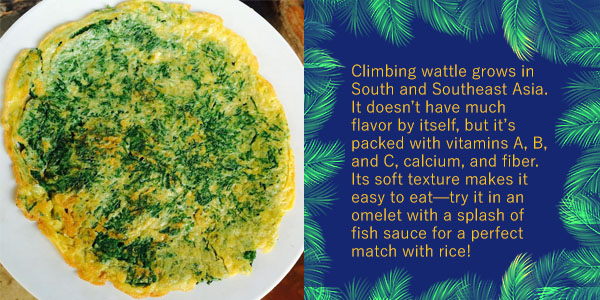
Khmer Food: Pong Tea Chien Saom (Fried egg with climbing wattle) 👇
TukTuk’s materials were used by teacher trainers too! 🐨
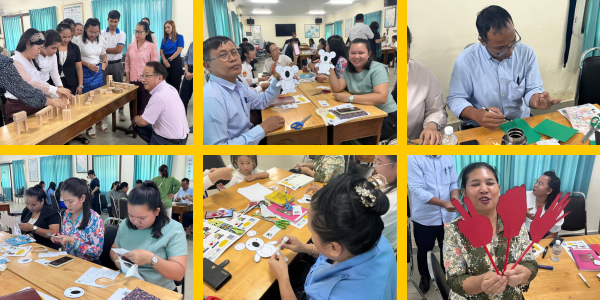
In February, Ms. Kaori Matsuda—representative director of Mommy's Family Inc., and a board member of Japanese International School Phnom Penh (JISPP)—visited one of the CLIP3 target preschools. While managing many nurseries in Japan, she also supports early childhood education in Cambodia by training teachers at the preschool teacher training center.
Last month, we had the opportunity to join her two-day workshop at the training institute. On the first day, a lecture on the history of early childhood education was provided, introducing the idea that "children learn through play by using all five senses," using examples like building blocks and group games.
Later, she held a hands-on workshop using TukTuk teaching materials, introducing future preschool teacher trainers to our resources. They created and enjoyed playing with “Climbing Koala” and “Rock-Scissors-Paper Stick,” showing great enthusiasm.
During the workshop, there was a key message: rather than simply teaching children how to play, it’s more effective for teachers to demonstrate the play themselves in front of the children and make it look fun, or even better, have fun with the children. This approach inspires children to join in naturally. It strongly resonated with us, as it reflects exactly what TukTuk encourages during our workshops—getting teachers to actively use the materials themselves.
On the second day, participants visited the JISPP to observe a Japanese-style kindergarten environment. They gained insight into classroom setup and activity planning. Later, the trainers tried rhythmic exercises mimicking animal movements—jumping, running, crouching—which offer fun ways to promote physical activity among children, addressing concerns about sedentary lifestyles.
We truly hope these teacher trainers will share their experience and knowledge, including TukTuk’s resources, with their future students to be the preschool teachers across Cambodia.
Voluntuker spotlight | Simon
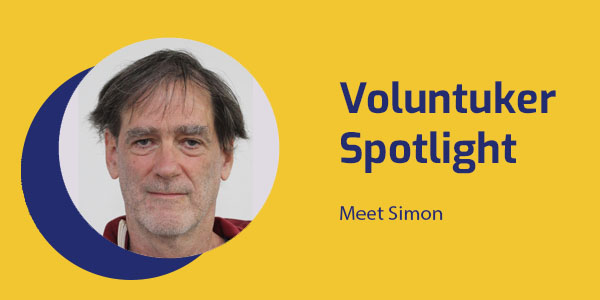
This month, we’d like to introduce Simon, who has been supporting TUKTUK online and will play a key role in next year’s project. He’ll be visiting TUKTUK in person for the first time this month, coming all the way from Australia, and we’re really looking forward to finally meeting him! 😊
What is your current job?: I retired from work in the middle of last year. For the last few years, I have been combining being a school teacher in Australia and also undertaking research projects in Asia. My last two studies were looking at the relationship between climate change and human trafficking in Bangladesh and the issue of forced labour in the Thai fishing industry. Many years ago, back in 1992, I was a volunteer teacher in Phnom Penh and thus my link with Cambodia.
How did you first get involved with TUKTUK?: Being retired, I wanted to be involved in a project in South East Asia where I can help with the skills that I have as a result of working in this part of the world for over 25 years. I was given the contacts of TUKTUK from another Voluntuker, Arky, who introduced me to Adrian. After one video call with Adrian, I have been having weekly meetings.
What do you do for TUKTUK?: Presently, my involvement with TUKTUK is helping develop project proposals, so that TUKTUK will be able to gain financial resources to undertake their plan to develop a Cambodian version of Play School, while also expanding its training of early childhood teachers.
What do you expect from your travel to Cambodia/Pursat in this month?: My main expectation is to gain a much better understanding of TUKTUK and its programs. Most importantly is to meet TUKTUK staff, the teachers involved in the program, the students of course and hopefully community members as well. It is my hope that I, along with another voluntuker from Australia, develop a short documentary illustrating the work of TUKTUK. I also hope to get a few lessons to improve my Khmer speaking.
Simon Baker first volunteered in Cambodia back in the '90s and has spent over 25 years working on big-picture issues like human trafficking, education, and health across Asia. He’s now helping TUKTUK find new funding and explore creative ways—like video—to share our story and impact.
We are currently looking for volunteers with the following skill sets to help TukTuk bring educational resources to Cambodia;
- Google Ads
- Fundraising
- Website Development
- Videographer
If you want to get involved or know someone with skills that could help us spread positive education in Cambodia, hit that link below and say hi (we're friendly, we promise). 😉
Tuktography highlights 📸