
Quarterly report · Pursat Province, Cambodia
CLIP3 quarterly report: January to March 2024
Baseline survey and classroom assessment of 26 preschool teachers, the kick-off meeting, project tools and the first workshop in Pursat, early 2024.
- 26preschool teachers in 15 partner schools
- 1,166students in the 26 partner classes
- 67attendees at the project kick-off meeting
- 23,801unique visitors to Rermork Digital Library
Project Overview
Cambodia is still in the process of rebuilding its education system, which failed during the civil war of the 1970s. In the field of early childhood education, the country faces the following challenges:
- Lack of teaching resources in Khmer to use in classrooms.
- Teachers lack the computer skills to create resources.
- Teachers lack experience in some teaching techniques to perform efficient online research.
- Available Khmer resources can be expensive, and schools, especially in rural areas, cannot afford to purchase them.
- Many of the available teaching materials may not align with the curriculum.
- Schools have very small or no budget for preschool teachers.
These issues occurring in the early childhood education stage, which is the foundation for a child's development, will affect the child's future growth process. Teachers are faced with these issues on a daily basis and wonder how to deal with them.
This project covers five regions in Pursat Province, located in the northwestern part of Cambodia. We at Rermork for Children (R4C) (in conjunction with TukTuk Charity), with 26 classes of 15 schools as partner schools, are working with provincial and district education department staff, preschool teachers, and members of the Rotary Club of Pursat (RCP) to empower teachers and parents, and increase educational opportunities for disadvantaged communities in early childhood education. The following activities will be undertaken over a two-year period to achieve the goal.
CLIP Project Goals
Empower teachers and parents, and increase educational opportunities for disadvantaged communities in early childhood education.
Five steps to achieve the goal
- Create teaching resources (storybooks, songs, activity games, board games, worksheets, etc.) in Khmer language, using local Cambodian artists, and aligning the government curriculum and Cambodian culture include options that require no printing or materials to remove economic boundaries. And distribute them to the target education offices and teachers.
- Enhance the “Rermork Digital Library”, a free educational material website for preschools developed by R4C (TukTuk Charity), to make it easier to use and to enrich its contents.
- Train teachers in seven workshops, not only on how to use the resources but also how to create their own resources. Laptops are supplied, and computer skills training will be conducted by the RCP.
- Make a platform for sharing teaching materials by uploading resources created by the teachers themselves on the "Rermork Digital Library", so that teachers nationwide can access these materials.
- Engage education bureau staff from the targeted provinces and districts to disseminate materials to schools beyond the project scope, as well as encourage educators to share materials with parents of the children, we aim to increase access to educational materials for a wider audience beyond the project's reach.
Through this project, we aim to ultimately have the targeted educators give back what they have learned to their respective communities, becoming leaders in further enhancing early childhood education nationwide. However, it is crucial not to forget that the primary beneficiaries of this project are the children. We hope that through the lessons of the educators who have undergone the project activities, children will find school an engaging place, leading to increased attendance and nurturing them into future leaders who actively engage in all endeavors.
About Project
The name of the project
Cambodia Literacy Integrative Project (CLIP)
- January – December 2021: CLIP1
- January 2022 – December 2023: CLIP2
- December 2023 – December 2025: CLIP3
Project implementing organization
Rermork For Children (R4C) (in conjunction with TukTuk Charity), Rotary Club of Pursat (RCP) (managed and funded by Rotary Club of Calgary Downtown)
Target areas
Pursat Province, Cambodia (Pursat City, Kandieng District, Bakan District, Krakor District, and Kravanh District)
Participants
Total 67 members
- Provincial and district education officials: 6 officers
- Provincial Office of Education (POE): 5 officers
- Director
- Department of Early Childhood Education
- Department of Primary Education
- Department of Education Audit
- Department of Plan
- District Office of Education (DOE): 15 officers
- Three people from the five target regions participated; the director of the DOE, the school education division staff, and the early childhood education division staff
- Principals: 15 teachers
- Preschool teachers: 26 teachers
Target Schools
There are a total of 26 classes in 15 schools (26 teachers, 1,166 students)
*There are three types of preschools in Cambodia; independent preschools, preschool classes attached to primary schools, and community schools overseen by the Ministry of Education but operated by the local community.
The CLIP3 covers a total of 15 schools; 7 independent preschools, 6 preschool classes, and 2 community schools.
| No. | Area | School | No. of Teachers | No. of Classes | Age | No. of Students (No. of Girls) |
|---|---|---|---|---|---|---|
| 1 | Pursat | Pursat school (independent preschool) | 4 | 4 | 3 years old | 45 (86) |
| 4 years old | 43 (19) | |||||
| 5 years old | 38 (22) | |||||
| 5 years old | 42 (17) | |||||
| 2 | Stung Toch school (preschool class) | 1 | 1 | 3 years old | 4 (2) | |
| 4 years old | 22 (11) | |||||
| 5 years old | 14 (5) | |||||
| 3 | Sokha Rum school (preschool class) | 1 | 1 | 4 years old | 17 (11) | |
| 5 years old | 21 (10) | |||||
| 4 | Kandieng | Preah Teat school (independent preschool) | 2 | 2 | 4 years old | 46 (26) |
| 5 years old | 54 (26) | |||||
| 5 | Toul Taprom school (preschool class) | 1 | 1 | 4 years old | 21 (15) | |
| 5 years old | 40 (21) | |||||
| 6 | Kbal Chheupok school (community school) | 1 | 1 | 3 years old | 7 (3) | |
| 4 years old | 10 (6) | |||||
| 5 years old | 10 (4) | |||||
| 7 | Bakan | Tropeang Chong school (independent preschool) | 3 | 3 | 3 years old | 41 (21) |
| 4 years old | 75 (35) | |||||
| 5 years old | 102 (43) | |||||
| 8 | Bong Knah school (preschool class) | 2 | 2 | 3 years old | 37 (20) | |
| 4 years old | 37 (22) | |||||
| 5 years old | 74 (36) | |||||
| 9 | Ohta Paong school (independent preschool) | 1 | 1 | 5 years old | 53 (23) | |
| 10 | Krakor | Bong Kontuot school (independent preschool) | 2 | 2 | 3 years old | 34 (20) |
| 5 years old | 25 (13) | |||||
| 11 | Po Tream school (preschool class) | 2 | 2 | 5 years old | 25 (13) | |
| 5 years old | 25 (17) | |||||
| 12 | Kbal Trach school (preschool class) | 1 | 1 | 4 years old | 4 (2) | |
| 5 years old | 21 (9) | |||||
| 13 | Kravanh | Lea Ch school (independent preschool) | 2 | 2 | 4 years old | 25 (12) |
| 5 years old | 35 (18) | |||||
| 14 | Ro Kat school (independent preschool) | 2 | 2 | 4 years old | 37 (24) | |
| 5 years old | 40 (15) | |||||
| 15 | Kom Peang school (community school) | 1 | 1 | 3 years old | 13 (9) | |
| 4 years old | 20 (13) | |||||
| 5 years old | 9 (5) | |||||
| Total | 26 | 26 | Total | 1,166 (654) | ||
| 3 years old | 181 (161) | |||||
| 4 years old | 357 (196) | |||||
| 5 years old | 628 (297) | |||||
Project Implementation
Main activities
| No. | Activity | Duration | Start Date | Completion Date |
|---|---|---|---|---|
| 1 | Baseline survey | 8 days | Dec/04/2023 | Dec/14/2023 |
| 2 | The 1st classroom assessment | 8 days | Dec/04/2023 | Dec/14/2023 |
| 3 | Kick-off meeting | 1 day | Dec/28/2023 | Dec/28/2023 |
| 4 | The 0th workshop | 1 day | Dec/28/2023 | Dec/28/2023 |
| 5 | Project tools delivery | 7 days | Feb/01/2024 | Feb/16/2024 |
| 6 | The 1st workshop | 1 day | Feb/15/2024 | Feb/15/2024 |
| 7 | The 1st follow-up visits | 10 days | Mar/11/2024 | Mar/25/2024 |
Baseline survey
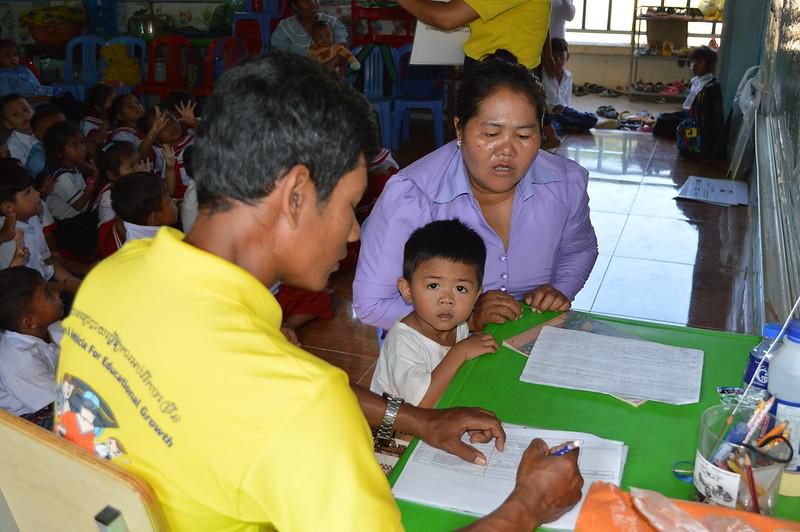
Before starting the project, we conducted interview surveys in December 2023 with 26 target teachers to understand how they typically conduct their classes. Over the two years of the project we will conduct 3 surveys including the baseline survey and 2 subsequent surveys conducted annually. By tracking these results, we aim to understand how the project activities have supported the teaching methods of the target teachers and what impact they have had on the teachers themselves.
For the initial survey, the objective was to investigate teaching methods before project participation. We surveyed the frequency and methods of using various teaching materials and classroom decorative teaching tools, computer usage, and areas of difficulty to serve as references for future workshop themes.
| Questions | Answers |
|---|---|
| Storybooks | |
| How many times a week do you use storybooks? |
|
| Where do you get the storybooks from? |
*Most teachers were unfamiliar with Kamishibai |
| In which areas do you use storybooks? (Multiple answers allowed) |
|
| What factors determine the choice of story content? |
|
| Do you encounter any difficulties when using storybooks? |
|
| Songs | |
| How many times a week do you use songs? |
*In Cambodia, songs are classified under "Society." |
| Where do you get the songs from? |
|
| When using songs, what equipment do you use? |
|
| What factors determine the choice of song content? |
|
| Do you encounter any difficulties when teaching songs? |
|
| Worksheets | |
| How many times a week do you use worksheets? |
|
| Where do you get the worksheets from? |
*Monthly gatherings of preschool teachers held in various regions. They create lesson plans and teaching materials. |
| Where do you print worksheets? |
* Some teachers print at their own expense. * Some teachers expressed difficulty printing in the school due to concerns about primary school classes. |
| In which areas do you use worksheets? (Multiple answers allowed) |
|
| What factors determine the choice of worksheet content? |
|
| Do you encounter any difficulties when teaching with worksheets? |
|
| Activity games | |
| How many times a week do you play activity games? |
|
| Where do you get the game ideas from? |
|
| In which areas do you play activity games? (Multiple answers allowed) |
|
| What factors determine the choice of game content? |
|
| Do you encounter any difficulties when playing activity games? |
|
| Craft | |
| How many times a week do you teach craft? |
*In Cambodia, crafts are classified under "Society." |
| Where do you get craft ideas from? |
|
| How do you procure tools for crafts? |
|
| What factors determine the choice of craft content? |
|
| Do you encounter any difficulties when doing crafts? |
|
| Classroom decorative teaching tools | |
| Since starting work as a teacher, have you received any training related to classroom decorative teaching tools? |
|
| Do you have any difficulties regarding classroom decorative teaching tools? |
|
| What would you like to learn about classroom decorative teaching tools? |
|
| Computer Usage | |
| Have you ever used a computer? |
|
| What do you use the computer for? |
|
| What would you like to learn about computers? |
|
| Others | |
| Do you have any difficulties in lesson planning? |
|
| What kind of materials would you like R4C to create? |
|
Based on the results, it was evident that a shortage of teaching materials, supplies, and budget was a prevalent issue across all categories. It also became apparent that each teacher was making efforts to conduct classes by improvising with self-made teaching materials or by conserving resources amidst these shortages.
R4C does not provide funding but supports preschool teachers by offering assistance in creating teaching materials and providing teaching ideas. Therefore, we believe it's essential to continue creating new teaching materials while prioritizing aspects such as alignment with preschool education guidelines, clarity, accessibility for teachers (low budget and easy preparation), alignment with Cambodian culture, and the engagement of children.
Furthermore, through the interviews, we discovered that each teacher possessed unique teaching ideas. We will encourage sharing these ideas not only within R4C but also among the teachers themselves during future workshops, fostering a culture of collaboration and creativity.
Additionally, it was revealed that the preschool education guidelines may not necessarily be user-friendly for teachers. Although some supplementary materials for educators exist, they are paper-based and have limitations in terms of accessibility. We aim to address this by facilitating opportunities for teachers to exchange ideas and resolve each other's queries during workshops involving POE and DOE bureau staff.
Concerning classroom decorative teaching tools, few teachers have received training, and the government-prescribed decoration standards are not widely known. We believe that the classroom decorative teaching tools assessment and workshops conducted as part of the project can be beneficial in this regard.
Many teachers have experience using computers, but the frequency of usage varies. However, all teachers expressed a desire to become proficient in using computers to create teaching materials in the future. Since the Cambodian government aims for all teachers to conduct classes using digital devices, we will provide one computer per targeted class, provide training on computer use in the first year and creating worksheets as practical exercises in the second year. We anticipate that this program will have a significant impact on teachers.
Furthermore, we were delighted to find that some teachers are already utilizing R4C's teaching materials extensively. This can be attributed to the close collaboration with provincial and district education bureaus since 2021, as well as partner teachers actively sharing R4C materials with others outside the target schools. Through bi-monthly regular teacher meetings held in various regions, teachers collaborate on lesson plans and share teaching materials. Therefore, if teachers targeted by CLIP3 take the lead in spreading the project's content, we believe we can support even more teachers.
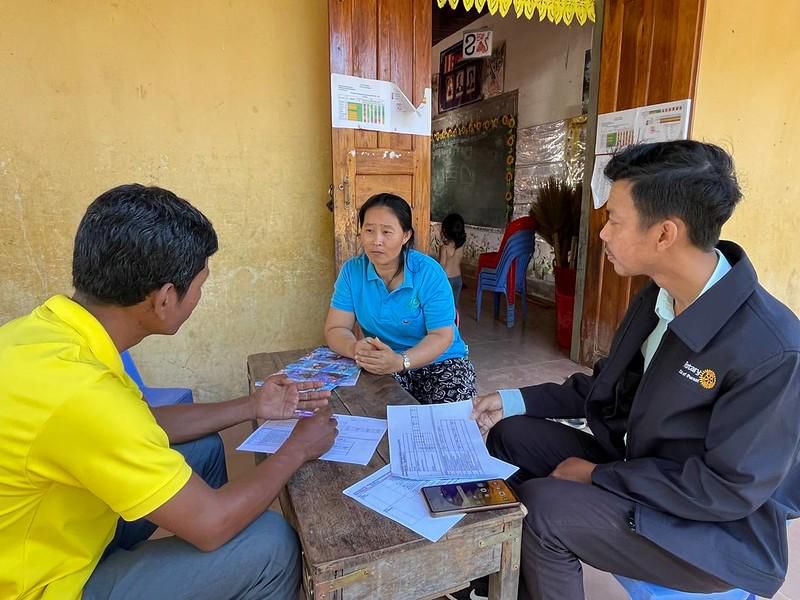
Building upon this baseline survey, over the two-year project duration, we aim to address issues such as "limited knowledge of teaching ideas" and "insufficient teaching materials" by facilitating information sharing among targeted educators, offering R4C materials as options, and empowering teachers to create their own teaching materials using computers. Additionally, regarding the uncertainty about how to decorate classrooms with teaching aids, we aim to collaborate with POE and DOE staff to disseminate teaching decoration guidelines to targeted teachers and distribute teaching decoration materials, with the goal of ensuring that all targeted classes meet the evaluation criteria.
The 1st classroom assessment
Conducted in parallel with the baseline survey, we also conducted classroom assessments. The Cambodian Ministry of Education has set standards for classroom decorative teaching tools for all preschool classes. Specifically, this involves setting up five corners within the classroom for "Science," "Hygiene," "Learning," "Art," and "Play," as well as decorating the ceiling, window frames, and walls. Although the specific items and classroom decorative teaching tools are prescribed, there has been no training provided on this matter, and it has not been widely communicated to all teachers.
Following a request from PoE and DoE staff during the previous CLIP2 project, we worked together to create an evaluation sheet based on the government's existing criteria. We then conducted assessments in targeted classrooms based on this sheet. Positive feedback from teachers who appreciated learning about classroom decorative teaching tools through the project, along with significant improvements in classroom environments over the two-year period, prompted us to include a classroom decorative teaching tool program (comprising two evaluations and workshops) in CLIP3.
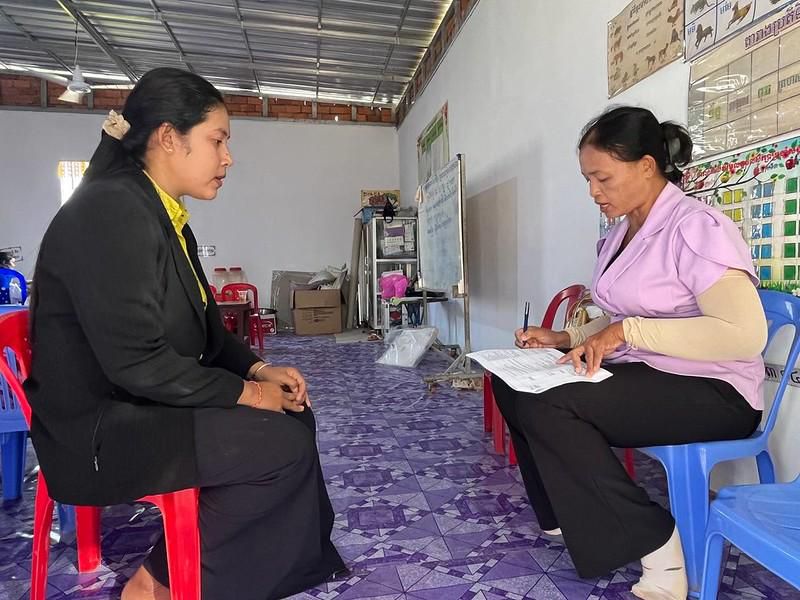
The purpose of the first evaluation in this round was to assess the initial situation before the project's implementation. The results showed that out of a maximum score of 37 points, the highest score was 33.59 points, with an average of 23.83 points across 26 classes. For the second classroom teaching decoration evaluation planned for the second year, the project's goal is to significantly increase overall scores by improving classroom environments to meet teaching decoration standards in all classes.
| Rank | School | Point (Total 37 points) |
|---|---|---|
| 1 | Pursat school (Independent preschool) | 33.59 |
| 2 | Kbal Chheupok school (Community school) | 33.50 |
| 3 | Pursat school (Independent preschool) | 33.00 |
| 4 | Lea Ch school (Independent preschool) | 32.18 |
| 5 | Kom Peang school (Community school) | 30.61 |
| 6 | Lea Ch school (Independent preschool) | 29.68 |
| 7 | Preah Teat school (Independent preschool) | 28.83 |
| 8 | Preah Teat school (Independent preschool) | 28.08 |
| 9 | Ro Kat school (Independent preschool) | 27.18 |
| 10 | Ohta Paong school (Independent preschool) | 26.86 |
| 11 | Toul Taprom school (Preschool class) | 26.08 |
| 12 | Stung Toch school (Preschool class) | 25.34 |
| 13 | Ro Kat school (Independent preschool) | 25.00 |
| 14 | Sokha Rum school (Preschool class) | 24.51 |
| 15 | Bong Knah school (Preschool class) | 21.36 |
| 16 | Bong Knah school (Preschool class) | 21.11 |
| 17 | Tropeang Chong school (Independent preschool) | 19.27 |
| 18 | Kbal Trach school (Preschool class) | 18.84 |
| 19 | Bong Kontuot school (Independent preschool) | 18.75 |
| 20 | Tropeang Chong school (Independent preschool) | 18.68 |
| 21 | Tropeang Chong school (Independent preschool) | 18.18 |
| 22 | Po Tream school (Preschool class) | 16.86 |
| 23 | Pursat school (Independent preschool) | 16.75 |
| 24 | Bong Kontuot school (Independent preschool) | 16.75 |
| 25 | Pursat school (Independent preschool) | 16.32 |
| 26 | Po Tream school (Preschool class) | 12.36 |
One intriguing observation was that the type of school—whether independent preschool, preschool class, or community school—did not significantly influence the results. Generally, independent preschools have larger budgets, followed by preschool classes and community schools. However, in this evaluation, it wasn't necessarily the independent preschools that performed well; there were instances where preschool classes and community schools scored higher. This suggests that the focus of the school or teachers on school management and early childhood education, as well as the extent of consideration given to classroom environments, may have influenced the results.
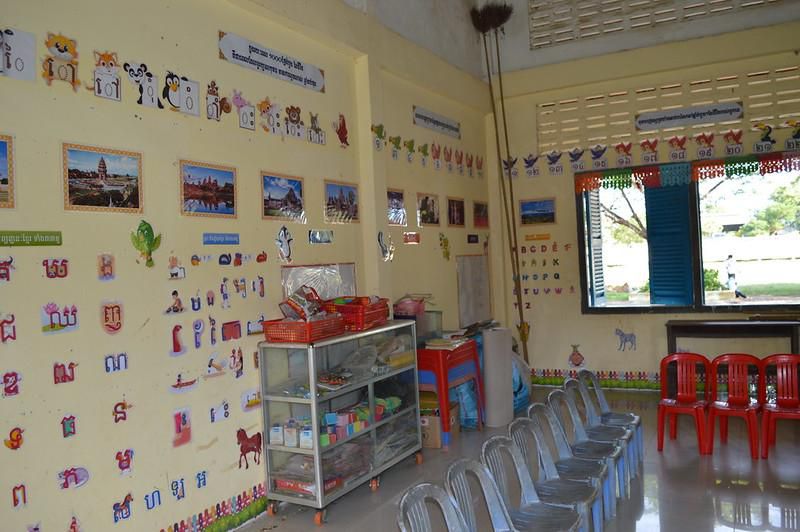
Moreover, a common factor among the items with consistently low scores across the board was the need for tangible items that cannot be easily displayed through posters or materials that teachers can create, print, or purchase relatively easily. For instance, items such as aquariums or plants for the "Science" corner, storybooks for the "Learning" corner, musical instruments for the "Art" corner, tools for the "Psychomotor Skills", and toys for the "Play" corner. While many of these items may need to be purchased, some can be handmade by teachers. Since R4C not only supports the creation of classroom teaching decorations but also provides craft ideas suitable for decoration through videos, we believe that this aspect can also be supported as part of the project.
Kick-off meeting
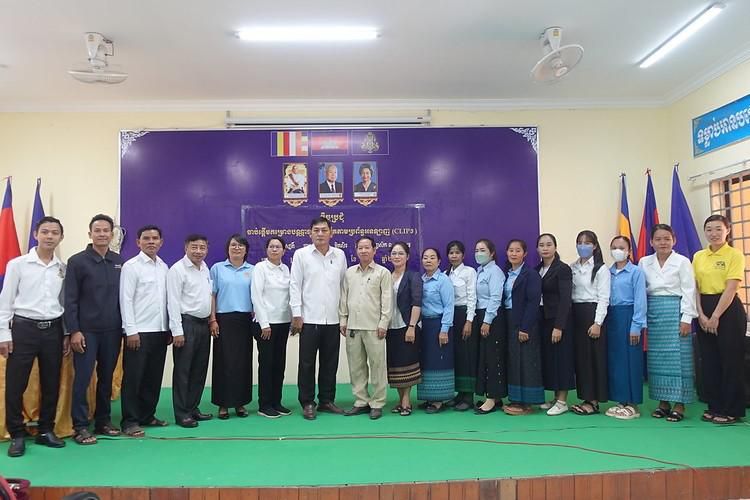
Following the baseline survey and the first classroom assessment, we convened all project stakeholders on December 28, 2023, for a kick-off meeting. The participants included education officials from the Pursat Provincial Office and five targeted district offices, staff from POE and DOE, principals, and teachers from targeted schools, totaling 67 attendees.
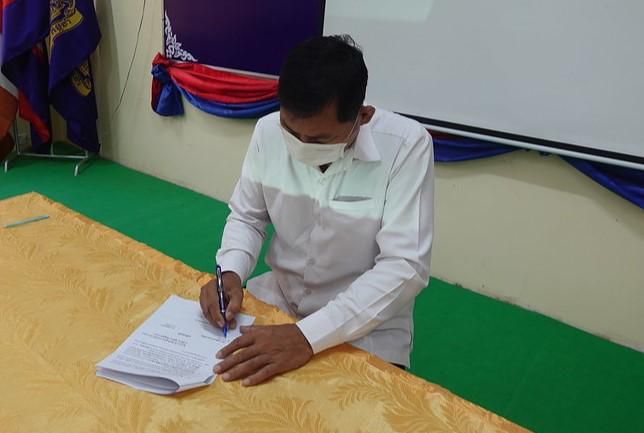
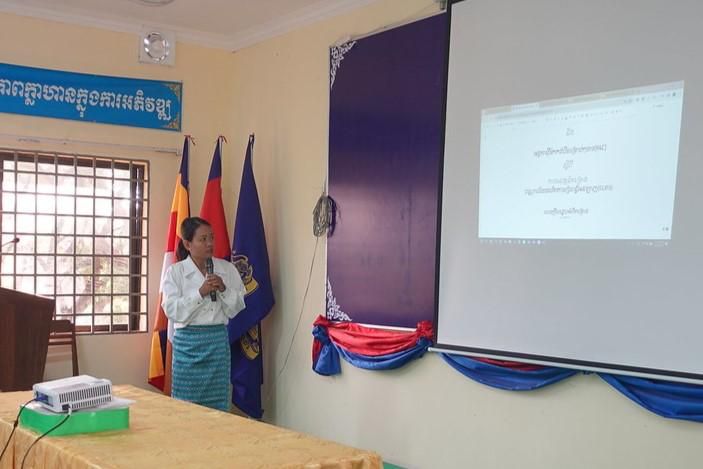
During the meeting, we explained the activities of the project and presented the results of the baseline survey. Subsequently, we signed an MOU (Memorandum of Understanding) with the education bureau staff. For CLIP3, it was the first time that officials from provincial and district offices were included as participants. These officials showed interest in the project's activities and, like other participants, expressed high expectations for the project's contribution to improving the capabilities of preschool teachers. Particularly, the education bureau staff at the provincial level appreciated the alignment of the project's content with the government's efforts to enhance teachers' digital literacy. They were keen on observing the improvement of targeted teachers' computer skills and the utilization of digital devices in teaching.
The pre-project workshop
The purpose of this workshop was to familiarize the 26 targeted teachers with the classroom decorative teaching tools and to have them actually create the tools provided by R4C.
Firstly, we announced the results of the initial classroom assessment and received explanations on teaching decoration standards and placement from the POE staff. This was well-received by the teachers as they appreciated receiving explanations directly from the DoE staff and were able to discuss any uncertainties through Q&A sessions.
Following this, the complete set of teaching decorative tools created by R4C was distributed to the targeted teachers and to classes not covered by the project within the targeted schools. However, since some teaching decorations required cutting and pasting and the instructions were not entirely clear from just the distribution, during the workshop, participants were divided into groups to try making the teaching decorations. Additionally, examples of teaching decorations were displayed in the workshop venue for each of the five corners, which was also appreciated as it made the process clearer for everyone.
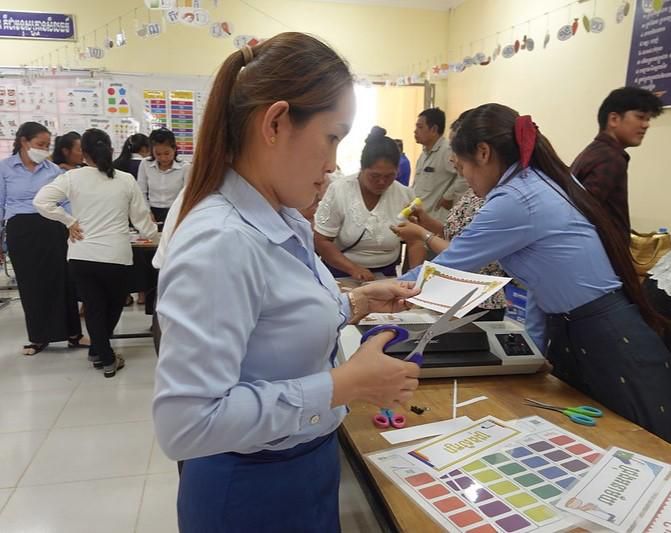
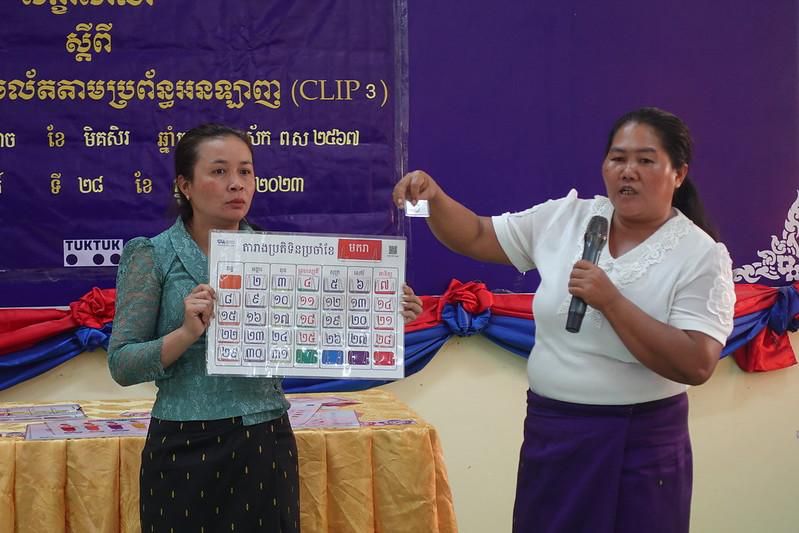
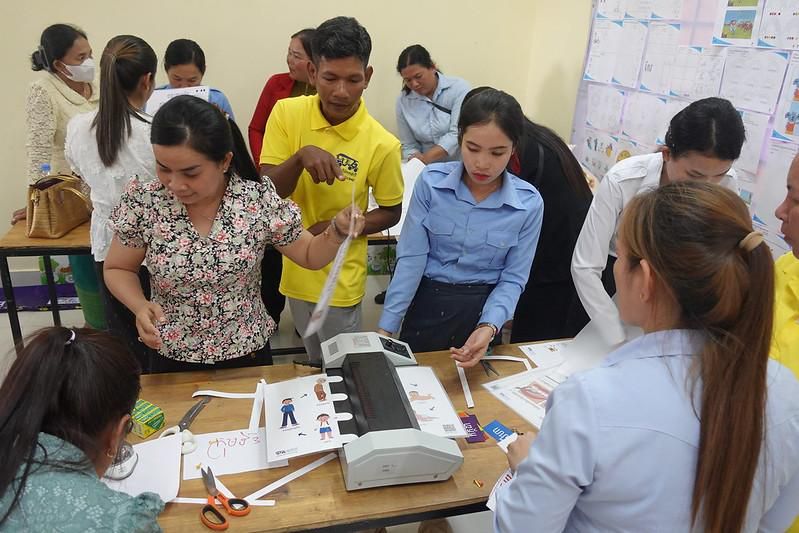
Delivery of Project supplied resources
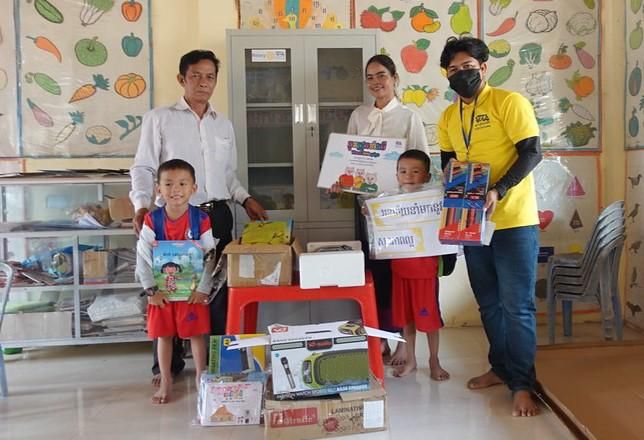
One of the objectives of the project is to "expand the range of teaching materials for teachers." To achieve this, the necessary resources were provided to the target schools (not directly to the teachers themselves). Additionally, by actively encouraging teachers to use R4C teaching materials, we aim to gather feedback and improve the quality of the materials.
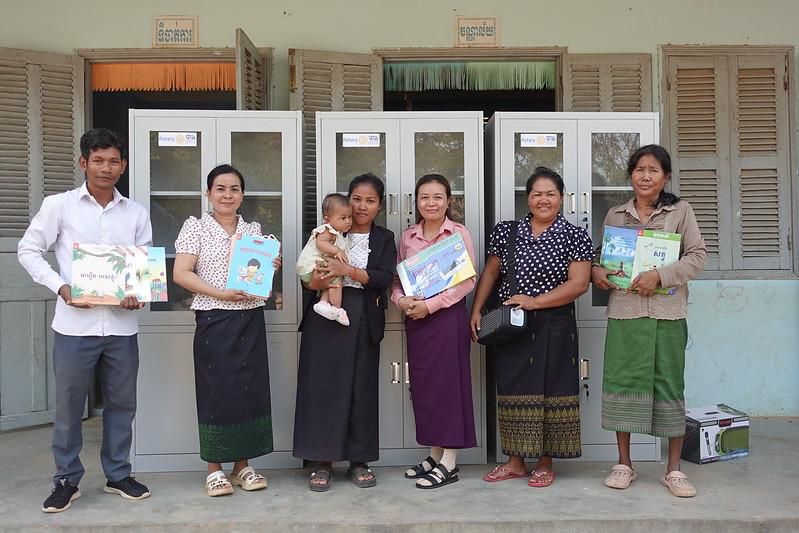
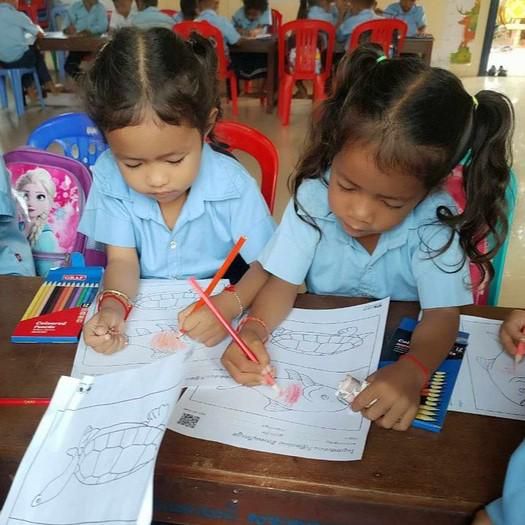
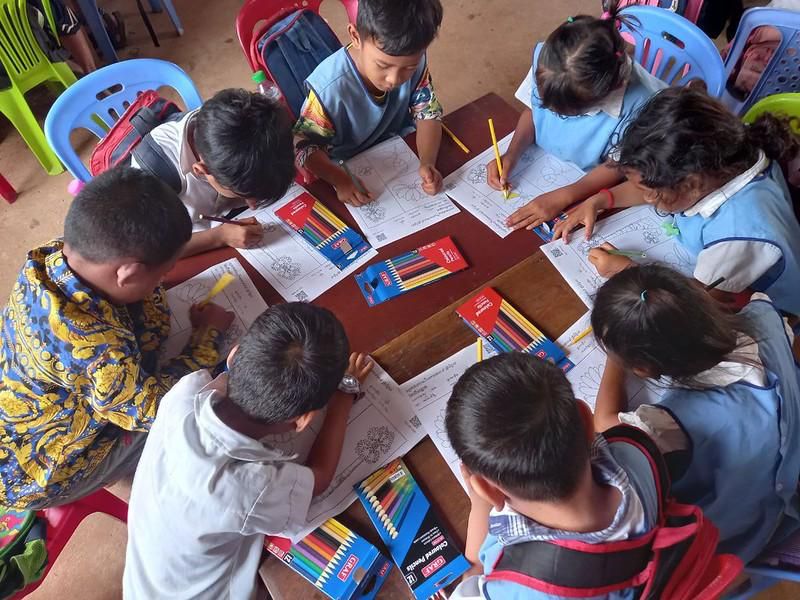
Teachers who received the donated equipment have shared photographs showing students utilizing the provided colored pencils for their worksheets, engaging in exercises with music from the supplied speakers, and reading the provided storybooks together.
One teacher expressed joy, saying:
As a preschool located in the central area, we haven't received much support even though we lacked teaching materials, so I'm really happy to receive a lot of equipment this time.
— One preschool teacher
| Equipment | Purpose for providing | Distributed to |
|---|---|---|
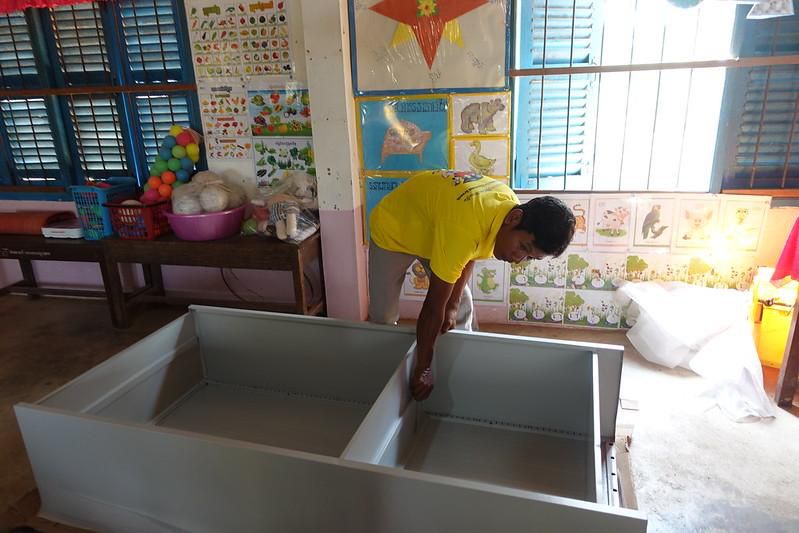
| Lockable cabinets | To store the provided equipment and the many teaching materials to be distributed in the future. | One per class (Total 26 cabinets) |
| Laminators, Laminate sheets (A3, A4) | To laminate classroom decorative teaching tools and teaching materials. |
|
| Corner cutters | To easily round the corners of laminated classroom decorative teaching tools and teaching materials. | One per class (Total 26 corners) |
| Speakers | To play music in the classroom and make it easier to give instructions using a microphone in classes with many children. | One per class (Total 26 speakers) |
| Storybooks including Kamishibai |
| 103 books per class (Total 2,938 books) |
| Colored pencils | To allow children to color extensively on worksheets. | according to the number of students in the target classes (total of 1,300 sets) |
| Colored papers | To assist in crafts and creating teaching materials. | One per class (Total 26 sets) |
| Computers | To enable teachers to search for and create teaching materials. | One per class (Total 26 computers) |
The 1st workshop
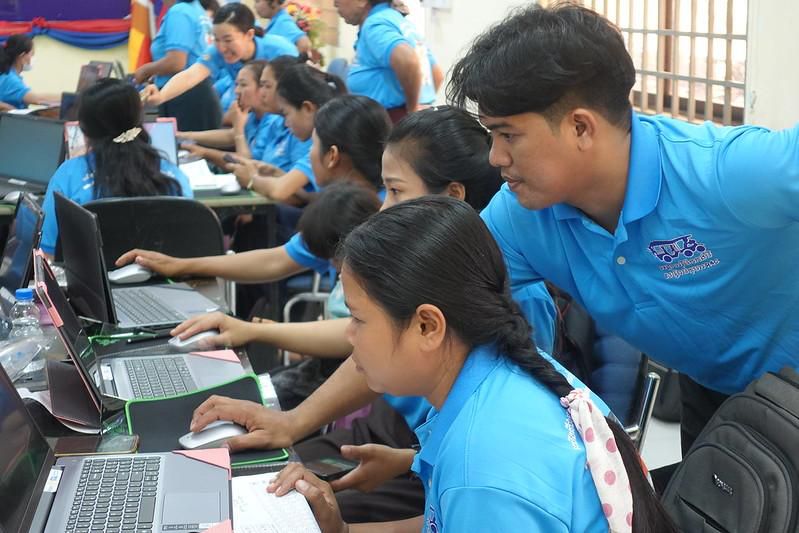
In this workshop, we conducted computer lessons with the support of the Rotary Club of Pursat (RCP). This included a tutorial on how to use the R4C free educational resource website "Rermork Digital Library," introduced R4C storybooks "Jack the Giant" and "Happy Khmer New Year," and created teaching plans using our storybook.
The computer lessons by RCP will be conducted throughout the first year of the project in four workshops. In this first session, basic computer operations such as using the mouse and touchpad, typing, turning on the computer, and connecting Bluetooth were explained. There were teachers who were touching a computer for the first time and others who hadn't used one in a while, so we were able to assess the computer skills of each of the 26 teachers present.
While every teacher was learning how to operate the new computers, it was challenging to cover everything within the limited time. Feedback from the teachers indicated that some felt they hadn't fully grasped the material, so in the remaining three computer lessons, we plan to incorporate a review of this session along with preparation for the second-year worksheet creation lessons.
After explaining computer operations, R4C staff introduced how to use the free educational resource website "Rermork Digital Library." This website hosts all educational materials created by R4C, which can be freely downloaded. Additionally, since the materials are copyright-free, teachers can freely copy and edit them.
In the project, we aim for the target teachers to fully utilize this website, create more materials tailored to preschool teachers' needs, and upload materials and teaching plans they create themselves to make the website more user-friendly and tailored to the needs. To achieve this, in this workshop, we explained how to use the website via computers and smartphones and asked the teachers to spread the word beyond the target audience.
While some teachers were already using the website, others expressed confusion, so we plan to create instructional videos on how to use the website and share them through R4C's Facebook, Telegram, and YouTube channels to reach not only teachers but also parents.
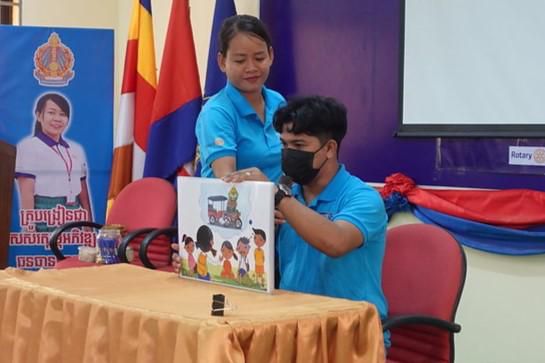
The R4C storybook introduction left a lasting impression on the teachers, especially the storytelling by R4C staff using Kamishibai (giant story book).
Many of the target teachers had never used one before, and some were seeing them for the first time. The R4C staff who demonstrated storytelling paid attention to aspects such as voice modulation, flipping the Kamishibai pages, and eye contact, which seemed to captivate the teachers and draw them into the story.
After confirming key points with the teachers regarding storytelling, we used our first book, "Jack the Giant", to brainstorm themes for lessons. R4C values the importance of storybooks within workshops not just as something to read but also as a means to develop various lessons from their contents. The teachers came up with numerous lesson theme ideas, providing R4C with a valuable opportunity to understand how teachers utilize the preschool curriculum.
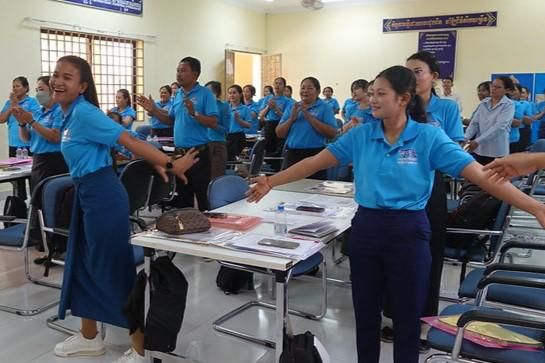
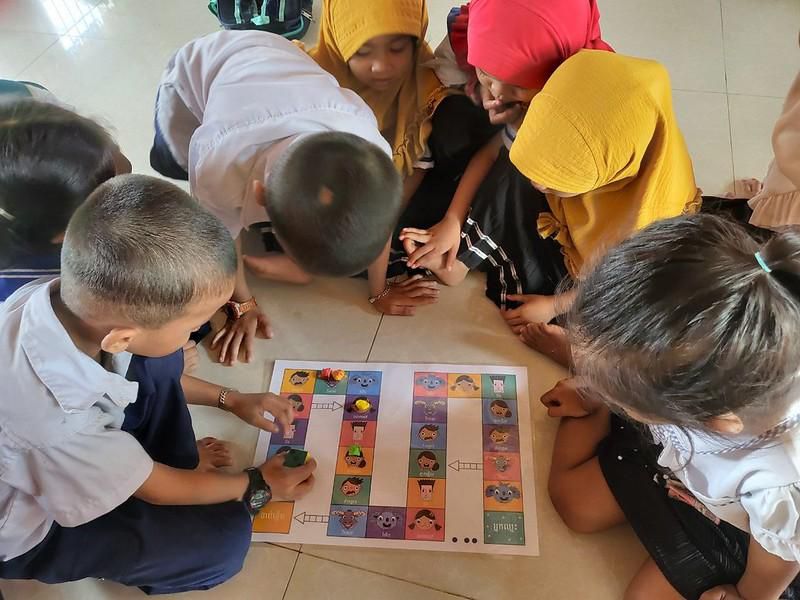
Furthermore, R4C not only creates storybooks but also develops "resource packages" consisting of songs, activity games, board games, and worksheets related to the content of the books. During the workshop, the teachers had the opportunity to try out these materials themselves, making it easier for them to incorporate them into their lessons. The teachers enjoyed the activities, and there were intense battles during the board games.
R4C believes that if teachers enjoy themselves, the enjoyment will be conveyed to the children, resulting in more effective lessons.
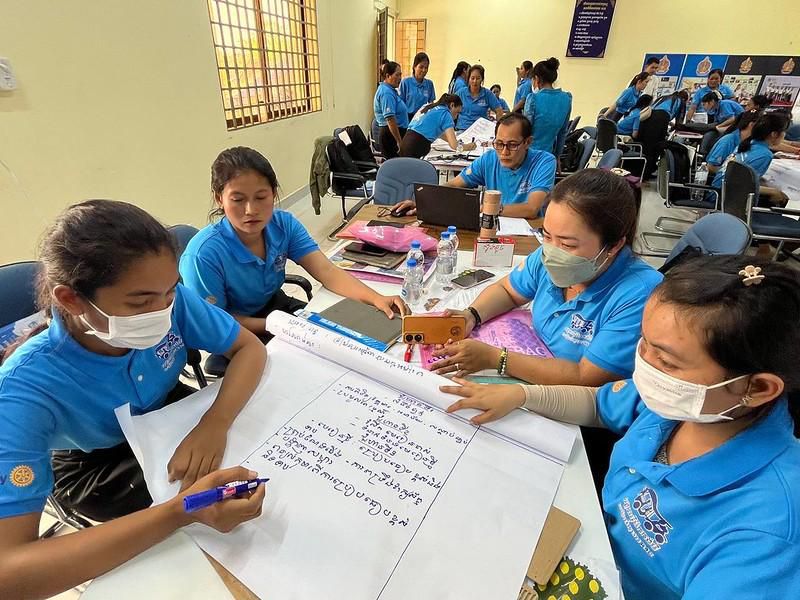
Finally, we conducted group activities to create teaching plans. Based on the lesson theme ideas generated during the storytelling session, each group created simple lesson plans and presented them. Some of the proposed lesson ideas included coloring illustrations of a watermelon and a boat from the story, a lesson using bottles to demonstrate "high" and "low," an observation lesson using real watermelons, and a lesson on emotions using songs.
Since each group comprised teachers from various target areas, it provided a good opportunity to share their experiences and the situation in their respective regions. In the post-workshop survey, there was a significant interest in incorporating the introduced books, songs, and board games into their lessons.
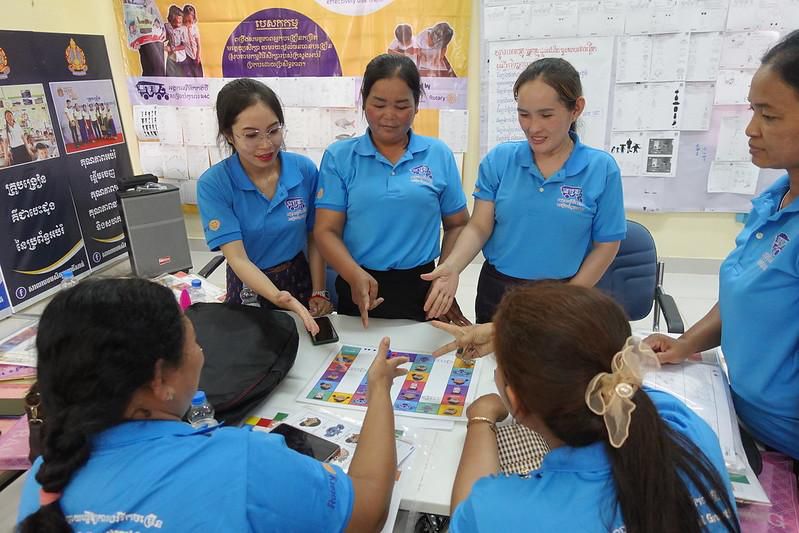
We received feedback from teachers expressing their happiness about being able to participate in such a workshop, as they had received support from other organizations but had not received practical training before. Moving forward, we aim to continue revitalizing the workshops as a platform for exchanging ideas among participating teachers, POE and DOE, and all members of R4C.
The 1st follow-up visits
We will visit every target school after each workshop to follow up on the workshop content.
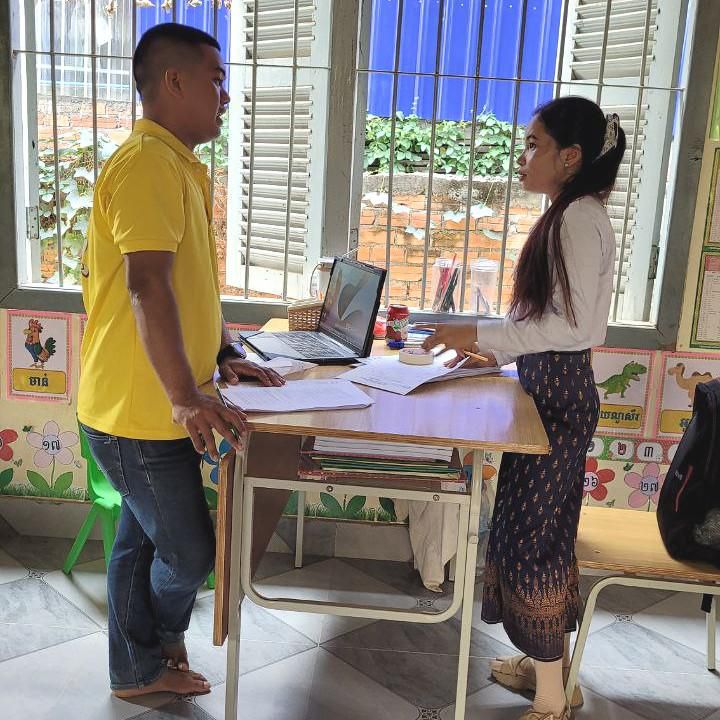
During this follow-up visit, we conducted additional questioning based on the surveys previously completed by the teachers, as well as classroom observations, computer skills checks, and tasks such as connecting computers to the school's printer.
Firstly, we asked the teachers about their experiences in the 1-2 weeks following the workshop, including their computer usage, utilization of the "Rermork Digital Library," and the usage of R4C teaching materials in their classes, as per the pre-visit questionnaire. The results are as follows:
| Questions | Answers |
|---|---|
| Computer | |
| How many times per week did you use the computer? |
|
| What software did you use? (Multiple answers allowed) |
|
| Which software did you use the most? |
|
| What did you use the mentioned software for? |
|
| Was there anything else you would like to learn about the computer lesson from the 1st workshop? |
|
| Was there any issue with the project-provided equipment? |
|
| “Rermork Digital Library” | |
| How many times did you use the "Rermork Digital Library" per week on your computer and smartphone? | Computer
Smartphone
|
| Which materials did you browse? (Multiple answers allowed) |
|
| Which material did you browse the most? |
|
| In which areas did you refer to the website? (Multiple answers allowed) |
|
| Which materials did you download? (Multiple answers allowed) |
|
| Did you introduce the website to other teachers or parents? |
|
| Were there any improvements or issues you would like to address in using the website? |
|
| Lessons | |
| Did you use R4C teaching materials? |
|
| What materials did you use in each domain? (Multiple answers allowed) | |
| Psychomotor Skills |
|
| Science |
|
| Society |
|
| Mathematics |
|
| Khmer |
|
| Did you create teaching plans using R4C materials? |
|
| (For those who didn't create teaching plans) Why didn't you create teaching plans? |
|
| Do you have any questions about R4C teaching materials, workshops, or social media? |
|
Regarding computer usage, it was found that many teachers use computers 4-6 times per week, with YouTube and the "Rermork Digital Library" being the most commonly used resources.
In Cambodia, Facebook is the most used social media platform, and even important government documents are often announced through Facebook. However, it was interesting to note that Facebook and Telegram were not commonly used on computers. This indicates that the target teachers utilize computers for video/audio playback and resource searching, while they use smartphones for collecting teaching materials via social media.
Furthermore, regarding the usage of the "Rermork Digital Library," it was primarily used for browsing and searching storybooks and songs. Therefore, it was predominantly utilized in areas related to "Society" and "Khmer" activities. The most downloaded materials were songs. Some teachers expressed difficulties in printing documents or navigating the site, so we plan to create instructional videos on how to use the website.
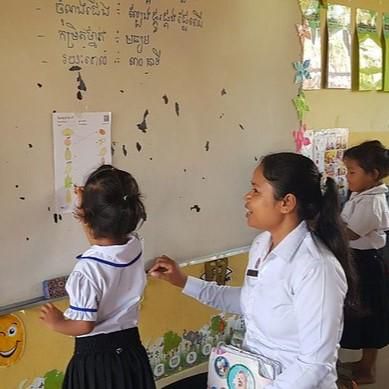
Within 1-2 weeks after the first workshop, all teachers had incorporated R4C teaching materials into their classes. Since many teachers had created lesson plans, R4C plans to take photos and later publish them on the "Rermork Digital Library" to introduce specific teaching methods to other teachers.
Additionally, it was observed that different types of materials were used depending on the activity area. Overall, storybooks, songs, and worksheets were the central focus of activities. On the other hand, activity games and board games were not utilized as much.
Since R4C produces a considerable number of worksheets and activity games in its resource packages, we need to investigate why they are underutilized.
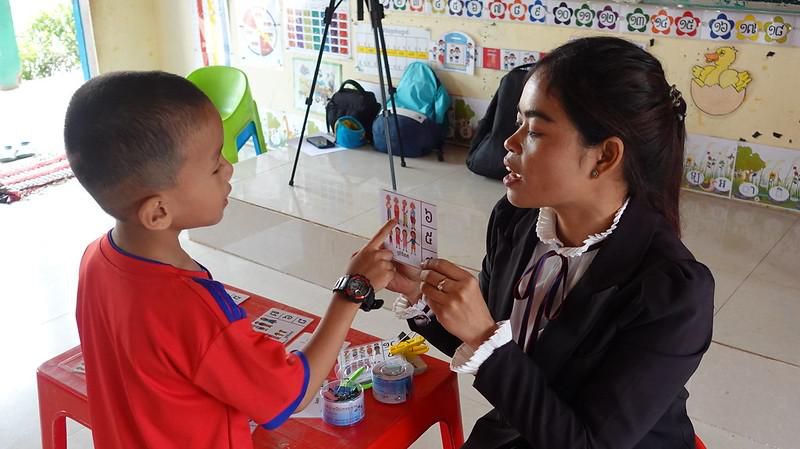
During the visits to each school, we observed teachers' classes and examined how classroom decorative teaching tools had improved since the beginning of the project, as well as observed the behavior of the children. During the visits, many teachers showed classes using R4C teaching materials, most of which involved worksheet-based lessons. However, on days when we were not present, teachers sent photos and videos of classes using Kamishibai and board games.
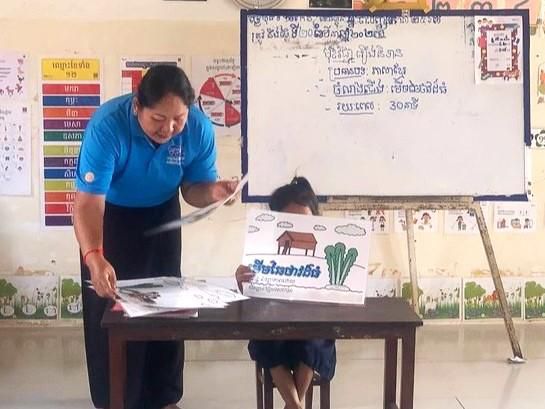
Regarding classroom decorative teaching tools, it was observed that many classes did not correctly place decorations or ornaments in the five corners specified by the government. Despite explanations from POE staff during the initial workshop, it seems that the information has not been fully understood by the teachers. While there may be changes in government standards for classroom environments in the future, we plan to create video materials that succinctly and clearly convey the current standards, as there may still be confusion among teachers.
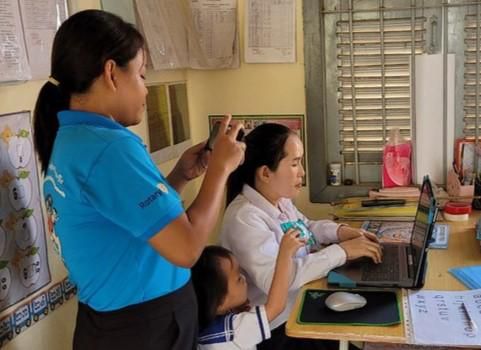
The purpose of conducting the computer skills check was to gain a more detailed understanding of the teachers' computer skills and to provide tailored support for each teacher, considering that the computer skills of each teacher varied after the first workshop. This was done to facilitate easier computer training in the future. The assessment below includes the four criteria and the results:
| Criteria | Pass (Total 26 teachers) |
|---|---|
| Can input the alphabet from A to Z within one minute | 16 teachers |
| Can place their fingers correctly on the keyboard | 5 teachers |
| Can input Khmer consonants within two minutes | 19 teachers |
| Can input their name in Khmer within 30 seconds | 24 teachers (6 teachers were slow-typing) |
Finally, the connection between the computers and the school printers was successfully established in 11 out of 13 schools that have printers (1 school had a printer malfunction, 1 school was not connected, and 2 schools did not have printers). With this, in the connected schools, materials such as worksheets can now be easily printed from the project-provided computers. For the schools that were not connected, we will check again during the next follow-up visit.
Resource Package Creation Status
CLIP3 includes the creation of four new original storybooks and their "Resource Packages*". In this fiscal year, we have just begun work on our 10th storybook, "Family Tree".
*Resource Package… A package of teaching materials that includes songs, activity games, board games, and worksheets related to the content of the picture book.
| Category | Resource | Status | Due Date |
|---|---|---|---|
| The 10th storybook “Family Tree” | |||
| Book | Kamishibai | In preparation | April 2024 |
| Animation | In preparation | April 2024 | |
| A4 printable (Color, Black/White) | In preparation | April 2024 | |
| Digital version | In preparation | April 2024 | |
| Song | MP3 | Complete | |
| MP4 | In preparation | April 2024 | |
| Activity game | Instruction sheet | Complete | |
| Supplemental resource | Complete | ||
| Instruction video | In preparation | April 2024 | |
| Board game | Game board | Complete | |
| Instruction video | Complete | ||
| Worksheet | Worksheet | In preparation | April 2024 |
| Instruction video | In preparation | April 2024 | |
Measuring Success
| Project | Collection method | Frequency | Beneficiaries |
|---|---|---|---|
| Number of beneficiaries of the project | |||
| Number of institutions participating in the program | Direct observation | Every three month | 15 |
| Number of education officials | Direct observation | Every three month | 26 (Provincial officer) 1, (District officer) 5, (POE) 5, (DOE) 15 |
| Number of teachers receive direct coaching and access to the digital library via technology solutions | Direct observation | Every three month | 26 |
| Number of benefiting school-age children | Direct observation | Every three month | 1,166 |
| Number of teachers who took surveys | |||
| Baseline survey | Direct observation | Once conducted | 26 |
| Number of teachers who took classroom assessments | |||
| The 1st classroom assessment | Direct observation | Once conducted | 26 |
| Number of teachers who took workshops | |||
| The pre project workshop | Direct observation | Once conducted | 40 (POE) 2, (DOE) 10, (Preschool teacher) 26, (Volunteer teacher) 2 |
| The 1st workshop | Direct observation | Once conducted | 40 (POE) 2, (DOE) 10, (Preschool teacher) 26, (Volunteer teacher) 2 |
| Number of teachers who took regular interviews | |||
| The 1st follow-up visit | Direct observation | Once conducted | 26 |
| Information dissemination via social media | |||
| Number of Facebook followers | Direct observation | Every month | 5,678 |
| Number of teachers in a private Facebook group | Direct observation | Every month | 3,899 |
| Number of teachers in private Telegram group | Direct observation | Every month | 2,808 |
| Number of subscribers to the YouTube channel | Direct observation | Every month | 6,751 |
| Number of unique visitors to the Rermork Digital Library website | Direct observation | Every month | 23,801 |
Next Schedule (April – June 2024)
- Create the 11th storybook and the resource package
- The 2nd workshop (May 23)
- The 2nd follow-up visit (June)
Help us keep TukTuk rolling
Your gift pays for workshops, books and the free Rermork Digital Library.
Achievement in Social Media Service and “Rermork Digital Library”
We run three open social media (Facebook, Telegram and YouTube) to share teaching resources for preschool teachers and parents.
R4C Facebook
We are sharing updates on R4C's materials and activities three times a week. Visitors can download materials from here or browse the "Rermork Digital Library." Not only educators but also parents can access it. The most shared item this term was the worksheet "ល្បែគូសតាមស្នាមចុចលេខ១-៣១ (Trace Fruits Numbers)" (168 shares, reaching 13,179 people*).
*Reach… The number of people who saw any content from the Page or about our Page, including posts, stories, ads, social information from people who interact with our Page and more. Reach is different from impressions, which may include multiple views of the posts by the same people. This metric is estimated.
The breakdown of followers:
Public Facebook Group for preschool teachers
This is a Facebook group for educators. It serves as a platform where not only posts from R4C are shared, but also where teachers themselves can disseminate teaching material ideas and educational information. The most shared post this season was a worksheet titled "ល្បែគូសតាមស្នាមចុចលេខ១-៣១ (Trace Fruits Numbers)" (reaching 3,329 people), similar to our Facebook page.
The breakdown of followers:
Telegram Channel
Similar to the Facebook page, we post R4C teaching materials and early childhood education information almost every day. Followers can download materials from here or browse the "Rermork Digital Library." Channel participants are not limited to teachers; parents can also join. The most viewed post this season was a song video titled "បទចម្រៀង ថ្ងៃនៃសប្តាហ៍ (Day Of The Week Song)" with 10,600 views.
YouTube
We are posting video teaching materials created by R4C. Many of them include animations, song videos, and instructional videos on activity games, worksheets, and crafts. The most viewed video this season was a song video titled "បទចំរៀង ពេលសប្បាយ (If You Are Happy And You Know It Song)" with 137,792 views.
The breakdown of subscribers:
Rermork Digital Library
This was established in August 2022. All materials are copyright-free and available for free download. The top three most viewed materials this season were classroom decorative teaching tools, worksheets, and storybooks. Additionally, the most downloaded material was a worksheet titled "ល្បែងសរសេរអក្សរ-ក-អ (Writing Consonants)" (162 downloads).
The breakdown of visitors: