
Quarterly report · Pursat Province, Cambodia
CLIP3 quarterly report: July to September 2024
Workshops 3 and 4 with computer lessons, the annual teacher survey, new storybook materials, and online reach in Pursat, July to September 2024.
- 1,139children in the 26 partner classes
- 45teachers at the technical meeting
- 94,060views of the top YouTube song video
- 34,421unique visitors to Rermork Digital Library
Project Overview
Cambodia is still in the process of rebuilding its education system, which failed during the civil war of the 1970s. In the field of early childhood education, the country faces the following challenges:
- Lack of teaching resources in Khmer to use in classrooms.
- Teachers lack the computer skills to create resources.
- Teachers lack experience in some teaching techniques to perform efficient online research.
- Available Khmer resources can be expensive, and schools, especially in rural areas, cannot afford to purchase them.
- Many of the available teaching materials may not align with the curriculum.
- Schools have very small or no budget for preschool teachers.
These issues occurring in the early childhood education stage, which is the foundation for a child's development, will affect the child's future growth process. Teachers are faced with these issues on a daily basis and wonder how to deal with them.
This project covers five regions in Pursat Province, located in the northwestern part of Cambodia. We at Rermork for Children (R4C) (in conjunction with TukTuk Charity), with 26 classes of 15 schools as partner schools, are working with provincial and district education department staff, preschool teachers, and members of the Rotary Club of Pursat (RCP) to empower teachers and parents, and increase educational opportunities for disadvantaged communities in early childhood education. The following activities will be undertaken over a two-year period to achieve the goal.
CLIP Project Goals
Empower teachers and parents, and increase educational opportunities for disadvantaged communities in early childhood education.
Five steps to achieve the goal
- Create teaching resources (storybooks, songs, activity games, board games, worksheets, etc.) in Khmer language, using local Cambodian artists, and aligning the government curriculum and Cambodian culture include options that require no printing or materials to remove economic boundaries. And distribute them to the target education offices and teachers.
- Enhance the “Rermork Digital Library”, a free educational material website for preschools developed by R4C (TukTuk Charity), to make it easier to use and to enrich its contents.
- Train teachers in seven workshops, not only on how to use the resources but also how to create their own resources. Laptops are supplied, and computer skills training will be conducted by the RCP.
- Make a platform for sharing teaching materials by uploading resources created by the teachers themselves on the "Rermork Digital Library", so that teachers nationwide can access these materials.
- Engage education bureau staff from the targeted provinces and districts to disseminate materials to schools beyond the project scope, as well as encourage educators to share materials with parents of the children, we aim to increase access to educational materials for a wider audience beyond the project's reach.
Through this project, we aim to ultimately have the targeted educators give back what they have learned to their respective communities, becoming leaders in further enhancing early childhood education nationwide. However, it is crucial not to forget that the primary beneficiaries of this project are the children. We hope that through the lessons of the educators who have undergone the project activities, children will find school an engaging place, leading to increased attendance and nurturing them into future leaders who actively engage in all endeavors.
About Project
The name of the project
Cambodia Literacy Integrative Project (CLIP)
- January – December 2021: CLIP1
- January 2022 – December 2023: CLIP2
- December 2023 – December 2025: CLIP3
Project implementing organization
Rermork For Children (R4C) (in conjunction with TukTuk Charity), Rotary Club of Pursat (RCP) (managed and funded by Rotary Club of Calgary Downtown)
Target areas
Pursat Province, Cambodia (Pursat City, Kandieng District, Bakan District, Krakor District, and Kravanh District)
Participants
Total 67 members
- Provincial and district education officials: 6 officers
- Provincial Office of Education (POE): 5 officers
- Director
- Department of Early Childhood Education
- Department of Primary Education
- Department of Education Audit
- Department of Plan
- District Office of Education (DOE): 15 officers
- Three people from the five target regions participated; the director of the DOE, the school education division staff, and the early childhood education division staff
- Principals: 15 teachers
- Preschool teachers: 26 teachers
Target Schools
There are a total of 26 classes in 15 schools (26 teachers, 1,139 students)
*There are three types of preschools in Cambodia; independent preschools, preschool classes attached to primary schools, and community schools overseen by the Ministry of Education but operated by the local community.
The CLIP3 covers a total of 15 schools; 7 independent preschools, 6 preschool classes, and 2 community schools.
| No. | Area | School | No. of Teachers | No. of Classes | Age | No. of Students (No. of Girls) |
|---|---|---|---|---|---|---|
| 1 | Pursat | Pursat school (independent preschool) | 4 | 4 | 3 years old | 42 (31) |
| 4 years old | 38 (15) | |||||
| 5 years old | 38 (21) | |||||
| 5 years old | 42 (17) | |||||
| 2 | Stung Toch school (preschool class) | 1 | 1 | 3 years old | 4 (2) | |
| 4 years old | 22 (11) | |||||
| 5 years old | 14 (5) | |||||
| 3 | Sokha Rum school (preschool class) | 1 | 1 | 4 years old | 17 (11) | |
| 5 years old | 21 (10) | |||||
| 4 | Kandieng | Preah Teat school (independent preschool) | 2 | 2 | 4 years old | 46 (26) |
| 5 years old | 54 (26) | |||||
| 5 | Toul Taprom school (preschool class) | 1 | 1 | 4 years old | 21 (15) | |
| 5 years old | 40 (20) | |||||
| 6 | Kbal Chheupok school (community school) | 1 | 1 | 2 years old | 5 (3) | |
| 3 years old | 10 (6) | |||||
| 4 years old | 10 (4) | |||||
| 5 years old | 42 (22) | |||||
| 7 | Bakan | Tropeang Chong school (independent preschool) | 3 | 3 | 3 years old | 72 (35) |
| 4 years old | 98 (44) | |||||
| 5 years old | 34 (19) | |||||
| 8 | Bong Knah school (preschool class) | 2 | 2 | 3 years old | 35 (19) | |
| 4 years old | 74 (38) | |||||
| 5 years old | 52 (21) | |||||
| 9 | Ohta Paong school (independent preschool) | 1 | 1 | 5 years old | 34 (20) | |
| 10 | Krakor | Bong Kontuot school (independent preschool) | 2 | 2 | 3 years old | 25 (13) |
| 5 years old | 25 (13) | |||||
| 11 | Po Tream school (preschool class) | 2 | 2 | 5 years old | 25 (17) | |
| 5 years old | 25 (11) | |||||
| 12 | Kbal Trach school (preschool class) | 1 | 1 | 5 years old | 22 (10) | |
| 13 | Kravanh | Lea Ch school (independent preschool) | 2 | 2 | 4 years old | 35 (18) |
| 5 years old | 35 (23) | |||||
| 14 | Ro Kat school (independent preschool) | 2 | 2 | 4 years old | 40 (15) | |
| 5 years old | 13 (9) | |||||
| 15 | Kom Peang school (community school) | 1 | 1 | 3 years old | 20 (13) | |
| 4 years old | 9 (5) | |||||
| 5 years old | 1,139 (620) | |||||
| Total | 26 | 26 | Total | 267 (106) | ||
| 3 years old | 338 (184) | |||||
| 4 years old | 627 (298) | |||||
| 5 years old | 628 (301) | |||||
Project Implementation
Main activities
| No. | Activity | Duration | Start Date | Completion Date |
|---|---|---|---|---|
| 1 | The 3rd workshop | 1 day | Jul./04/2024 | Jul./04/2024 |
| 2 | The 3rd follow-up visits | 11 days | Jul./15/2024 | Jul./29/2024 |
| 3 | The 4th workshop | 1 day | Aug./22/2024 | Aug./22/2024 |
| 4 | The 4th follow-up visits | 10 days | Sep./02/2024 | Sep./13/2024 |
The 3rd workshop
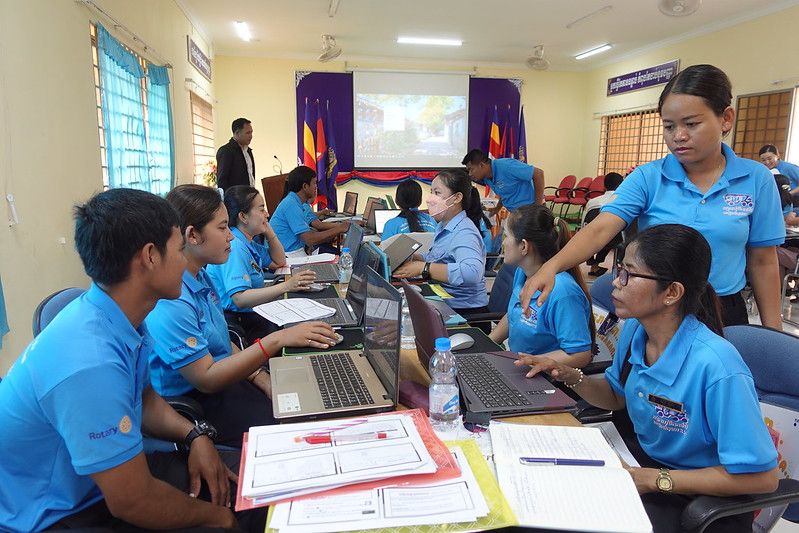
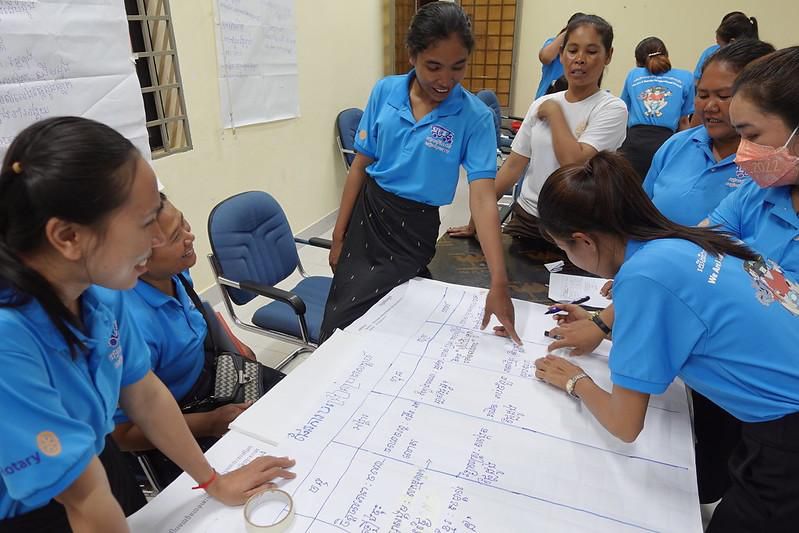
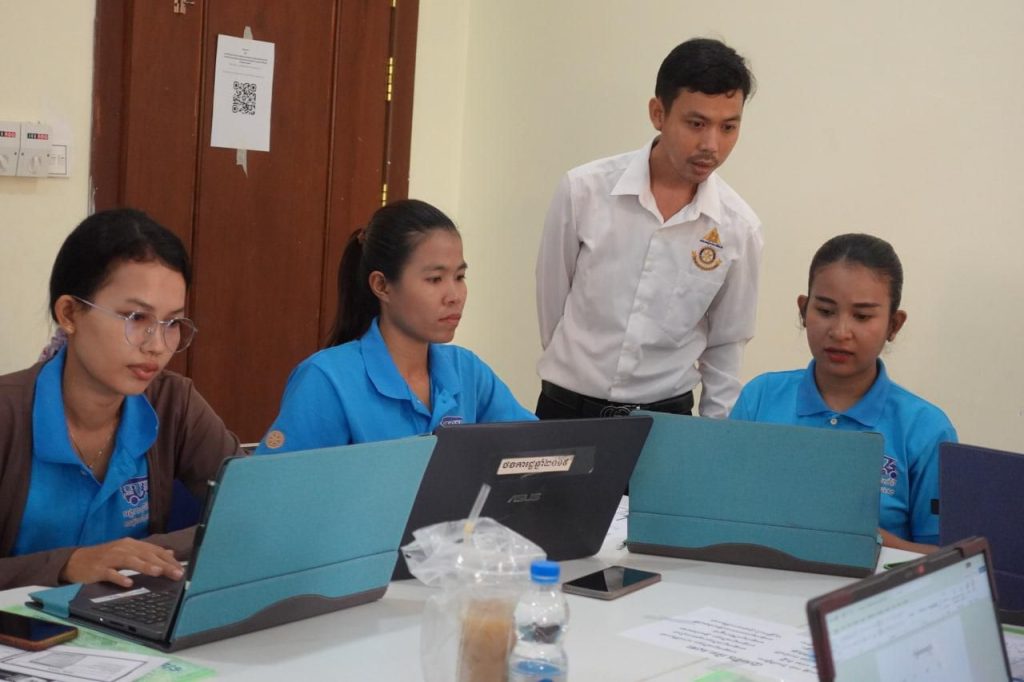
In this workshop, we conducted computer lessons by the Rotary Club of Pursat (RCP), introduced R4C's storybooks "What Are You Good At?" and "Which Job Would You Like?," and created lesson plans using these books.
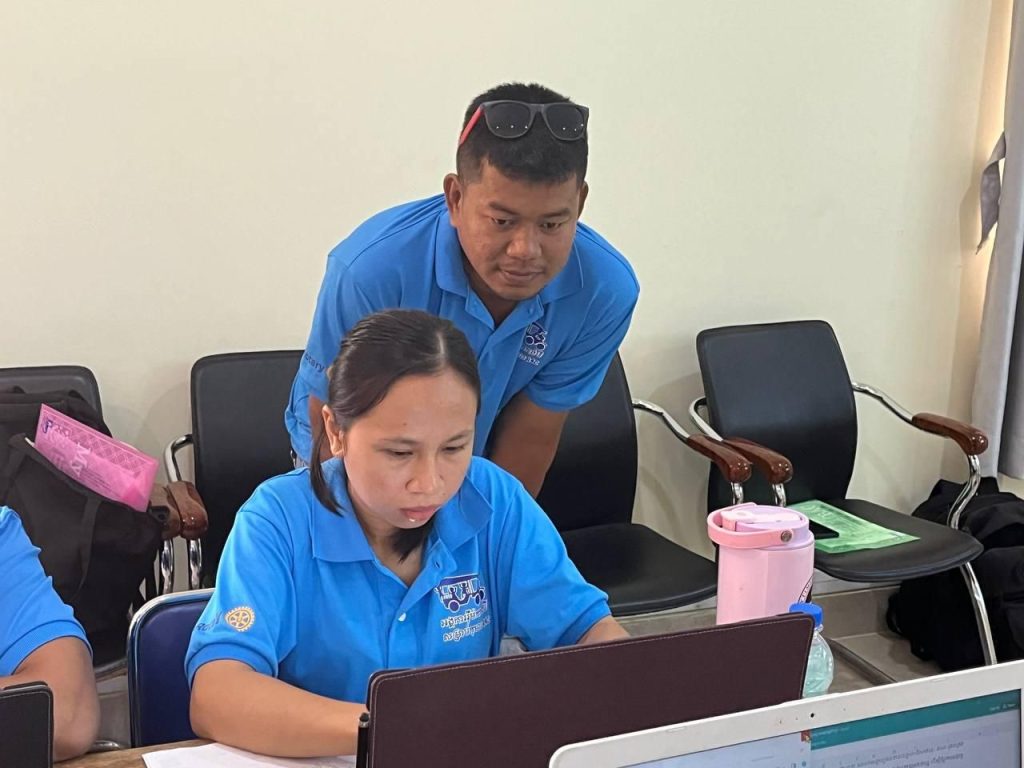
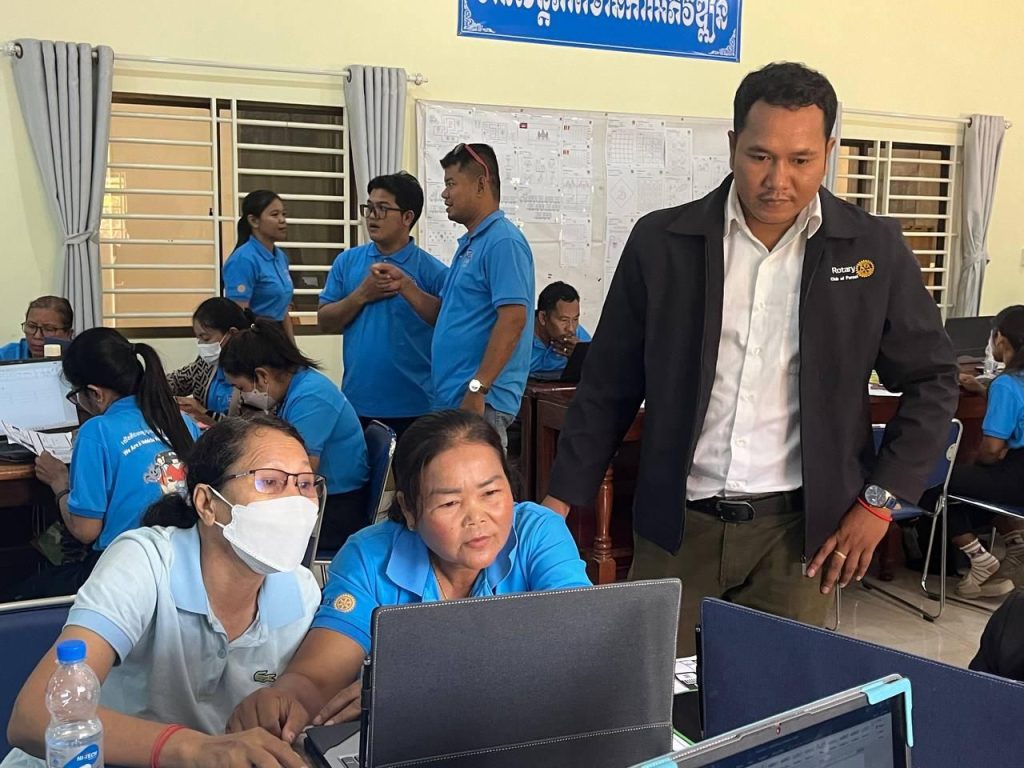
The computer lessons provided by RCP are held across four workshops during the first year of the project. This time, everyone learned the basic usage of Microsoft Office Word. While many teachers were already familiar with Word since they often use it to create lesson plans and administrative documents, some were using features like bold text, underlining, and adjusting text alignment for the first time. To help improve their computer skills, we encouraged teachers who were more comfortable with Word to assist those who were less familiar with it. Afterward, each teacher practiced typing using Khmer-language typing software, designed to improve their typing skills in a fun, game-like way.
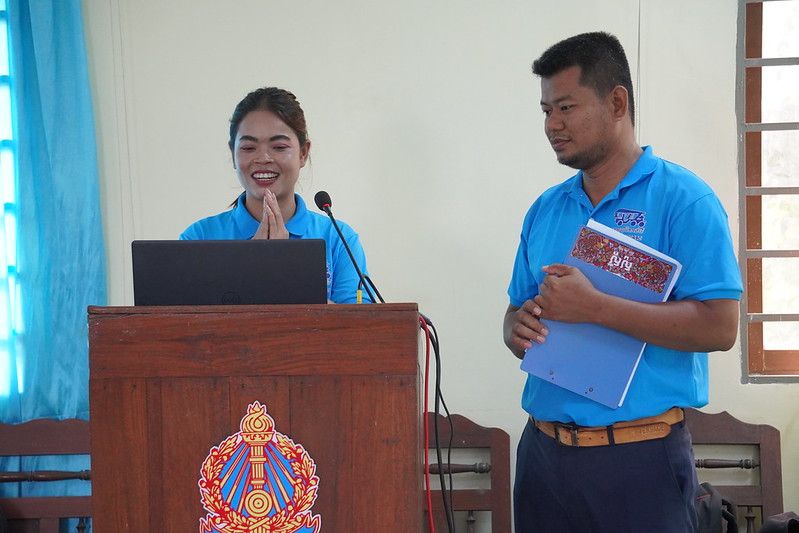
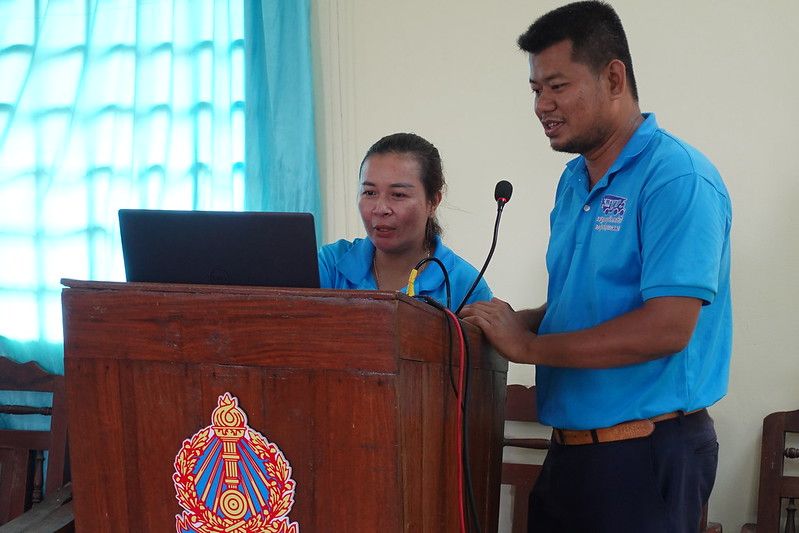
This time, a teacher who participated in the previous CLIP2 project also joined and shared how they have been using the R4C materials. The teacher mentioned that, through the project, they were able to create worksheets using a computer, and that the R4C materials align well with the preschool curriculum, making them easy to use as supplementary teaching resources.
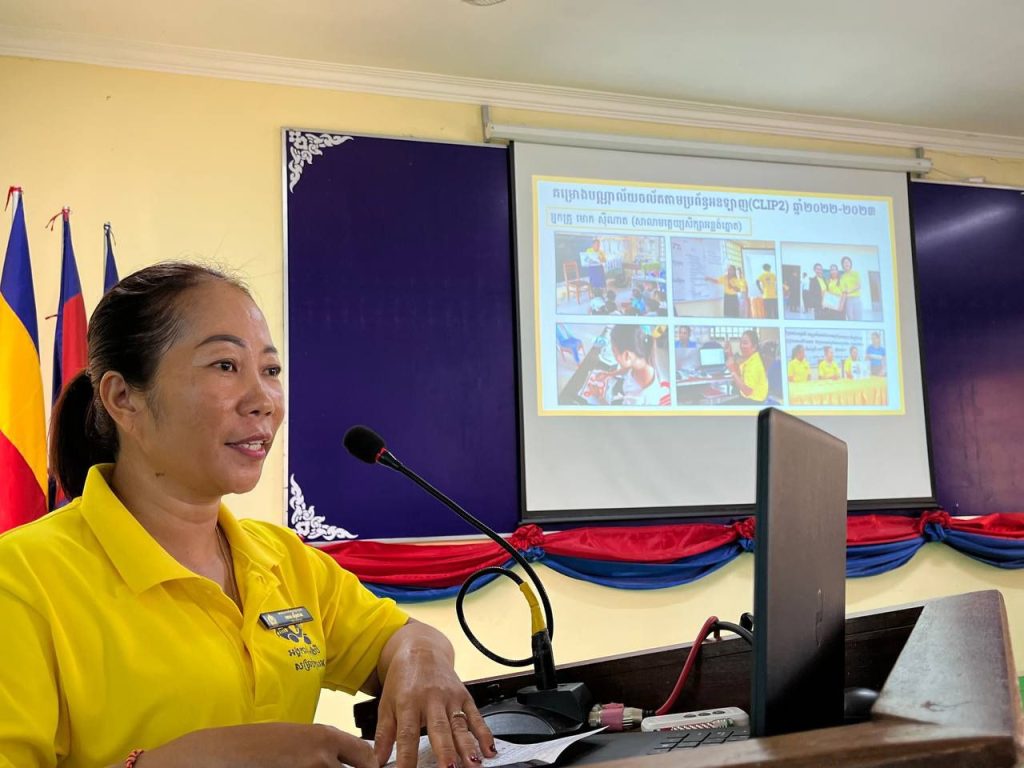
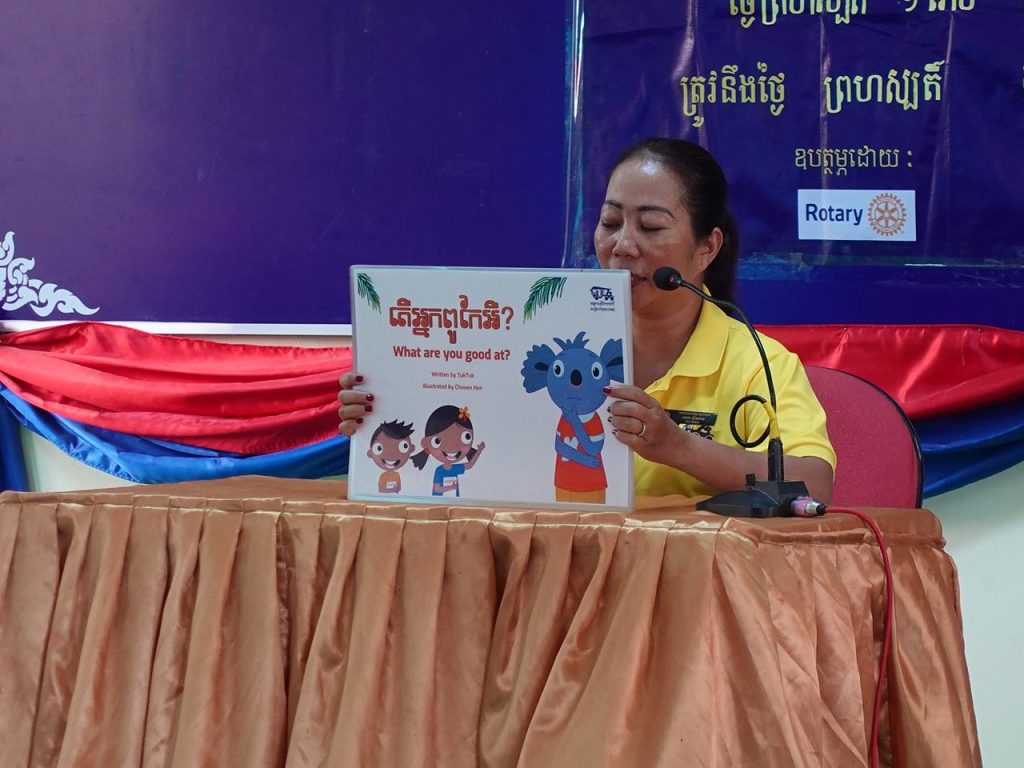
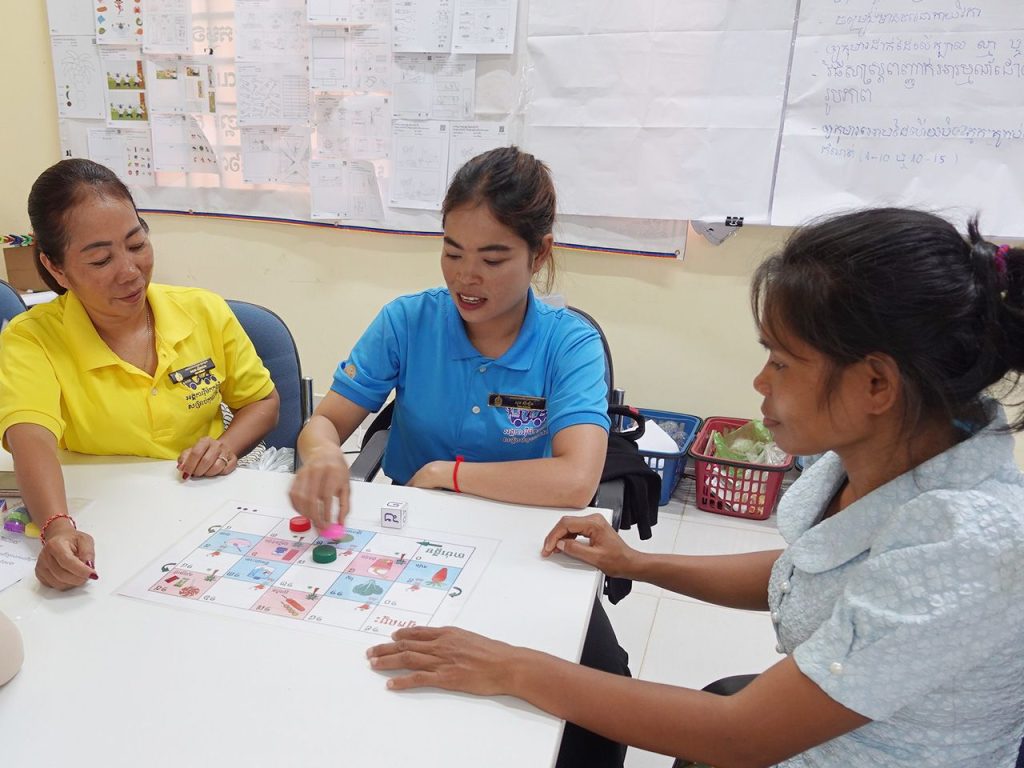
During the materials introduction, we focused on activities from the materials 'What Are You Good at?' and 'Which Job Would You Like?'—especially those that are easy for the teachers to implement or that help deepen understanding when used together.
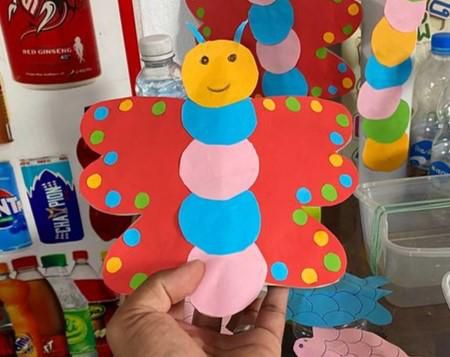
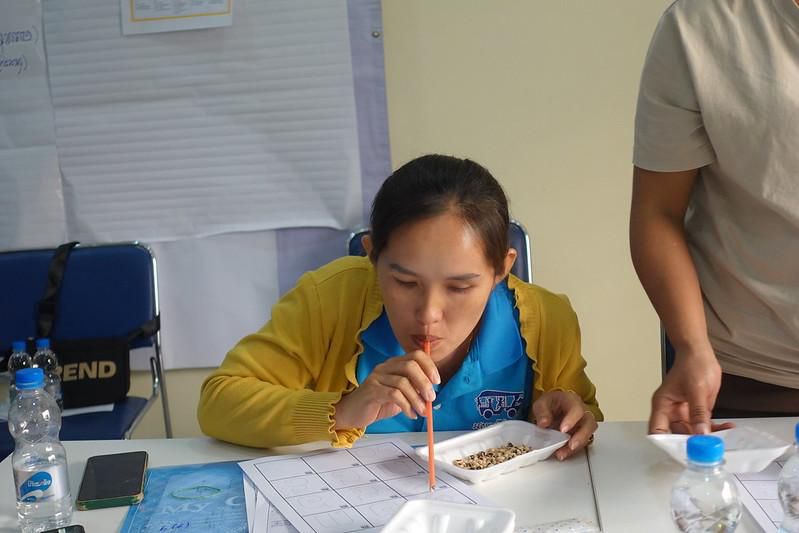
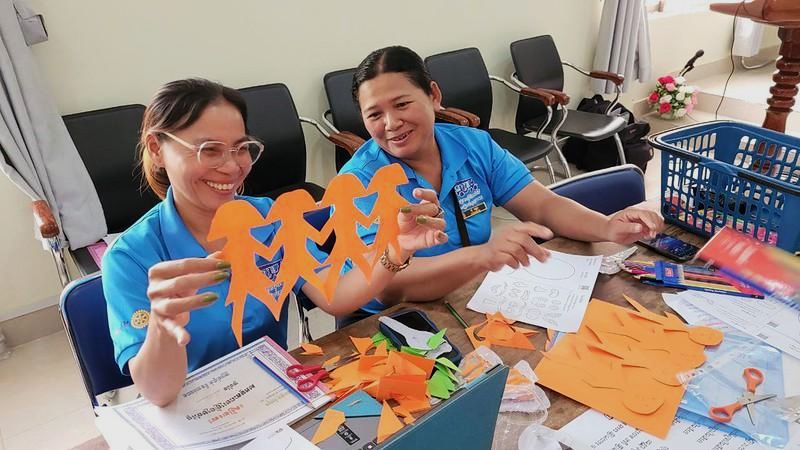
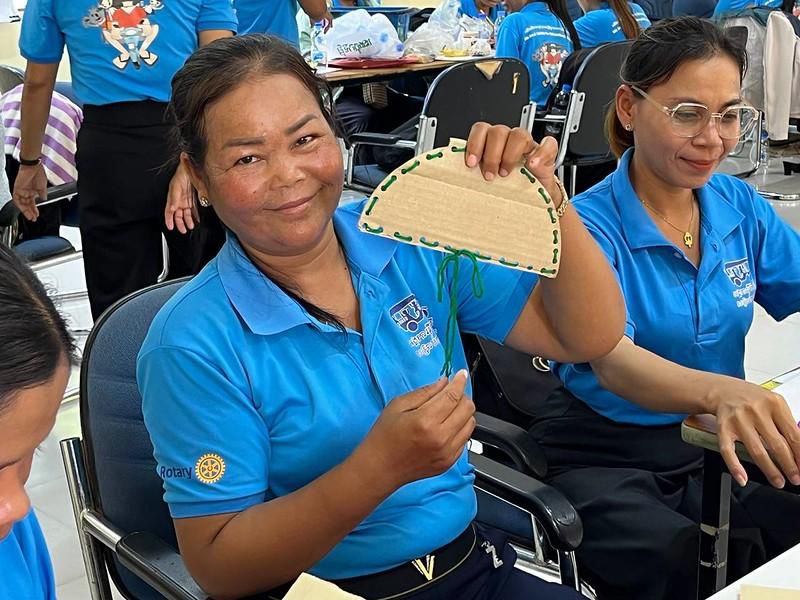
As seen from the follow-up visits, we know that when teachers themselves try out the materials, they are more likely to actively use them in their classrooms. Therefore, we aim to introduce as many materials as possible during each workshop. This time, for the first time, we also introduced a craft program. Previously, we had the impression that many teachers were hesitant to incorporate crafts into their lessons, citing reasons such as 'I'm not good at crafts' or 'There's little budget for craft materials.' However, the truth is that with ideas easily found online, crafts can be made from affordable or even discarded items. To help teachers realize that 'you can actually make crafts easily with things around you,' we had each group try different crafts.
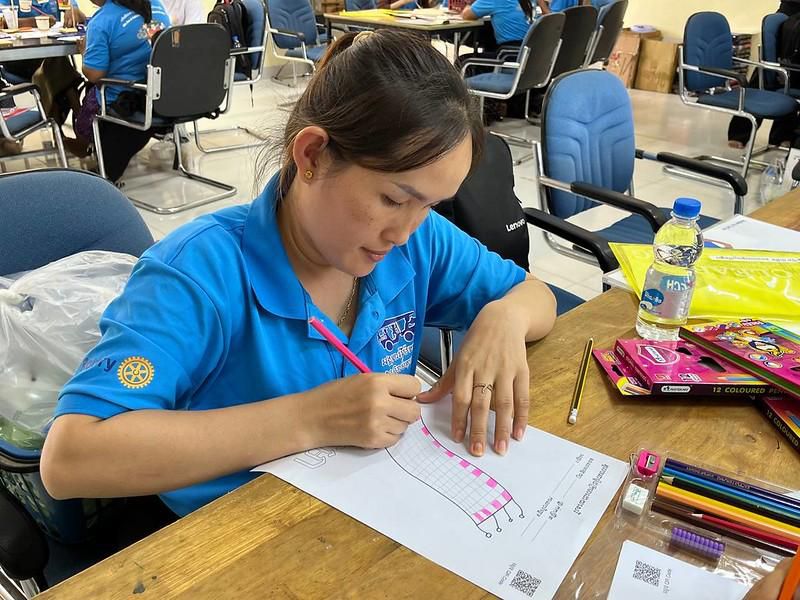
Even teachers who said they weren't good at crafts were able to create adorable crafts that would capture children’s interest, and they seemed to enjoy the process. Some even remarked, 'I have this tool at home, but I didn’t know it could be used for crafts,' showing that we might have sparked some interest in incorporating these ideas into their own classes.
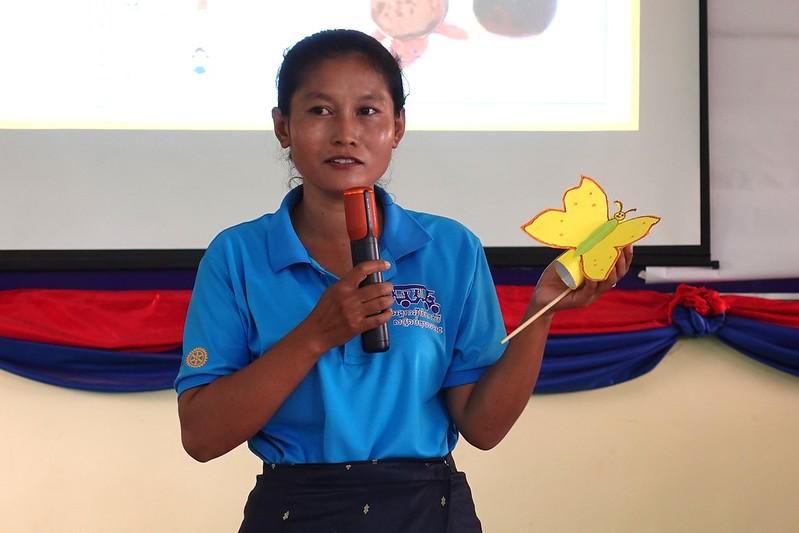
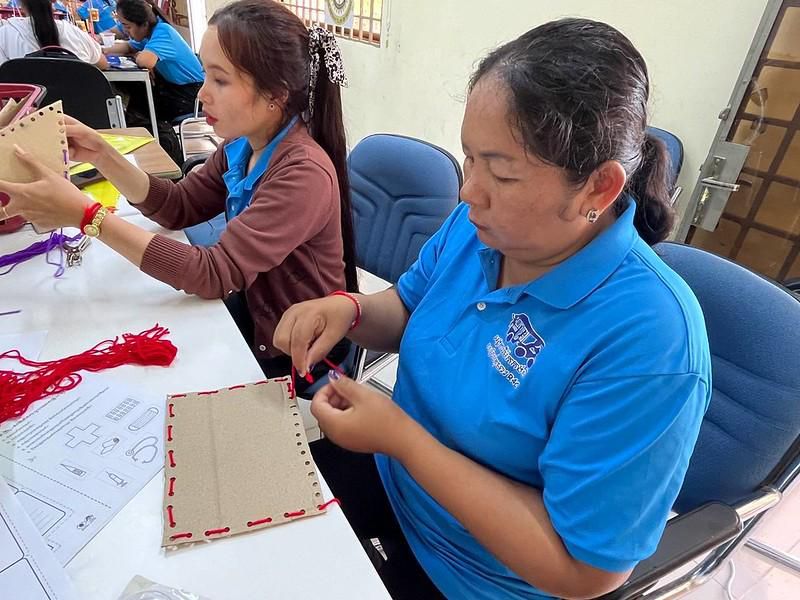
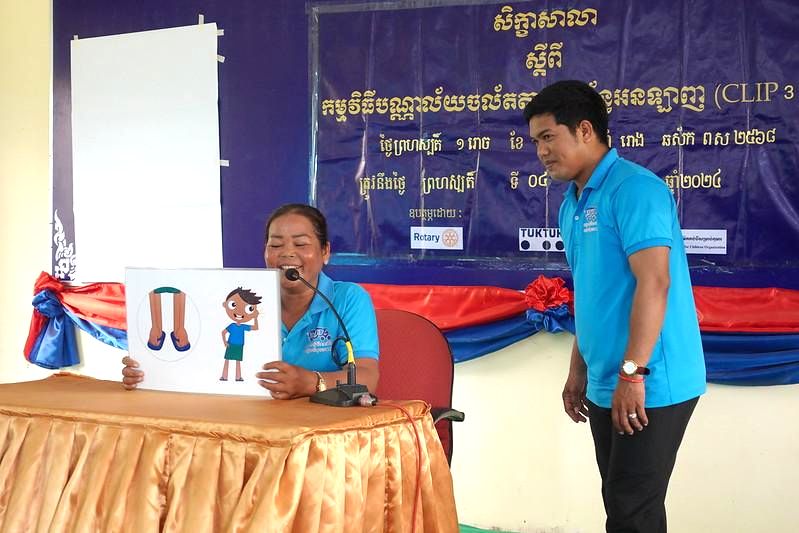
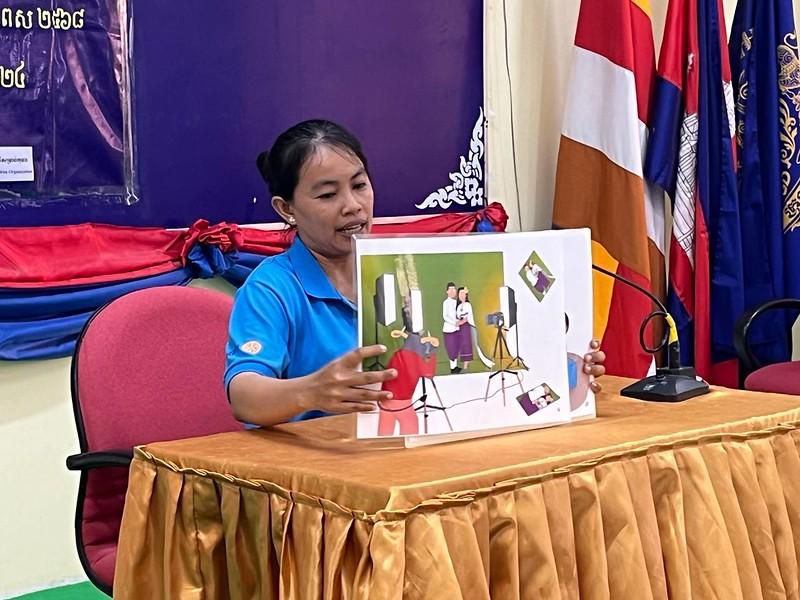
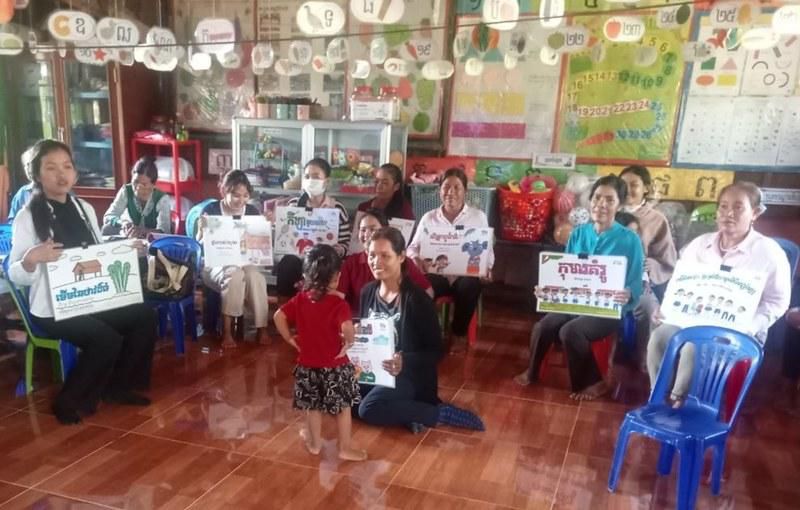
Additionally, we introduced the R4C original Kamishibai titled "Meakara, Meakara..." along with the two storybooks. This Kamishibai seemed to capture the teachers' interest with its catchy phrases, rhythmic language, and the unique method of storytelling where only half of the picture is revealed as the story progresses. We had two teachers practice reading it aloud, and although they were initially unsure about the motion of pulling the picture while reading, they gradually got into the rhythm. The other teachers who were watching also enjoyed the performance.
In the post-workshop survey, many participants found the computer lessons, which are consistently popular, as well as the weekly lesson plan creation and the crafts introduced during the materials session, to be particularly useful. On the other hand, several teachers mentioned that the computer lessons were the most challenging. Given the limited time, we need to ensure that participants not only listen to the explanations from RCP but also actively teach one another during the sessions to improve their learning. Many teachers requested more computer lessons and expressed a desire to learn how to create worksheets on the computer. Therefore, our goal is to ensure that all teachers become familiar with basic Word functions by the end of this year so they can independently use them and move toward creating worksheets next year.
Additionally, teachers showed a particular interest in incorporating the Kamishibai, songs, and activity games introduced during the session into their lessons. Moving forward, it would be great to see more interest in incorporating craft ideas as well.
The 3rd follow-up visits
As part of the project, we follow up with visits to the target schools after each workshop to review the workshop content. During this follow-up visit, we asked additional questions to the pre-visit survey and observed the classes.
First, in the pre-visit survey, we asked the teachers about their situation one to two weeks after the second workshop. We inquired about their use of computers, their utilization of the "Rermork Digital Library," and their use of R4C materials in their lessons. Please see here for detailed survey results.
Regarding computer usage, although many teachers reported using computers once a week to almost daily, the overall data shows an increase in the number of teachers using computers more than seven times a week compared to the past three months. The most common use was browsing the “Rermork Digital Library”. After attending this computer lesson, many teachers expressed a strong desire to further deepen their understanding of the lesson content.
Regarding the usage of the “Rermork Digital Library”, this time it was noted that, in addition to the consistently popular songs, there was an increase in views for activity games, board games, and crafts compared to the previous session. Additionally, there was a rise in the downloads of board games, crafts, and illustrations, suggesting that teachers are exploring a wider variety of R4C resources. On the other hand, some teachers mentioned difficulties in successfully creating items by following the craft videos. We plan to address this during the upcoming follow-up visits. There were also comments about difficulties downloading materials; however, with the upload of a “Rermork Digital Library” tutorial video on YouTube, we believe teachers will find it easier to use moving forward.
Regarding questions about lessons using R4C materials, we also inquired about the frequency of Kamishibai usage this time. Most teachers reported using them 1 to 3 times per week. Prior to the start of this project, many teachers were unfamiliar with Kamishibai and had never used it. This indicates that the project has effectively expanded the range of lesson ideas available to the teachers. In terms of materials used by the subject, songs and worksheets remain the most frequently used, but the crafts introduced in the third workshop were used more often across all subjects compared to the previous session.
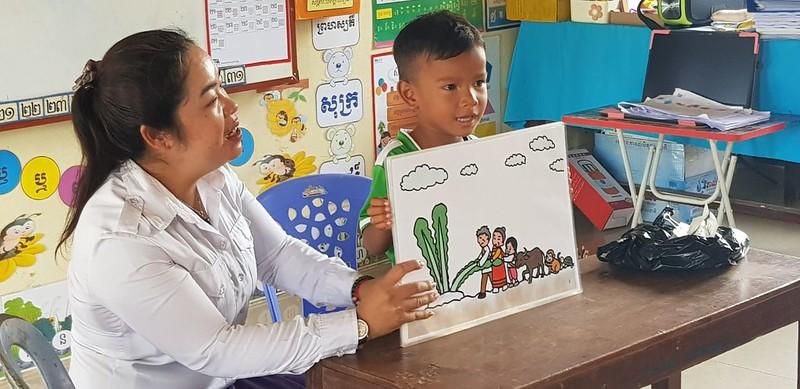
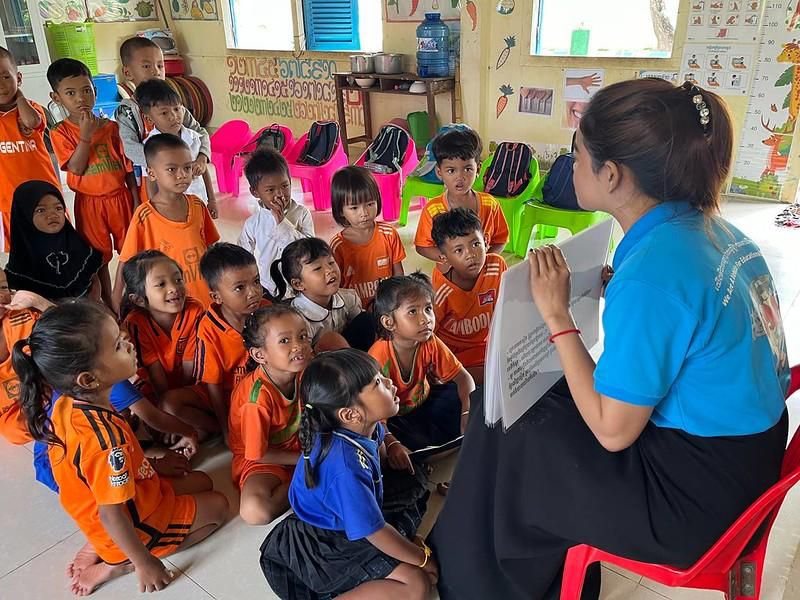
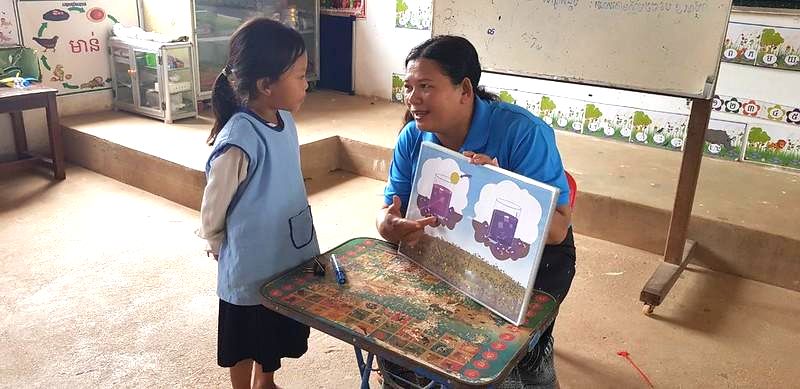
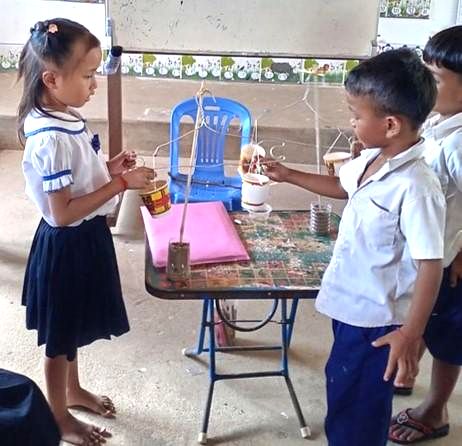
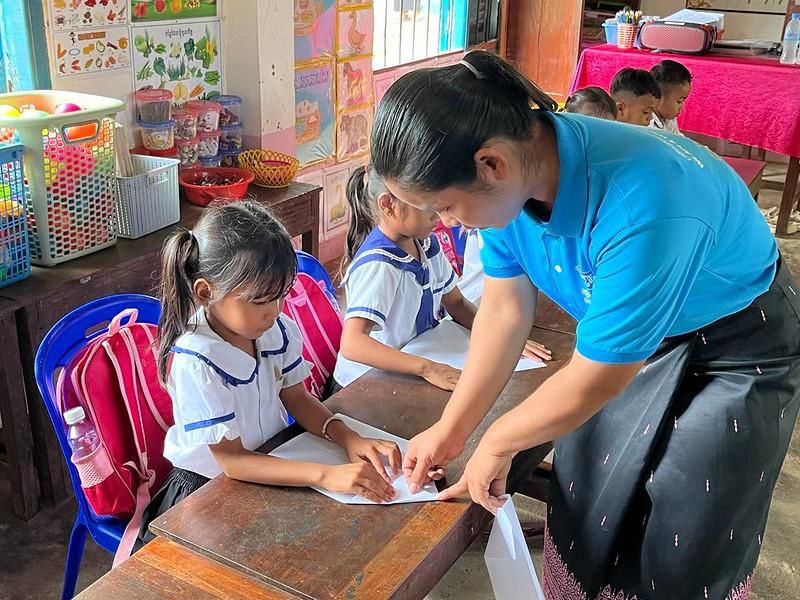
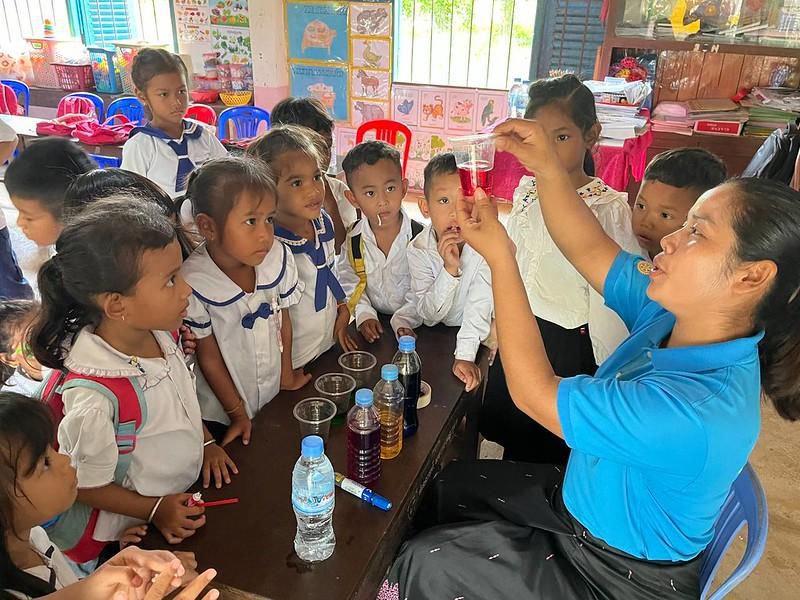
During the observation of lessons in 26 classes, we noticed a shift from the previous focus on worksheet-based lessons. This time, in addition to the Kamishibai storytelling lessons we had requested in advance, we also witnessed experiments, crafts, and song-based lessons. Some teachers quickly took the initiative to create and display crafts introduced in the workshop, while others conducted lessons where they made crafts together with the children. It was clear that the teachers were actively incorporating R4C materials into their lessons.
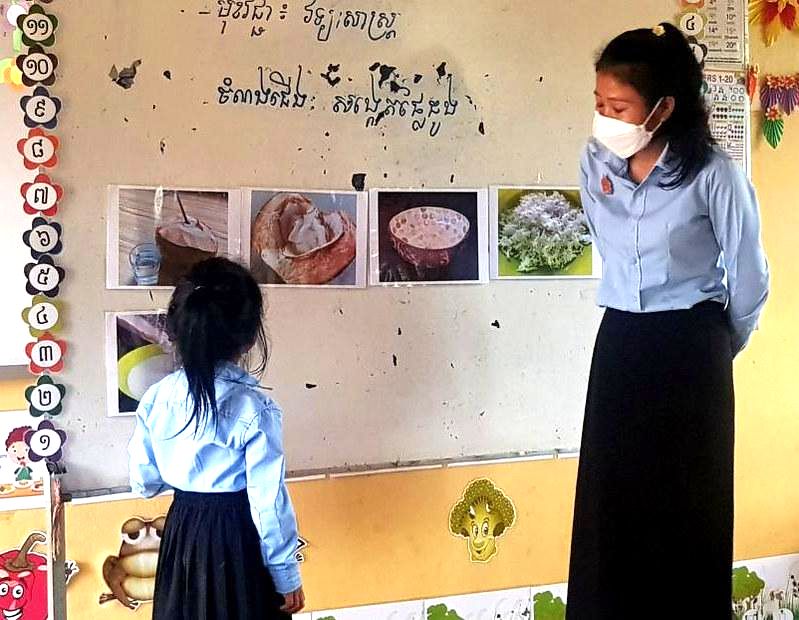
Additionally, during the bi-monthly "Technical Meetings" where teachers gather in their respective regions to develop lesson plans and create materials, a teacher from one target area took the lead in sharing the songs learned during the workshop with teachers from non-target schools. Furthermore, staff from the regional early childhood education department created a list of Kamishibai rentals to ensure that these resources reach teachers outside the project as well. It was reported that 45 teachers from 33 schools participated in this meeting, demonstrating the project's goal of empowering targeted educators to share what they have learned with their communities and to become leaders in advancing early childhood education in the country.
The 4th workshop
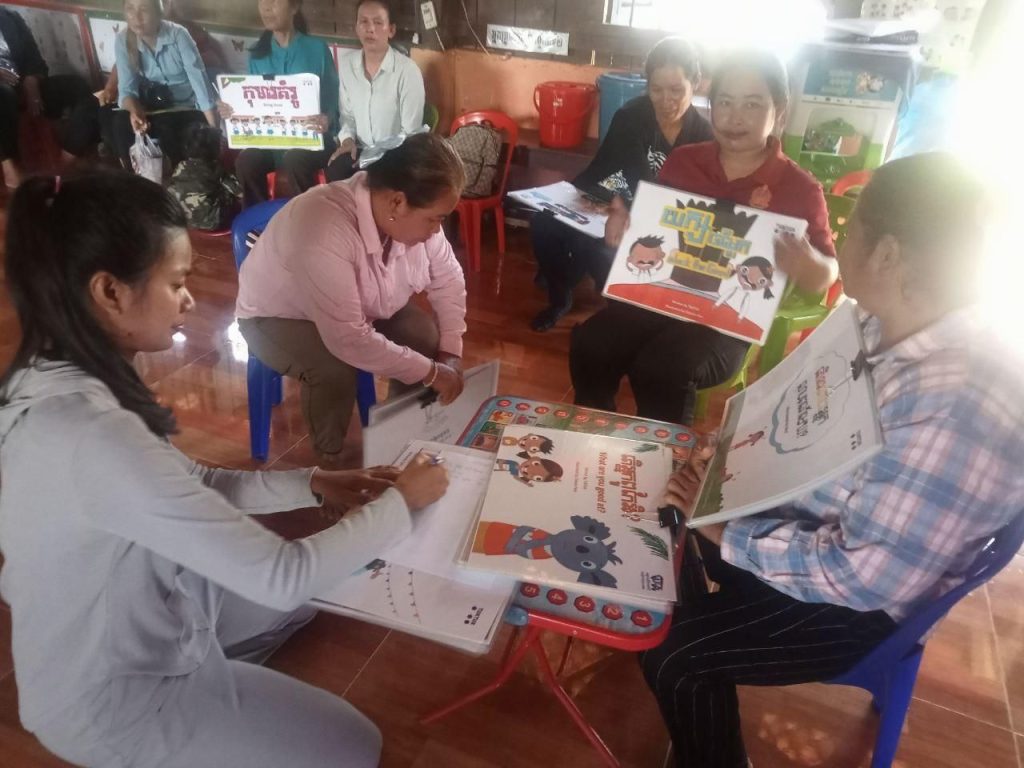
In this final workshop of 2024, we conducted computer lessons by the Rotary Club of Pursat (RCP), introduced the R4C’s storybooks “Being Good” and “We Can - Just Differently,” and held a lecture on lesson plan creation led by the directors of the early childhood education department from each target area.
The computer lessons provided by RCP, which spanned four sessions, concluded with this final session. As a review, we utilized the basic computer skills learned in the previous three sessions to create lesson plan templates. Before the workshop, the teachers had practiced the topics to be covered using a pre-test created by RCP. On the day of the workshop, we confirmed their understanding by introducing new operations, such as creating tables, text boxes, and bullet points.
While many teachers expressed that they found the computer lessons challenging in the feedback surveys, the RCP staff had prepared videos on the same content and shared them with the teachers beforehand, as well as created a review test to help them revisit the operations individually. As a result, it seemed that the lesson content was more firmly established than before. We hope the teachers will continue to review and practice these skills in the future.
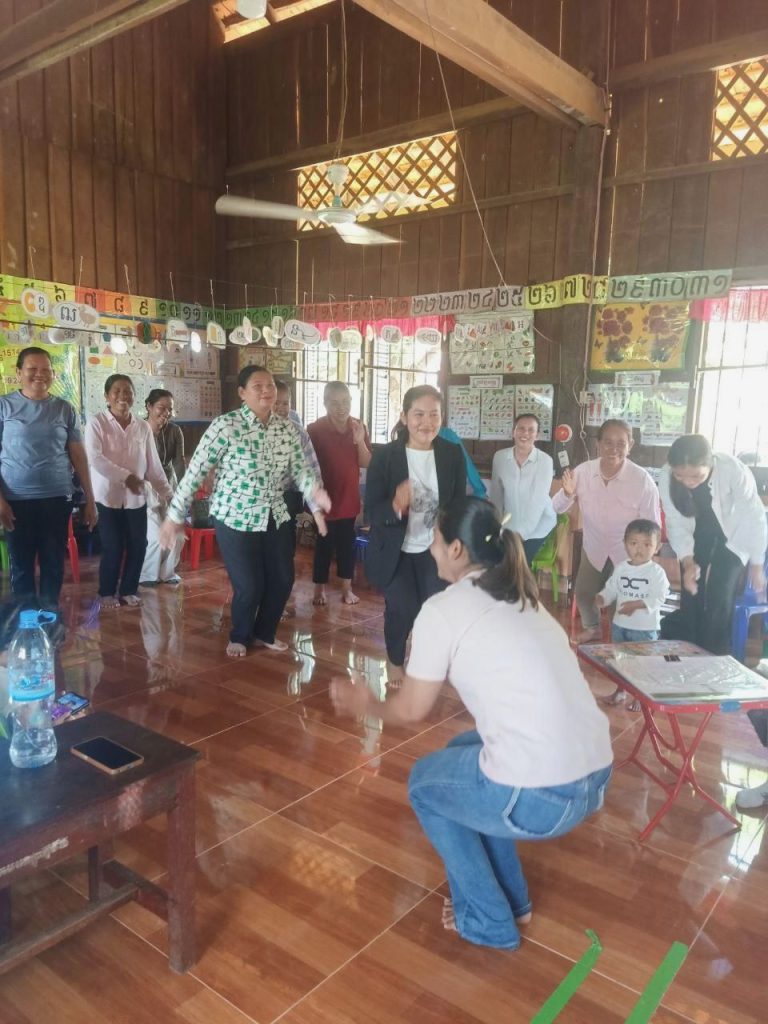
During the materials introduction, the teachers enjoyed practicing songs and games again. For a song that incorporates traditional Cambodian rhythms and dances, a teacher skilled in dancing explained the movements to the others. In response to the recurring feedback about the dance moves being challenging, we plan to share a music video in the project’s Telegram group beforehand so that everyone can watch the dance at least once before participating in the workshop.
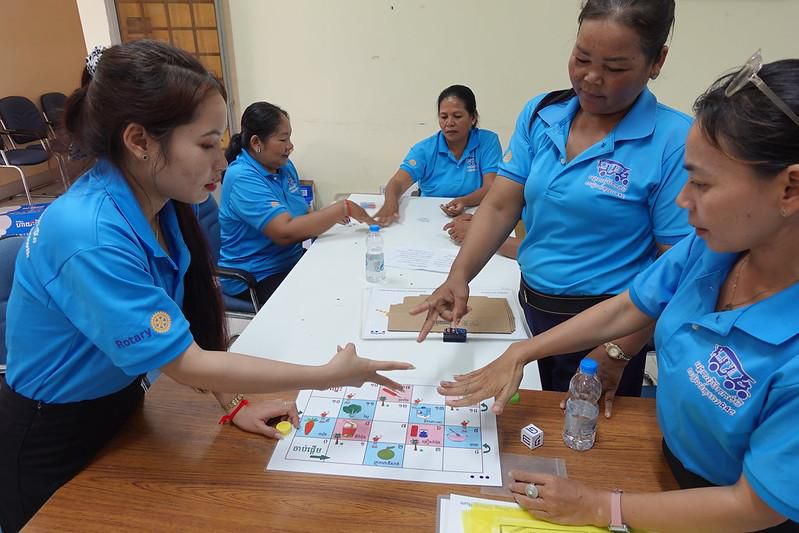
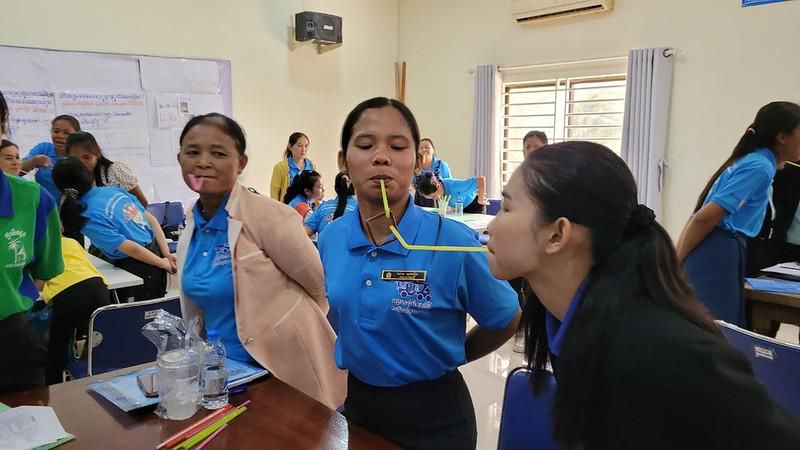
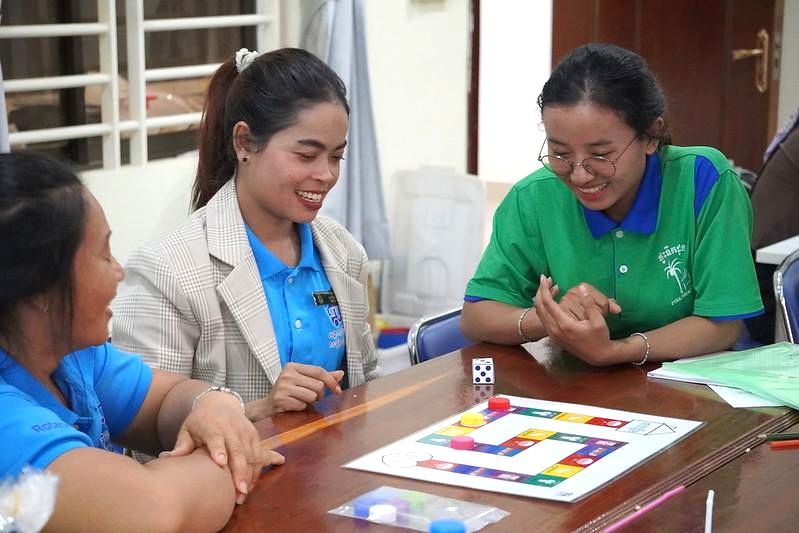
Furthermore, when selecting activity games to introduce at each workshop, we focus on whether the games are enjoyable for the teachers or if it’s better to demonstrate them while explaining. The three games practiced this time were not only lively but also sparked thoughts among the teachers about how to adapt the play for children, such as, "This might be a good way for kids to play," and "How about doing it this way?" There is no fixed way to use R4C materials, so it's encouraging to see teachers expressing their desire to creatively adapt the materials for their students.
In the crafts program, the teachers demonstrated more creativity than in the previous session, allowing for a deeper exploration of the content. Many teachers had previously hesitated to engage in crafts due to concerns about difficulty, material costs, or time constraints. However, hearing comments like, "You can do it like this with some adjustments!" and "I finished creating it in 10 minutes!" were very positive. It turns out that the teachers have many ideas and possess craft talents, so we would like to create programs in future workshops that share the ideas of the 26 target teachers and disseminate them to teachers outside of the target regions.
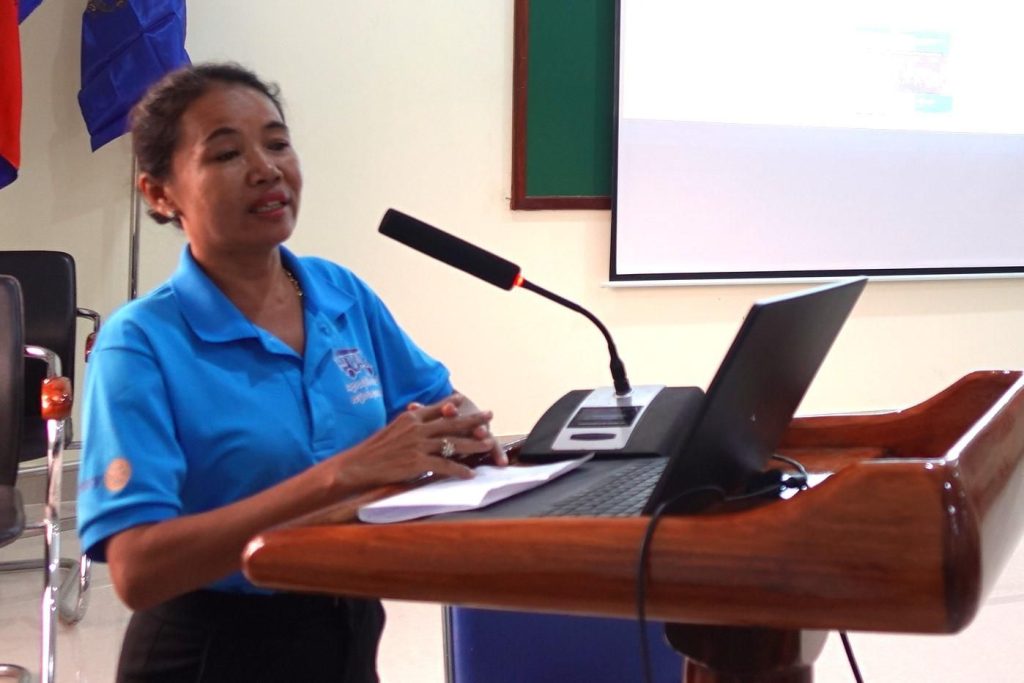
The lecture on lesson plan creation by the director of the DOE's Early Childhood Education Division received positive feedback, ranking second in usefulness after the computer lessons provided by RCP. However, the survey indicated that many teachers seemed to struggle with fully digesting the content. During the previously mentioned "technical meetings," the lesson plan creation process should have been shared among all teachers, including the DOE staff. Yet, there appears to be a current issue where lesson plan copies and sales among teachers lead to the use of incorrect versions.
The project requires the targeted teachers to submit lesson plans, specifically those using R4C materials. We aim to compile these lesson plans for future publication on our website, which will help other teachers envision how to utilize the materials effectively. Since we want to present well-formatted lesson plans on the website, we plan to have the collected lesson plans reviewed by the heads of each Early Childhood Education Division. We will publish the approved lesson plans as they become available.
The 4th follow-up visits
This time, we conducted an annual survey for the teachers as we approach the one-year mark since the project began. The survey aimed to assess the extent to which the teachers have used R4C materials over the past year, gather their feedback on the materials, and identify any changes they have experienced since participating in the project. The insights gained from this survey will be utilized for future material development and project management. (For a detailed comparison of the results with the baseline survey conducted in December 2023, please click here.)
Here, we summarize the key points from each survey item.
Story Materials (Storybooks and Kamishibai)
Comments from the teachers indicated that the R4C story materials align well with the curriculum and can be used across all subjects. As a result, the range of subjects in which story materials are used has broadened since they participated in the project. All teachers reported that R4C story materials are beneficial, noting that the vibrant colors and engaging content have motivated children to pick up books and concentrate during storytelling time. Learning read-aloud techniques from R4C staff and other teachers during workshops has been particularly stimulating for the educators.
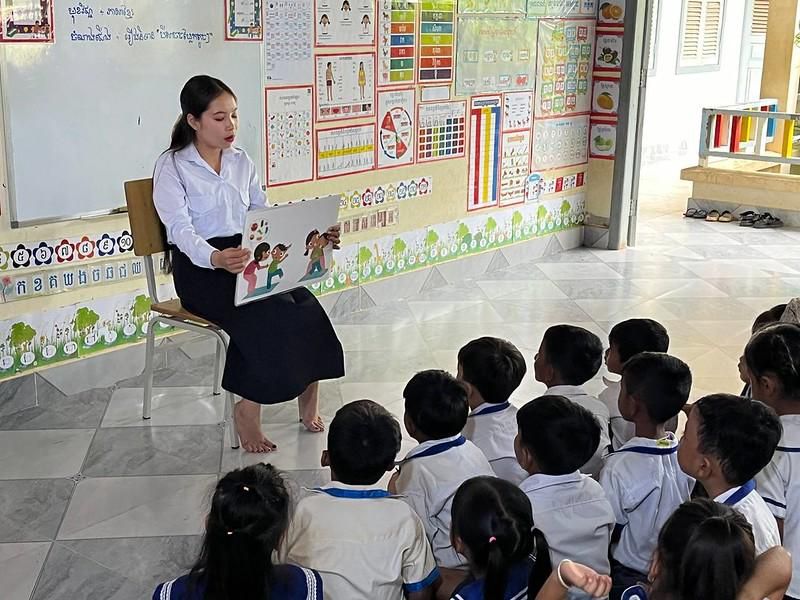
In terms of challenges, before the project, teachers raised concerns about a lack of story materials and the availability of storybooks that were not suitable for the curriculum or children’s ages. However, the annual survey revealed that many current challenges are related to the techniques of reading aloud, suggesting that material-related issues have largely been resolved.
Song
Overall, the usage rate of songs has increased compared to before the project began. Access to R4C songs has diversified the types of songs used in classrooms. During the baseline survey, 14 teachers reported teaching songs without any equipment, often leading to issues like "straining their voices." However, over the past year, they have started using computers and speakers to teach songs effectively.
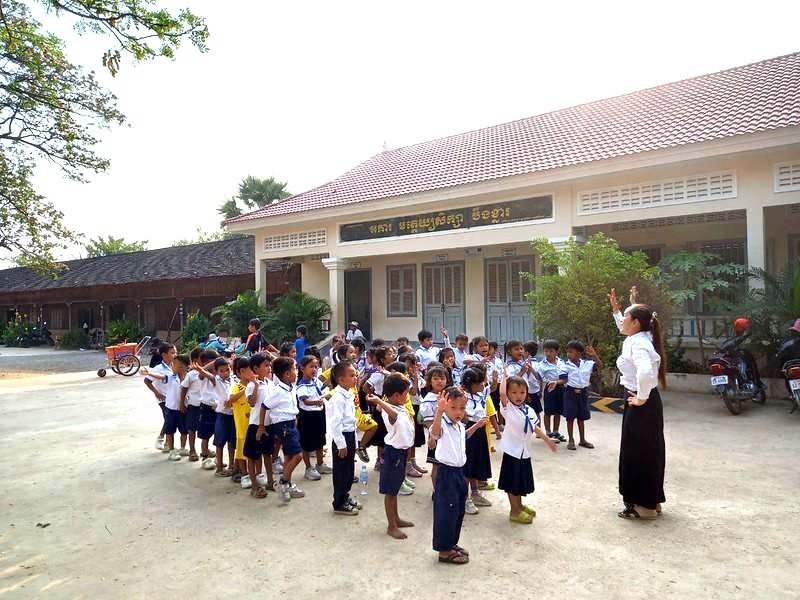
The most common feedback regarding R4C songs was that "the lyrics and dance moves are appealing." Many teachers noted that children enjoy these songs, particularly the unique movements associated with the lyrics. Additionally, teachers have reported feeling a personal transformation, having learned and practiced various dance movements since joining the project. Some even mentioned becoming comfortable enough to dance without feeling shy, indicating that the experience of dancing together in workshops has had a positive impact.
Worksheet
Before the project began, five teachers had never used worksheets. However, after one year, all teachers are now using R4C worksheets across all subjects. Most of the target classes can print worksheets using printers available at their school or affiliated primary schools. Additionally, some teachers have been printing worksheets at copy shops, funded by school budgets or personal expenses.
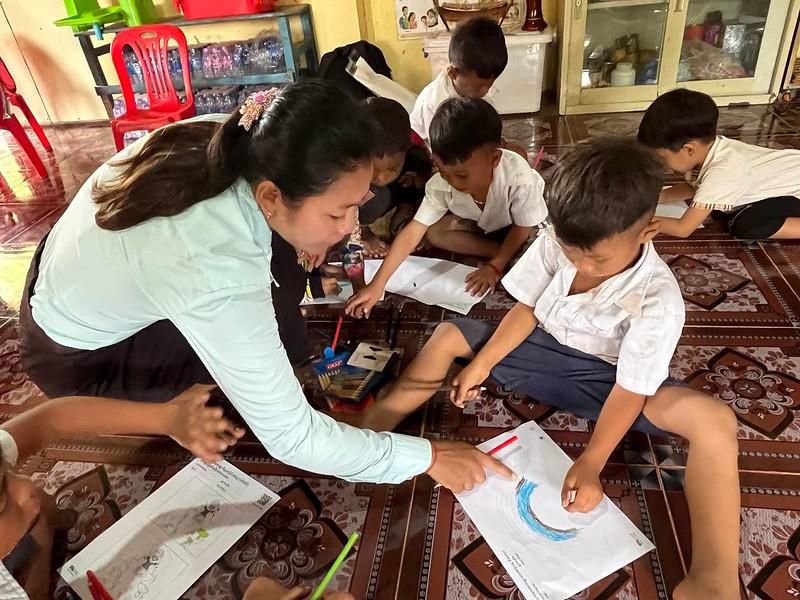
Teachers particularly appreciate the convenience of R4C worksheets, noting their variety in themes and designs, which can be applied across all subjects. Many teachers feel that they can now select and use worksheets that are more suitable for each subject, enhancing their teaching experience.
Activity Game / Board Game
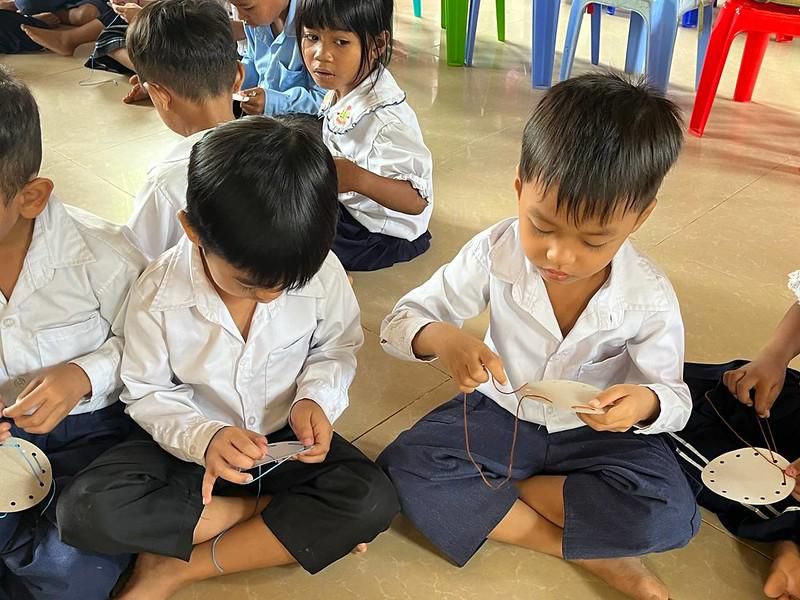
The use of activity games and board games has increased across various subjects compared to the baseline survey. Teachers are looking for games that facilitate learning through play, and they find that many of R4C's materials include such games, which are beneficial for their daily lesson planning. Additionally, some games can substitute for the activities listed in the curriculum, making it easier for teachers to find suitable materials.
Classroom Decorative Teaching Tool
Most teachers reported that over 70% of R4C's classroom decorative teaching tools were displayed in their classrooms. Those who did not use the decorations cited reasons such as limited classroom space or already having similar decorations. Overall, the project successfully provided materials that satisfied all teachers.
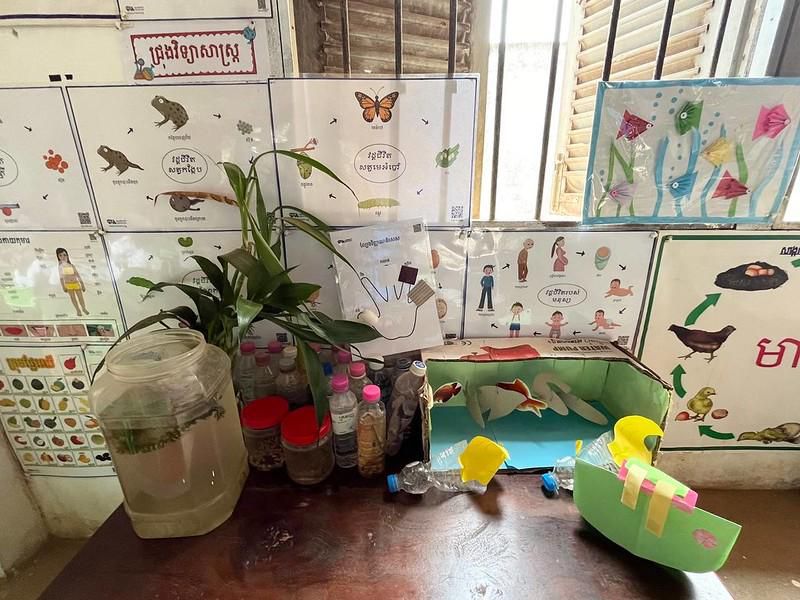
One of the most common comments was that R4C's decorative tools captured children's interest. Some teachers even noted that parents commented on how much nicer the classroom looked. Participating in the project clarified the previously vague standards for classroom decorations, allowing teachers to organize and decorate each corner more effectively.
While there were requests for more diverse designs, it is anticipated that as teachers improve their computer skills, they will be able to design and edit their own materials. Plans are in place to include computer lessons on creating worksheets that can address this need in next year's workshops.
Computer
Before joining the project, 14 teachers had very limited experience using computers. However, after receiving computers through the project and nearly a year of support, 18 teachers now use computers at least four times a week. Almost half of them primarily use Microsoft Office Word for creating lesson plans and administrative documents. Overall, all teachers reported feeling more competent in computer skills than before the project began. Those who had no prior experience have been actively learning computer operations by seeking help from colleagues and family members.
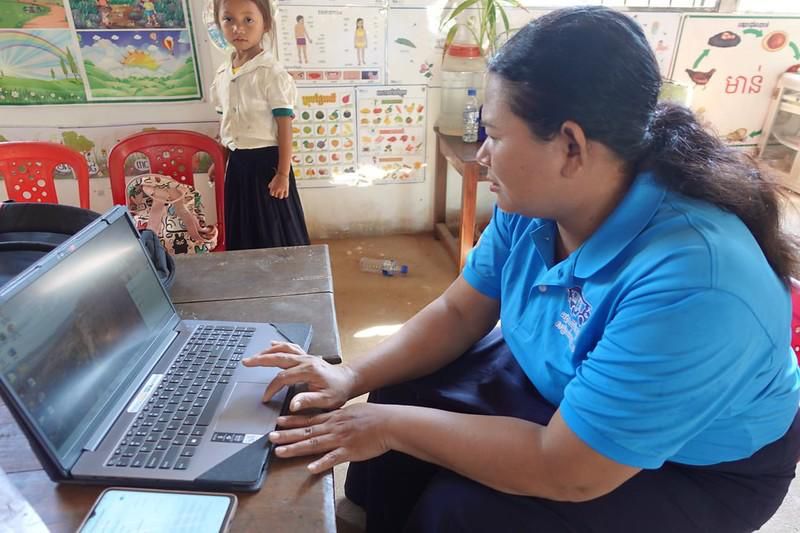
When asked about future workshop needs, many teachers expressed a desire for more computer lessons. Following that, there was a strong interest in crafting lessons, indicating a high level of enthusiasm for hands-on activities. Other requests included support related to classroom management, school administration, and lesson planning. As TukTuk, which specializes in educational materials creation and proposals, we believe these aspects should be led by state and district education office staff, who are experts in Cambodian education. Therefore, we plan to continue focusing our workshops specifically on developing educational materials.
Rermork Digital Library
The targeted teachers frequently use the R4C website to search for songs, which explains the higher usage of resources in subjects such as "Psychomotor skills" and "Society." They reported using computers four to six times a week more than smartphones, which is likely due to the convenience of downloading and printing worksheets directly from the site.
When examining usage by subject, all subjects showed the highest frequency of worksheet usage, with "Psychomotor skills" being notable for its song utilization. The overall order of material usage was as follows: worksheets, songs, picture books, activity games, illustrations, crafts, classroom decorations, and board games.
Lesson Plan
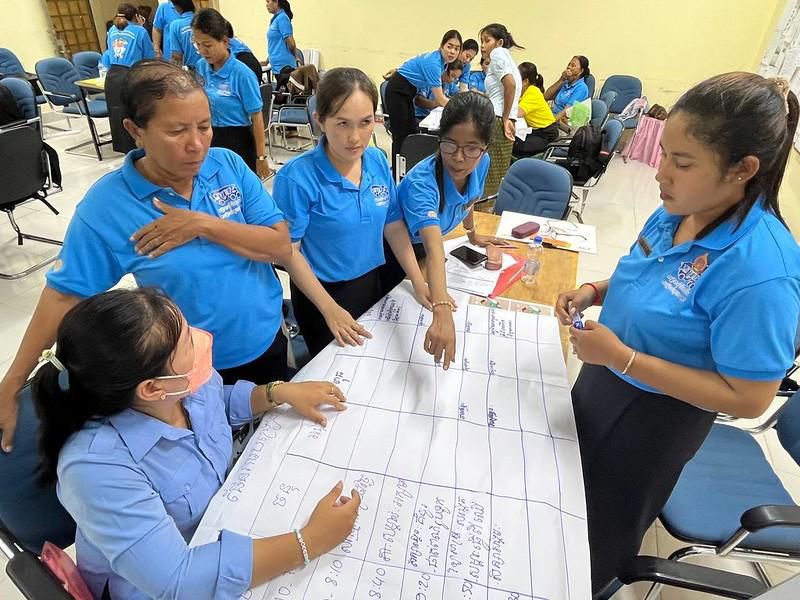
The feedback from the lesson on lesson plan creation by the director of the DOE's Early Childhood Education Division at the fourth workshop highlights that teachers had previously harbored doubts about how to write lesson plans. However, through the workshops, they have become more adept at creating lesson plans using computers. The group work conducted in each workshop allowed teachers to exchange ideas with their peers from other schools, enabling them to learn effective methods for lesson planning. As a result, many teachers reported feeling a sense of personal growth over the project’s first year.
Others
The budget per class seems to be trending lower compared to last year. In our material development and workshops, we aim to continue emphasizing the importance of creating resources that are low-cost and can be made using easily accessible materials.
Since the launch of the CLIP3 project, TukTuk's social media presence has significantly increased, attracting more followers and gaining visibility among a wider audience. This growth is largely thanks to the 26 target teachers who have shared our materials within their networks, including with other teachers and parents in social media groups they belong to. Moving forward, it would be wonderful to see not only an increase in social media engagement but also teachers taking the initiative to directly promote R4C materials to their peers.
Resource Package Creation Status
CLIP3 includes the creation of four new original storybooks and their "Resource Packages*". Currently, we are in the process of creating the 11th book, which is expected to be completed in the first half of the next term.
*Resource Package… A package of teaching materials that includes songs, activity games, board games, and worksheets related to the content of the picture book.
| Category | Resource | Status | Due Date |
|---|---|---|---|
| The 10th storybook “Family Tree” | |||
| Complete | |||
| The 11th storybook “Be Careful, Be Safe” | |||
| Story Materials | Kamishibai | Complete | |
| Animation | Not yet started | Oct. 2024 | |
| A4 printable (Color, Black/White) | Complete | ||
| Digital version | Complete | ||
| A5 size book | In preparation | Oct. 2024 | |
| Song | MP3 | In preparation | Oct. 2024 |
| MP4 | Not yet started | Oct. 2024 | |
| Activity Game | Instruction sheet | In preparation | Oct. 2024 |
| Supplemental resource | Not yet started | Oct. 2024 | |
| Instruction video | In preparation | Oct. 2024 | |
| Board Game | Game board | In preparation | Nov. 2024 |
| Instruction video | Not yet started | Nov. 2024 | |
| Worksheet | Worksheet | In preparation | Oct. 2024 |
| Instruction video | Not yet started | Oct. 2024 | |
Measuring Success
| Project | Collection method | Frequency | Beneficiaries |
|---|---|---|---|
| Number of beneficiaries of the project | |||
| Number of institutions participating in the program | Direct observation | Every three month | 15 |
| Number of education officials | Direct observation | Every three month | 26 (Provincial officer) 1, (District officer) 5, (POE) 5, (DOE) 15 |
| Number of teachers receive direct coaching and access to the digital library via technology solutions | Direct observation | Every three month | 26 |
| Number of benefiting school-age children | Direct observation | Every three month | 1,139 |
| Number of teachers who took surveys | |||
| Baseline survey | Direct observation | Once conducted | 26 |
| Annual survey | Direct observation | Once conducted | 26 |
| Number of teachers who took classroom assessments | |||
| The 1st classroom assessment | Direct observation | Once conducted | 26 |
| Number of teachers who took workshops | |||
| The pre-project workshop | Direct observation | Once conducted | 40 (POE) 2, (DOE) 10, (Preschool teacher) 26, (Volunteer teacher) 2 |
| The 1st workshop | Direct observation | Once conducted | 40 (POE) 2, (DOE) 10, (Preschool teacher) 26, (Volunteer teacher) 2 |
| The 2nd workshop | Direct observation | Once conducted | 41 (POE) 2, (DOE) 10, (Preschool teacher) 26, (Volunteer teacher) 3 |
| The 3rd workshop | Direct observation | Once conducted | 41 (POE) 2, (DOE) 10, (Preschool teacher) 26, (Volunteer teacher) 3 |
| The 4th workshop | Direct observation | Once conducted | 41 (POE) 2, (DOE) 10, (Preschool teacher) 26, (Volunteer teacher) 3 |
| Number of teachers who took regular interviews | |||
| The 1st follow-up visit | Direct observation | Once conducted | 26 |
| The 2nd follow-up visit | Direct observation | Once conducted | 26 |
| The 3rd follow-up visit | Direct observation | Once conducted | 26 |
| The 4th follow-up visit | Direct observation | Once conducted | 26 |
| Information dissemination via social media | |||
| Number of Facebook followers | Direct observation | Every month | 6,352 |
| Number of teachers in a private Facebook group | Direct observation | Every month | 5,585 |
| Number of teachers in private Telegram group | Direct observation | Every month | 3,235 |
| Number of subscribers to the YouTube channel | Direct observation | Every month | 8,475 |
| Number of unique visitors to the Rermork Digital Library website | Direct observation | Every month | 34,421 |
Next Schedule (October – December 2024)
- Create the 12th storybook and the resource package
- The project annual meeting (December)
The Status Of Education In Cambodia
The Cambodian Ministry of Education reported the results of a survey on the number of schools and enrolled students as of February 2024.
| School | The number of schools |
|---|---|
| Preschool | 8,891 |
| Primary school | 8,252 |
| Secondary school | 1,341 |
| High school | 897 |
| Higher education | 169 |
| School | The number of students |
|---|---|
| Preschool | 400,959 (Female: 50.2%) |
| Primary school | 2,265,783 (Female: 47.9%) |
| Secondary school | 711,113 (Female: 53.3%) |
| High school | 430,792 (Female: 54%) |
| Higher education | 284,599 (Female: 52.3%) |
Help us keep TukTuk rolling
Your gift pays for workshops, books and the free Rermork Digital Library.
Achievement in Social Media Service and “Rermork Digital Library”
We run three open social media (Facebook, Telegram and YouTube) to share teaching resources for preschool teachers and parents.
R4C Facebook
We are sharing updates on R4C's materials and activities three times a week. Visitors can download materials from here or browse the "Rermork Digital Library." Not only educators but also parents can access it. The most shared item this term was the worksheet book "សម្គាល់លេខនិងចំនួន-១-១០ (Khmer Number Worksheet Book)" (114 shares, reaching 9,539 people*).
*Reach… The number of people who saw any content from the Page or about our Page, including posts, stories, ads, social information from people who interact with our Page and more. Reach is different from impressions, which may include multiple views of the posts by the same people. This metric is estimated.
The breakdown of followers;
Public Facebook Group for Preschool Teachers
This is a Facebook group for educators. It serves as a platform where not only posts from R4C are shared, but also where teachers themselves can disseminate teaching material ideas and educational information. The most shared post this season was worksheets posted by a follower (39 shares, reaching 2,772 people).
The breakdown of followers;
Telegram Channel
Similar to the Facebook page, we post R4C teaching materials and early childhood education information almost every day. Followers can download materials from here or browse the "Rermork Digital Library." Channel participants are not limited to teachers; parents can also join. The most viewed post this season was the story of ‘The Enormous Turnip’ with 4,581 views.
YouTube
We are posting video teaching materials created by R4C. Many of them include animations, song videos, and instructional videos on activity games, worksheets, and crafts. The most viewed video this season was a song video titled "បទចម្រៀង ពេលសប្បាយ (If You Are Happy And You Know It Song)" with 94,060 views.
The breakdown of subscribers;
Rermork Digital Library
This is a free educational resource site for early childhood education launched in August 2022 by R4C. All materials can be downloaded free of charge without copyright restrictions. Teachers' own materials are also uploaded to this platform, aimed at empowering Cambodian early childhood education by Cambodian teachers themselves.
The top three most viewed materials this term were worksheets, classroom decorative teaching tools, and storybooks. Additionally, the most downloaded material was a worksheet titled "ព្យញ្ជនៈកាត ៣៣តួ (Khmer Consonant Cards)" (215 downloads).
The breakdown of visitors;