
Closing report · Pursat Province, Cambodia
CLIP3 closing report: the full two-year project
How 26 Pursat preschool teachers in 15 schools were trained, supplied with Khmer teaching resources and supported over the two-year CLIP3 project.
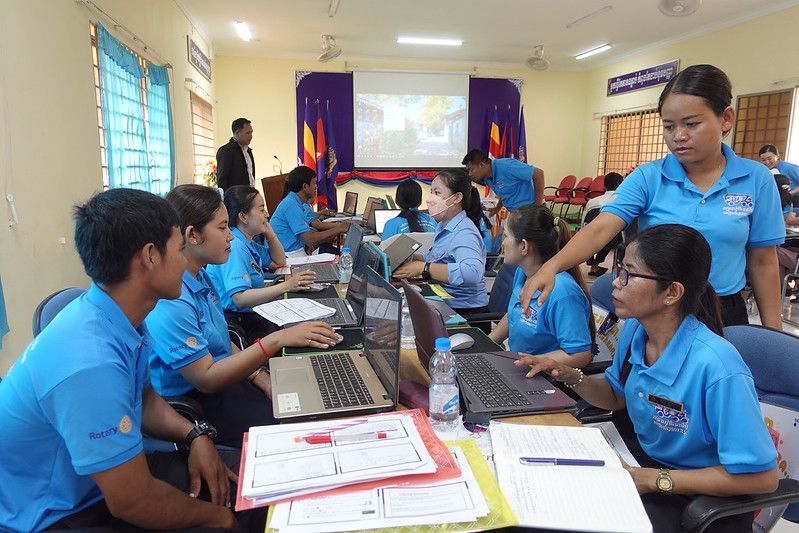
- 26preschool teachers and classes in 15 schools
- 1,015children aged 3–5 reached through their classes
- 48,927unique visitors to Rermork Digital Library in Q8
- 10,519YouTube subscribers by the end of the project
Executive Summary
The Cambodia Literacy Integrative Project – Phase 3 (CLIP3) is a two-year Global Grant project implemented in Pursat Province, Cambodia, focused on strengthening early childhood education (ECE) by improving teacher capacity, access to curriculum-aligned resources, and collaboration with education authorities.
CLIP3 was implemented across five districts—Pursat City, Kandieng, Bakan, Krakor, and Kravanh—working directly with 26 preschool teachers across 26 classes in 15 schools, reaching 1,015 children aged 3–5 through improved classroom practice. The project was implemented by Rermork for Children (R4C) in partnership with Rotary. The Rotary Club of Calgary Downtown served as the international funding and oversight partner, while the Rotary Club of Pursat acted as the local host and supporting Rotary Club, providing financial oversight, participating in implementation activities, and coordinating with schools and education authorities.
CLIP3 builds on the foundations established through CLIP1 (2020–2021) and CLIP2 (2022–2023), applying a refined, teacher-centered model that emphasizes practical application rather than one-off material distribution. The project integrates five core components: development of Khmer-language teaching resources aligned with government curriculum, access through a free digital platform, structured teacher training workshops, follow-up school visits, and active collaboration with Provincial Department of Education, Youth and Sports (PoE) and District Offices of Education (DOE).
Throughout CLIP3, POE and DOE officers participated as both participants and co-facilitators, particularly in areas related to curriculum alignment and classroom environment standards. This involvement supported consistency with government expectations and strengthened institutional ownership of project activities.
Evidence collected through teacher surveys, follow-up visits, and workshop observations indicates measurable changes at the teacher level. Teachers reported increased confidence in lesson planning, greater use of play-based and interactive teaching methods, improved ability to select and adapt resources aligned with curriculum requirements, and more consistent use of digital tools to support classroom instruction. Follow-up visits confirmed that teachers were actively using project resources across multiple learning domains and applying workshop content in daily classroom practice.
The Rermork Digital Library played a central role in extending access to resources beyond the immediate project area. Materials developed through CLIP3 were made freely available, supporting continued use by teachers from earlier CLIP phases and by educators from non-project schools.
CLIP3 demonstrates that sustained investment in teacher capacity—supported by structured training, digital access, and government collaboration—can strengthen classroom practice at scale. The project provides a tested, replicable model for improving early childhood education through systems, skills, and locally aligned resources rather than short-term inputs.
Project Overview (Context and Governance)
Early childhood education (ECE) in Cambodia continues to face structural challenges, particularly in rural areas where preschool teachers often have limited access to Khmer-language teaching resources, constrained classroom budgets, and few opportunities for practical, skills-based professional development. CLIP3 was designed to address these identified gaps by strengthening teacher capacity through curriculum-aligned resources, practical training, and collaboration with education authorities.
CLIP3 (Cambodia Literacy Integrative Project – Phase 3) was implemented in Pursat Province, Cambodia, across five districts: Pursat City, Kandieng, Bakan, Krakor, and Kravanh. The project directly engaged 26 preschool teachers across 26 classes in 15 schools, reaching 1,015 children aged 3–5 through improved classroom practice.
The project was implemented by R4C. Rotary’s involvement was structured to ensure clear accountability and effective oversight:
- The Rotary Club of Calgary Downtown served as the international funding and oversight partner, responsible for fundraising, grant compliance, and reporting to Rotary International.
- The Rotary Club of Pursat acted as the local host and supporting Rotary club, providing in-country financial oversight, supporting community assessments, participating in workshops, and coordinating closely with schools and education authorities.
Provincial Department of Education, Youth and Sports (POE) and District Offices of Education (DOE) were actively involved throughout CLIP3 as both participants and co-facilitators. Their engagement included participation in workshops, collaboration on curriculum alignment, and guidance on classroom environment standards in line with government requirements. This ensured that project activities remained consistent with national education expectations and strengthened institutional ownership.
This governance and partnership structure supported disciplined implementation, transparent financial management, and sustained collaboration between implementing partners, Rotary, and government stakeholders.
About the CLIP Program
The Cambodia Literacy Integrative Project (CLIP) is a multi-phase program designed to strengthen early childhood education by systematically improving teacher capacity, access to curriculum-aligned resources, and integration with the formal education system.
CLIP has been implemented through consecutive two-year Global Grants:
- CLIP1: 2020–2021
- CLIP2: 2022–2023
- CLIP3: 2023–2025
Each phase was implemented with a new cohort of teachers and schools, with teachers participating in the program for a single two-year period rather than on an ongoing basis. This approach allowed the program to expand organically while avoiding dependency on a fixed group of participants.
CLIP1 was implemented at a smaller scale, establishing the core workshop model and introducing teachers to Khmer-language, curriculum-aligned resources. CLIP2 expanded the program to additional schools and refined workshop content based on feedback from teachers and education officials. CLIP3 worked entirely with new schools, applying a mature program model that incorporated lessons learned from earlier phases and further strengthened collaboration with education authorities.
Across all phases, workshops and support activities were iteratively refined in response to teacher feedback, observations during follow-up visits, and guidance from PoE and DoE. This process allowed the program to progressively improve relevance, practicality, and alignment with government expectations.
A core element supporting continuity across phases is the Rermork Digital Library, developed and managed by R4C. The platform provides free, open-access early childhood education resources and serves as the primary distribution channel for materials developed through CLIP, enabling access beyond individual project cohorts.
CLIP3 represents the application of a refined and tested program model within a defined geographic context, focusing on consistency of classroom practice, teacher confidence, and institutional alignment rather than expansion for its own sake.
Target Area and Participants
CLIP3 was implemented in Pursat Province, Cambodia, covering five districts: Pursat City, Kandieng, Bakan, Krakor, and Kravanh. Target schools and teachers were selected in coordination with the Provincial and District Offices of Education, prioritizing preschool teachers who demonstrated strong commitment to their work, willingness to adopt new approaches, and potential to act as leaders within their schools and local education community.
The project worked directly with 15 schools, comprising a mix of independent preschools, preschool classes attached to primary schools, and community-based preschools managed at the village level while following the Ministry of Education curriculum framework. Within these schools, 26 preschool teachers participated, each responsible for one class, resulting in 26 classes included in the project.
Through improved teaching practice and classroom implementation, CLIP3 reached 1,015 children aged 3–5 enrolled in these classes. While children benefited directly through classroom activities, the project’s design and measurement focused on teachers as the primary participants and beneficiaries.
CLIP3 deliberately adopted a teacher-focused approach to support long-term sustainability. By strengthening teacher skills, confidence, and access to curriculum-aligned resources, the project aimed to improve classroom practice beyond the project period itself. Teachers continue to apply these practices with new cohorts of children each year, extending the benefits of the project well beyond the initial group of participating students.
Primary beneficiaries:
- Preschool teachers, through improved access to curriculum-aligned resources, practical training, and ongoing support.
Direct beneficiaries via teachers:
- Children in participating classrooms, through more consistent use of play-based, curriculum-aligned teaching practices.
Target schools and participants were identified in coordination with the POE and DOE, ensuring alignment with local education priorities and government requirements. This selection process supported effective implementation and integration within existing education structures.
Project Design and Implementation Framework
CLIP3 was designed as a teacher-centered capacity-building project, with the objective of improving classroom practice through repeated engagement, practical application, and alignment with government curriculum and standards. The project framework combined resource development, structured training, follow-up support, and close collaboration with education authorities into a single, integrated model.
The design of CLIP3 was guided by the following principles:
Focus on teacher capacity
Rather than providing one-off materials, the project prioritized strengthening teacher skills, confidence, and decision-making in the classroom. Teachers were supported to select, adapt, and use resources in ways that aligned with curriculum requirements and classroom realities.
Curriculum alignment and relevance
All resources and training content were developed in Khmer and aligned with the government curriculum. POE and DOE were involved throughout the process to ensure consistency with national expectations and classroom environment standards.
Practical, application-based training
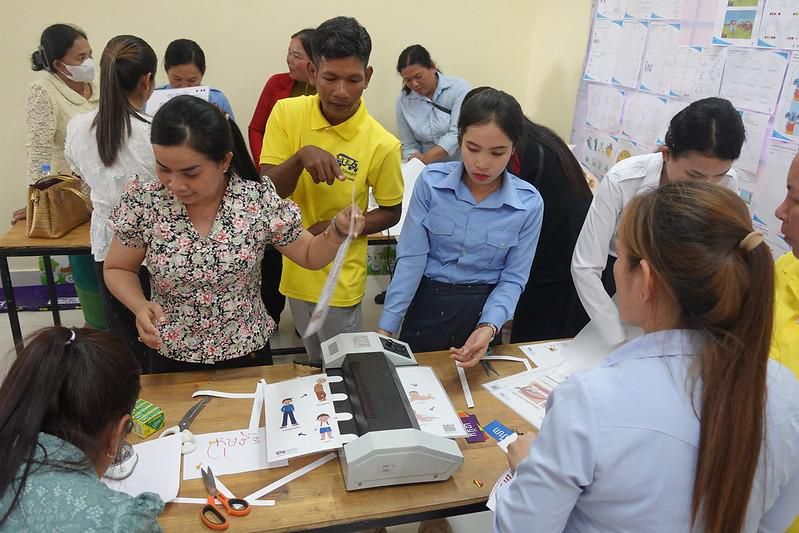
Workshops were structured to emphasize hands-on use of resources and practical classroom application rather than theory. Teachers were trained to create their own teaching materials, both by hand using low-cost physical materials and through basic computer-based resource creation, and to apply these materials directly in their classrooms. Teachers were encouraged to share experiences and adapt resources to suit their classroom context.
Repeated engagement and follow-up support
Training workshops were complemented by follow-up visits to participating schools. These visits were designed primarily to support teachers in implementing workshop content, provide practical guidance in real classroom settings, and address challenges encountered during application. Project staff worked directly with teachers to reinforce concepts introduced during workshops and to assist with adapting resources to specific classroom contexts.
During follow-up visits, teachers were also invited to share feedback on the usefulness of resources, identify areas requiring clarification, and suggest ideas for improving future workshop content and materials.
Digital access and resource distribution
The Rermork Digital Library served as the primary platform for distributing project resources. By providing free, open-access materials, the project supported continued use by participating teachers and access by educators beyond the immediate project area.
Collaboration with education authorities
POE and DOE participated as both participants and co-facilitators in project activities. Their involvement supported institutional alignment, reinforced classroom standards, and strengthened integration of project practices within the existing education system.
Together, these elements formed a coherent implementation framework that emphasized sustainability, consistency, and relevance. This framework allowed CLIP3 to apply an improved program approach within a defined geographic area, while adjusting activities based on teacher feedback and education authority requirements.
Implementation Highlights
CLIP3 was implemented through a structured sequence of workshops, follow-up school visits, and ongoing engagement with teachers and education authorities. Activities were designed to reinforce learning over time and support practical classroom application rather than deliver one-off training events.
Teacher training workshops
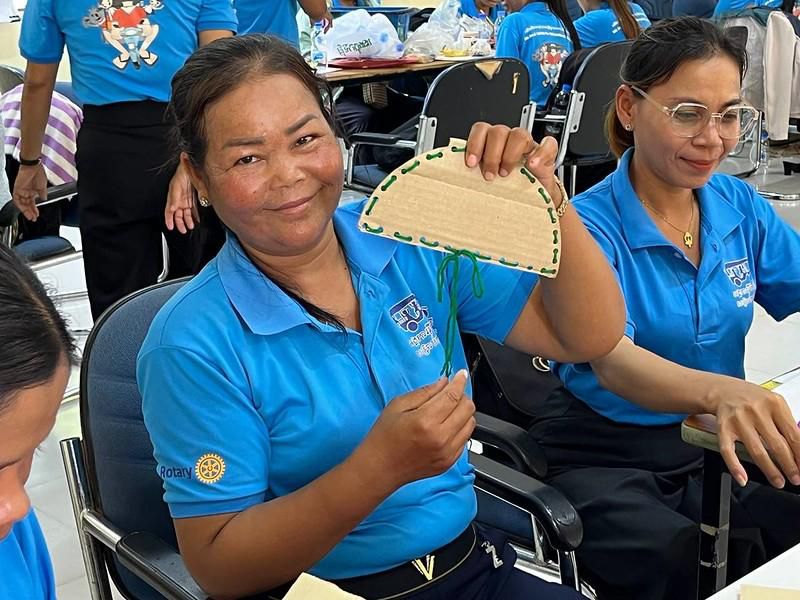
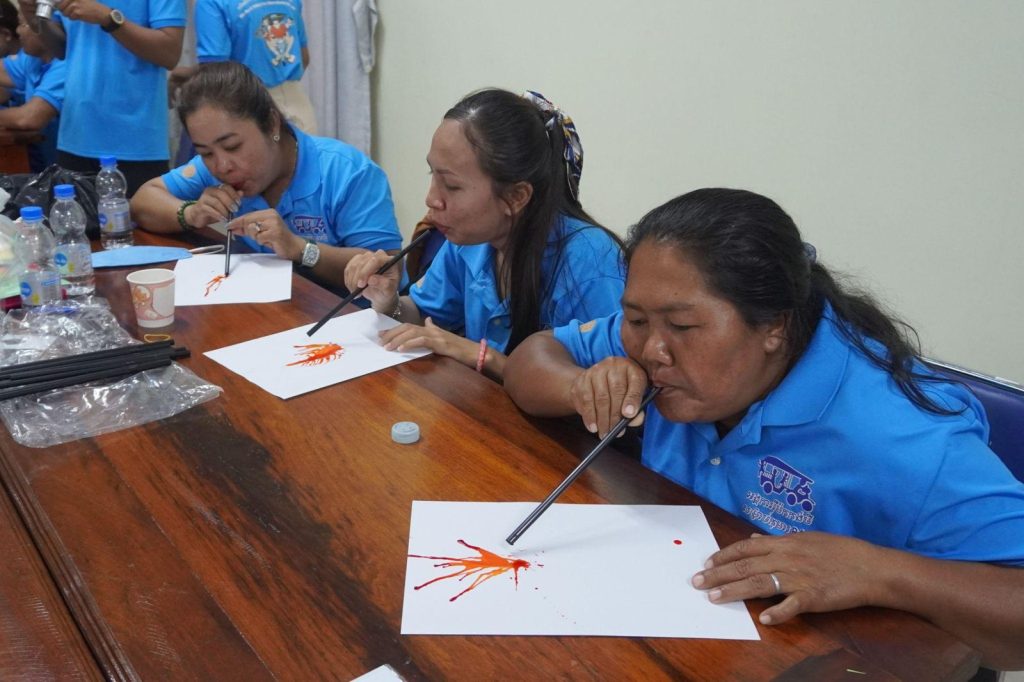
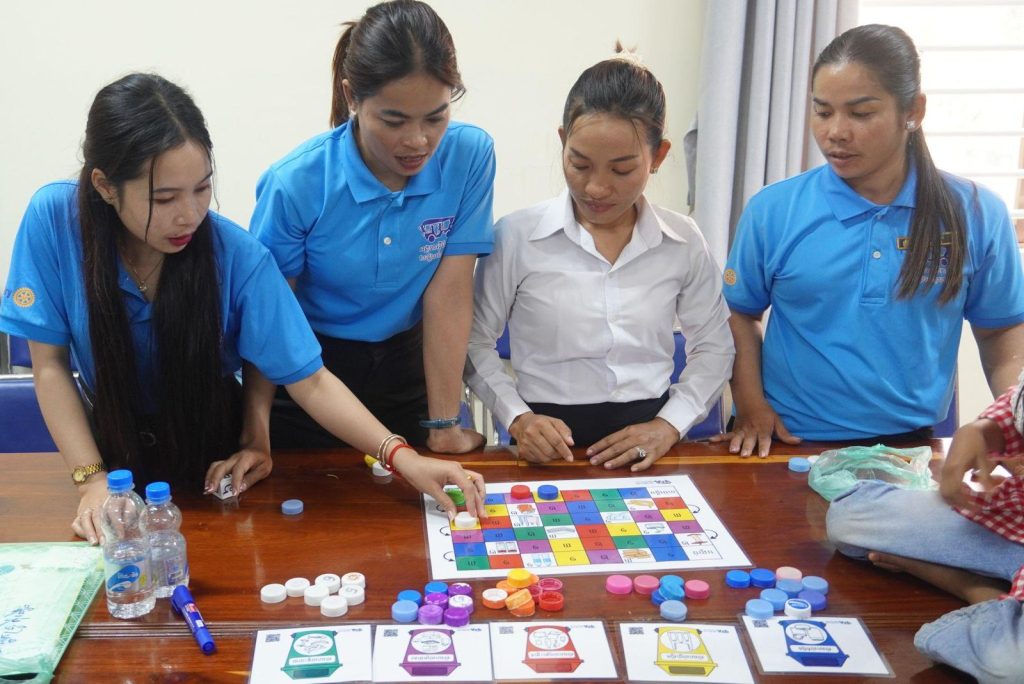
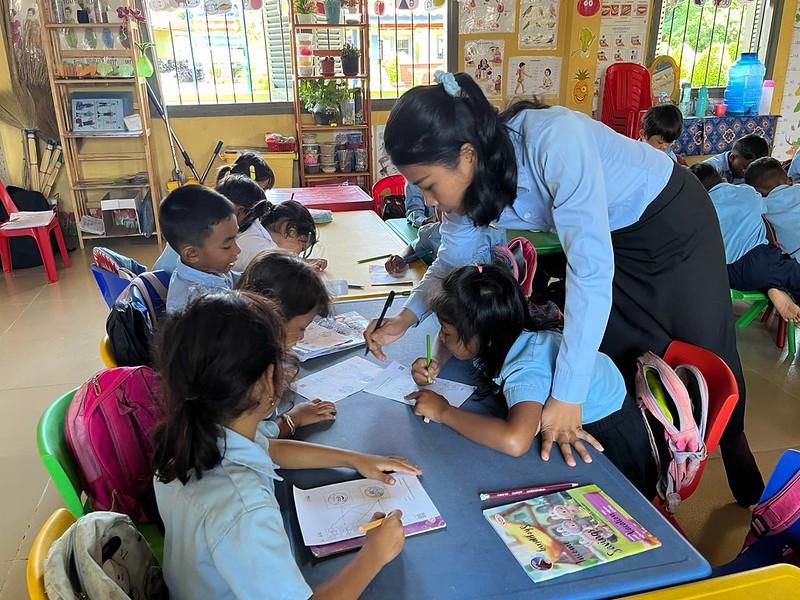
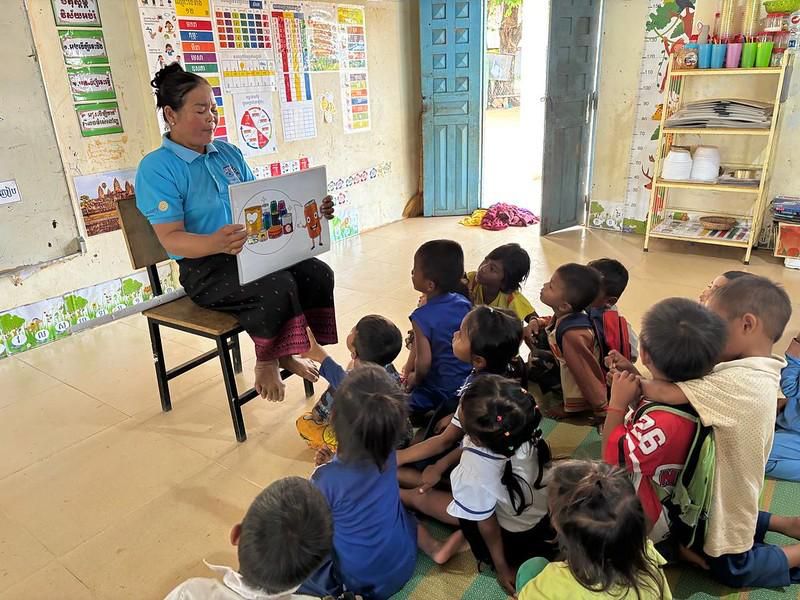
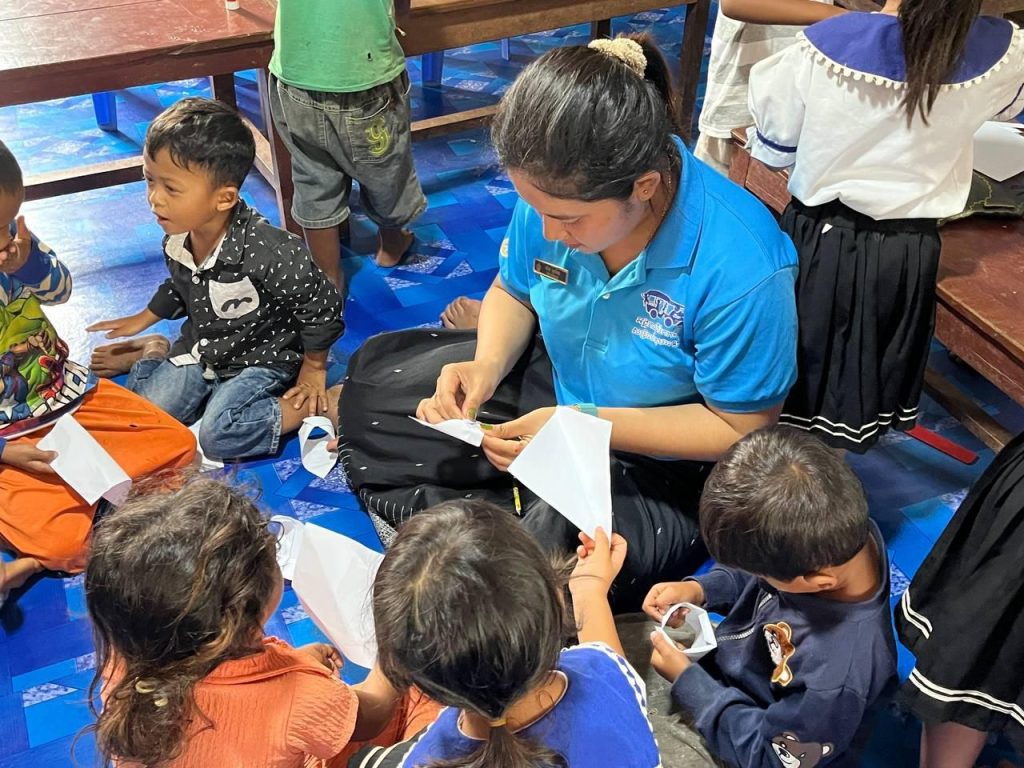
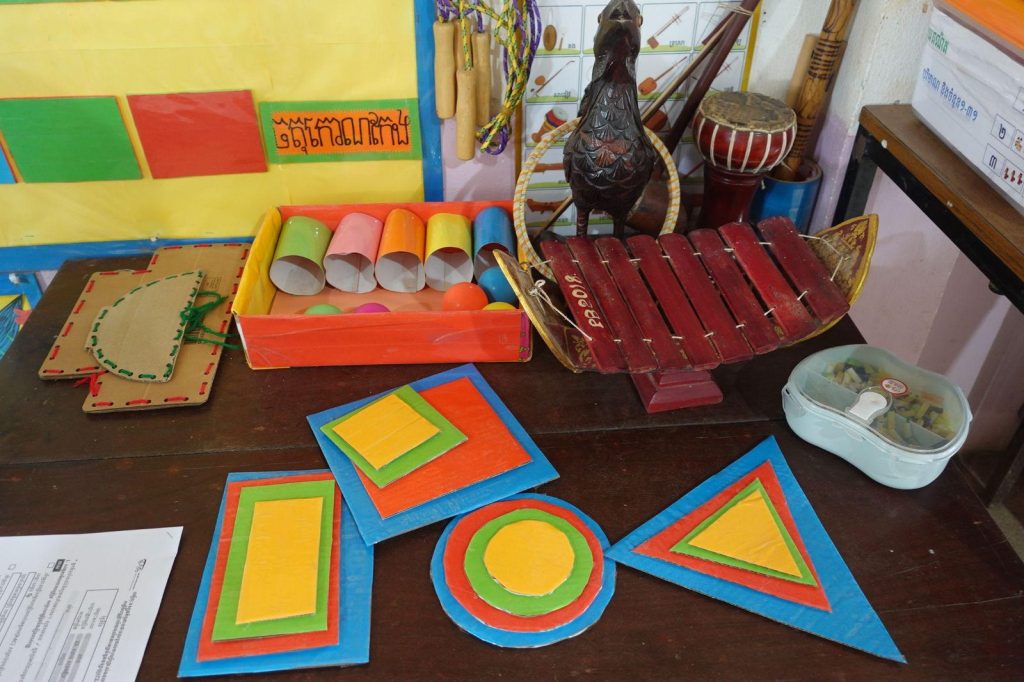
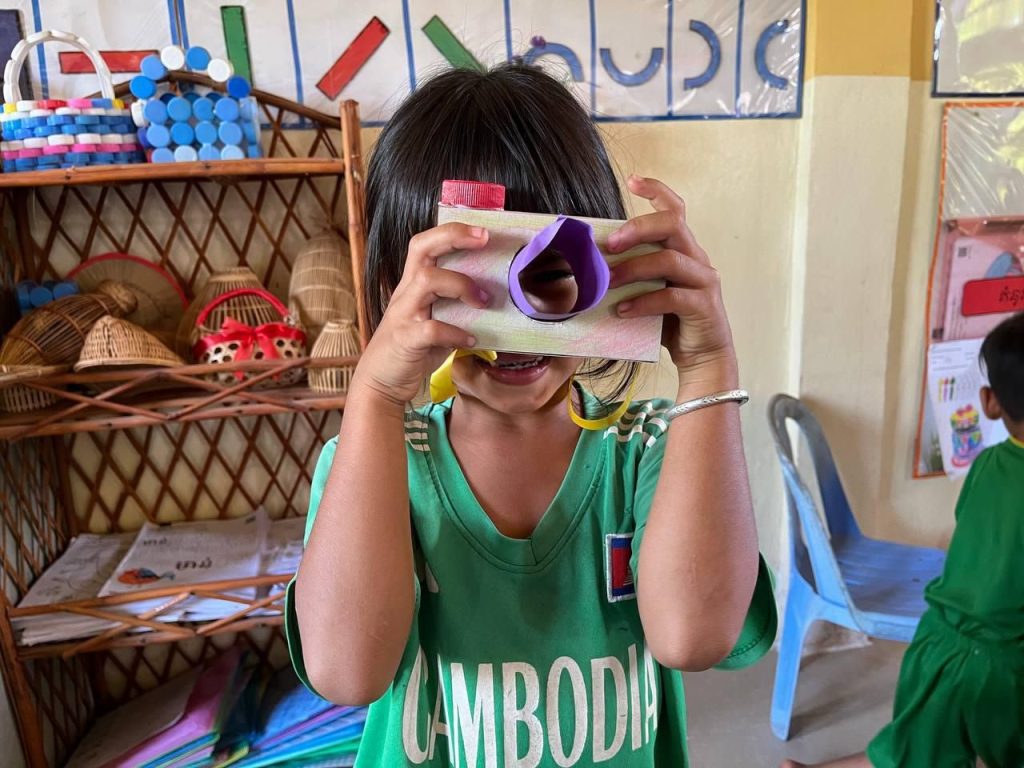
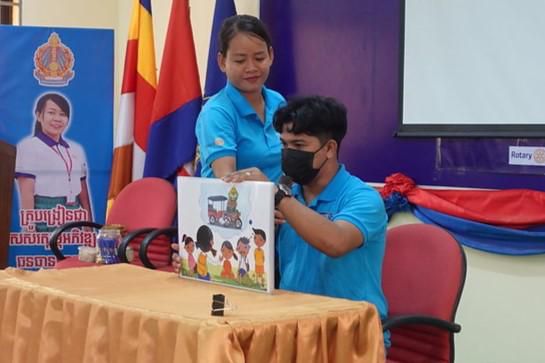
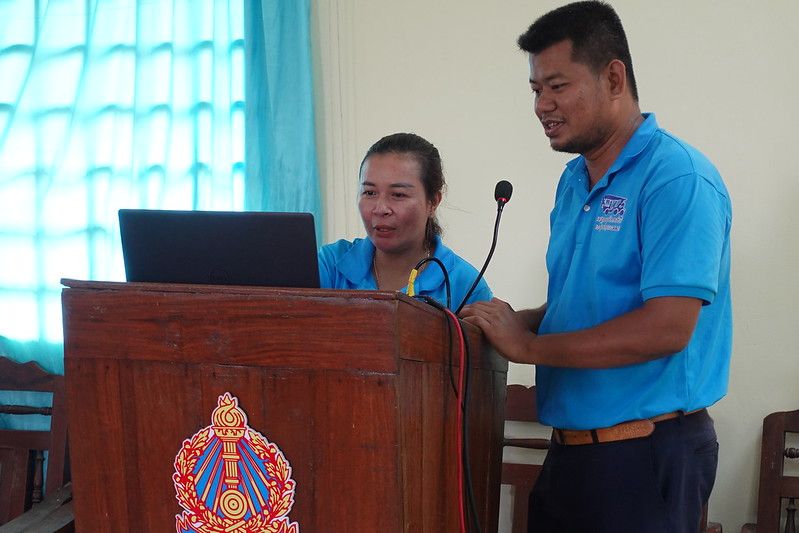
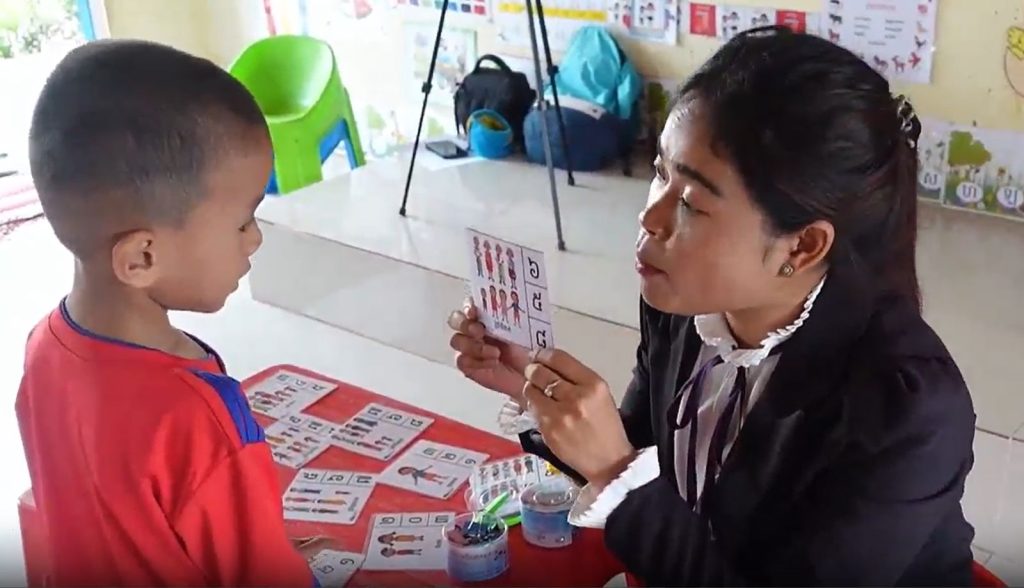
Workshops formed the core of project implementation. These sessions focused on practical use of curriculum-aligned teaching resources, lesson planning, and play-based learning activities appropriate to early childhood classrooms. Teachers were trained to create their own teaching materials, both by hand using low-cost physical materials and through basic computer-based resource creation. During workshops, teachers actively practiced activities, developed materials together, and discussed how resources could be adapted to different classroom contexts. POE and DOE officers participated in workshops as both participants and co-facilitators, providing guidance on curriculum alignment and classroom environment standards.
Follow-up school visits
Following each workshop, project staff conducted follow-up visits to participating schools. These visits focused on supporting teachers as they implemented workshop content in their own classrooms. Staff worked alongside teachers to address challenges, clarify workshop concepts, and provide practical guidance based on classroom realities. Follow-up visits also provided an opportunity for teachers to share experiences, discuss challenges, and suggest improvements to future workshops and resources.
Integration of classroom environment standards
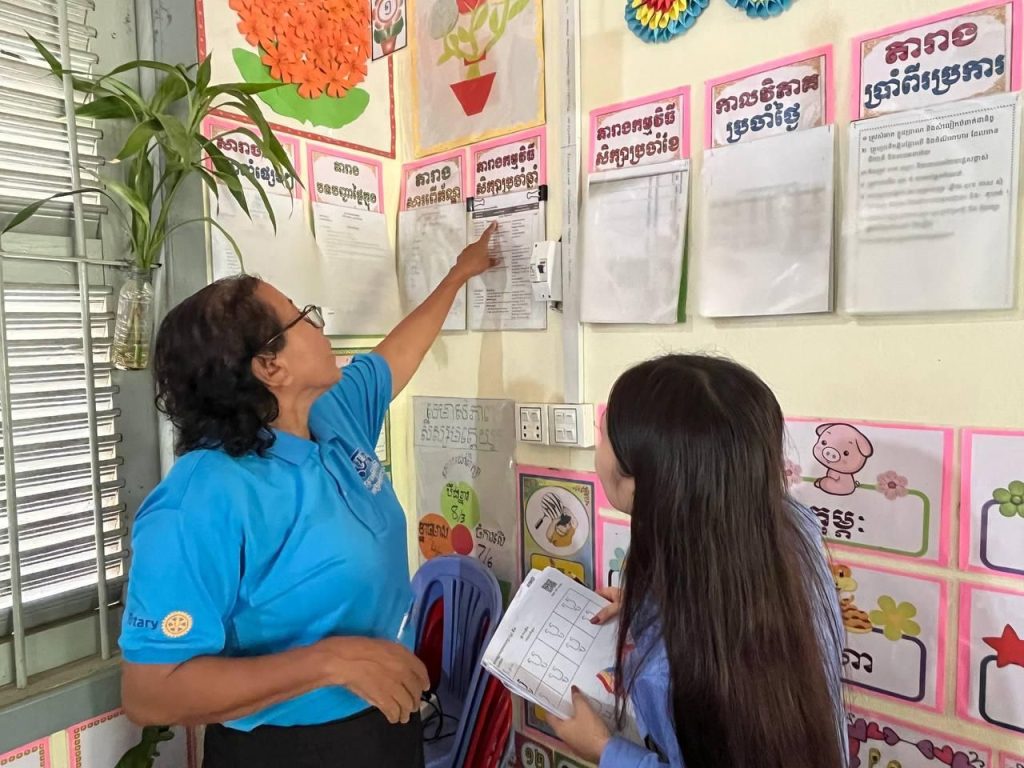
In collaboration with education authorities, CLIP3 placed specific emphasis on supporting teachers to meet government classroom environment standards. Resources related to classroom displays and learning environments were developed and introduced through workshops, with POE and DOE officers providing guidance on how classrooms are assessed against these standards. This collaboration helped teachers better understand expectations and apply them consistently in their classrooms.
Ongoing teacher engagement and peer support
Beyond formal workshops and school visits, teachers remained connected through established support channels, including teacher groups facilitated by the project. These channels enabled teachers to share ideas, exchange self-created materials, and discuss classroom experiences with peers. This ongoing engagement reinforced workshop learning and encouraged collaboration among teachers beyond scheduled project activities.
Together, these implementation activities ensured that CLIP3 was delivered as a continuous process rather than a series of isolated events. The approach supported sustained engagement, practical application, and responsiveness to teacher and institutional needs.
Resource Development and Digital Access
Resource development was a central component of CLIP3 and formed the foundation for both teacher training and classroom implementation. Rather than relying on externally sourced materials, the project focused on creating Khmer-language teaching resources aligned with government curriculum and classroom requirements, ensuring relevance, usability, and long-term value.
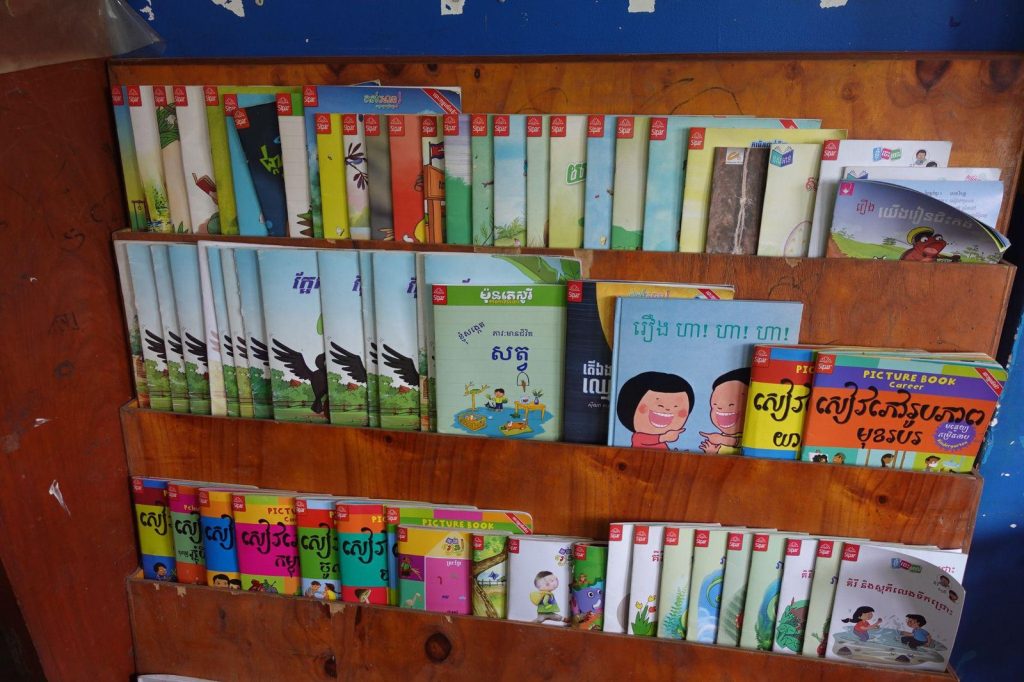
Resources developed through CLIP3 included a range of materials designed for direct classroom use, such as story-based learning materials, activity games, songs, worksheets, and classroom environment resources. All materials were developed to support play-based learning approaches and to be adaptable to different classroom contexts and resource constraints. Particular attention was given to creating materials that could be used with minimal cost and easily reproduced by teachers.
Resource development was carried out through a collaborative process involving teachers, POE, DOE, and R4C. Teachers contributed directly to decisions on content relevance and classroom practicality based on daily teaching experience, while education officers and project staff worked alongside teachers to ensure materials aligned with government curriculum and classroom environment standards. This shared approach supported consistency with official requirements while reinforcing teacher ownership and confidence in using the materials.
The Rermork Digital Library, developed and managed by R4C, served as the primary distribution platform for all CLIP3 resources. The platform provides free, open-access early childhood education materials and enabled teachers to access resources before and after workshops, download materials for classroom use, and revisit content as needed.
Digital access through the Rermork Digital Library extended the reach of CLIP3 beyond the immediate project area. Resources developed for participating teachers were made openly available, supporting continued use by teachers from earlier CLIP phases and access by educators from non-project schools. In addition to the digital platform, teachers actively shared self-created and adapted materials through established teacher support groups, reinforcing peer learning and collaboration.
By combining structured resource development with open digital access, CLIP3 ensured that materials created during the project remain available for ongoing classroom use. This approach supported consistency of teaching practice, reduced reliance on repeated in-person training, and strengthened the project’s long-term contribution to early childhood education.
Outcomes and Evidence of Change (Teacher-Level)
The outcomes of CLIP3 were assessed at the teacher level, reflecting the project’s design focus on strengthening teaching practice rather than directly measuring child learning outcomes. Evidence was drawn from teacher surveys, workshop feedback, follow-up school visits, and observations during follow-up visits conducted during the project period.
Increased teacher confidence and capability
Teachers reported increased confidence in planning and delivering lessons aligned with the government curriculum. Many indicated greater comfort in selecting appropriate resources, adapting materials to their classroom context, and applying play-based learning approaches across different learning domains. Teachers also reported improved confidence in managing classroom activities and engaging children through a wider range of teaching methods.
More consistent use of curriculum-aligned resources
Follow-up visits and teacher feedback indicated more regular and consistent use of project resources in daily classroom practice. Teachers reported integrating story-based materials, activity games, songs, worksheets, and classroom environment resources into lessons, rather than relying on a narrow set of teaching tools. Observations during follow-up visits confirmed that resources introduced during workshops were actively being used and adapted in participating classes.
Improved lesson planning and classroom practice
Teachers demonstrated increased ability to structure lessons using a combination of resources and activities aligned with curriculum requirements. Workshop activities and follow-up support contributed to clearer lesson sequencing, improved use of play-based activities, and more intentional classroom organization in line with classroom environment standards.
Strengthened use of digital tools for teaching support
Teachers reported more frequent use of digital tools to access teaching resources, download materials, and prepare lessons. Increased familiarity with the Rermork Digital Library and related digital tools supported more independent lesson preparation.
Peer learning and professional exchange
Teachers engaged in ongoing peer exchange through workshops, follow-up visits, and established support groups. Teachers shared ideas, discussed classroom challenges, and exchanged self-created or adapted materials. This peer interaction reinforced learning from workshops and contributed to a more collaborative professional environment among participating teachers.
Overall, the evidence from CLIP3 indicates measurable changes in teacher confidence, resource use, and classroom practice. These outcomes align with the project’s objective of strengthening teacher capacity as a means of improving early childhood education practice within participating schools.
Monitoring, Feedback, and Evidence Sources
Monitoring and feedback activities for CLIP3 were designed to support implementation, inform ongoing refinement, and provide evidence of change at the teacher level. Data collection focused on classroom practice, teacher experience, and resource use, consistent with the project’s emphasis on teacher capacity rather than direct assessment of child learning outcomes.
Evidence used to inform the outcomes described in this report was drawn from multiple sources collected throughout the project period, including:
Teacher surveys
Baseline, annual, and final surveys were conducted with participating teachers to capture changes in confidence, resource use, and classroom practice over time. Survey data provided insight into how teachers perceived the usefulness of training, resources, and ongoing support.
Workshop feedback
Feedback was collected during and after training workshops to assess relevance, clarity, and applicability of workshop content. This feedback informed adjustments to workshop structure, pacing, and resource introduction across the project period.
Follow-up school visits and observations during follow-up visits
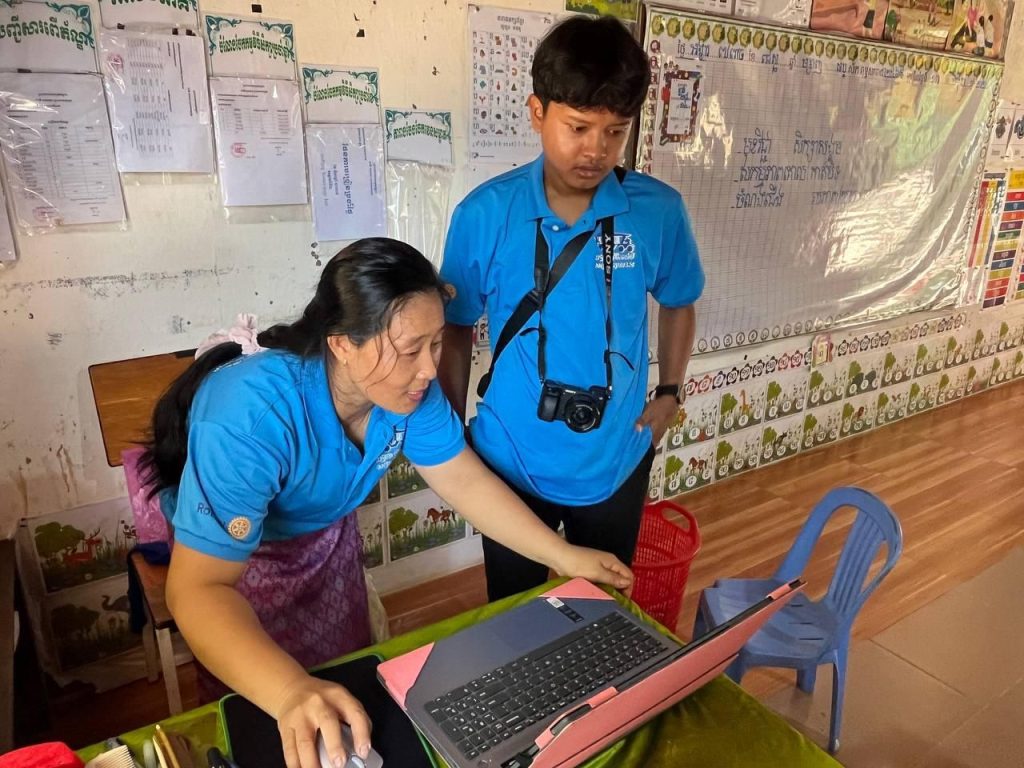
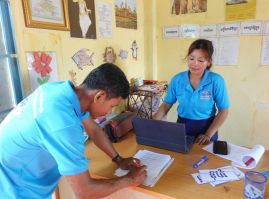
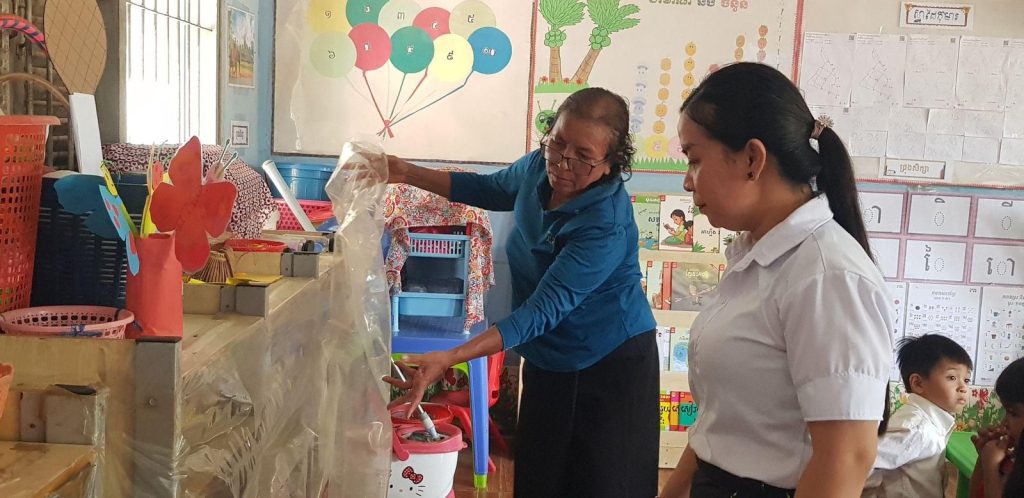
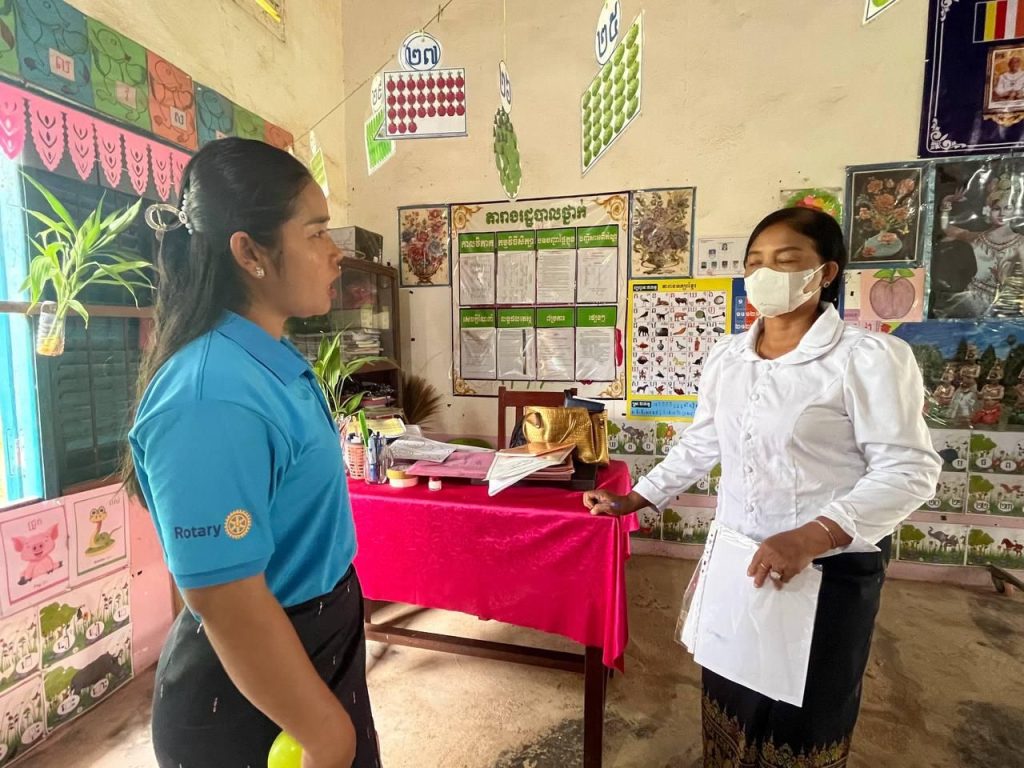
Follow-up visits were conducted after workshops to support teachers during classroom implementation. Observations and discussions during these visits provided qualitative evidence of how resources and teaching approaches were being applied in practice and highlighted areas requiring additional support or clarification.
Classroom environment assessments
Classroom environment assessments were conducted in collaboration with DOE at key points during the project. These assessments focused on alignment with government classroom environment standards and supported comparison over time.
Digital platform and engagement records
Usage data from the Rermork Digital Library and associated teacher communication platforms were reviewed to understand patterns of access, engagement, and continued use of project resources. These data reflect reach and engagement rather than direct measures of educational outcomes.
Rotary Global Grant reporting
Detailed activity records, timelines, impact measures, and participation data were reported through the Rotary Global Grant online reporting system in accordance with Rotary requirements. In addition, quarterly progress reports were prepared and shared with the Rotary Club of Calgary Downtown and the Rotary Club of Pursat throughout the project period. Together, these reports provide a comprehensive account of project activities, beneficiaries, platform reach, and implementation progress, and form the formal compliance and accountability record for the grant.
In the Rotary Global Grant reporting system, ‘institutions’ include education offices and administrative bodies in addition to schools. The project worked directly with 15 target schools, alongside Provincial and District education offices and related institutions.
Together, these sources provide the evidence base for the outcomes and observations presented in this report. Quantitative data and qualitative feedback were used in combination to assess consistency of implementation, changes in teacher practice, and patterns of resource use, while recognizing the limitations inherent in early childhood education settings.
Platform Reach and Usage Trends
Digital platforms played an important role in extending access to CLIP3 resources beyond in-person activities and supporting continued engagement throughout the project period. Usage and engagement data presented in this section are drawn from platform records and are included to illustrate reach, accessibility, and patterns of use, rather than to measure educational outcomes.
Rermork Digital Library access and downloads
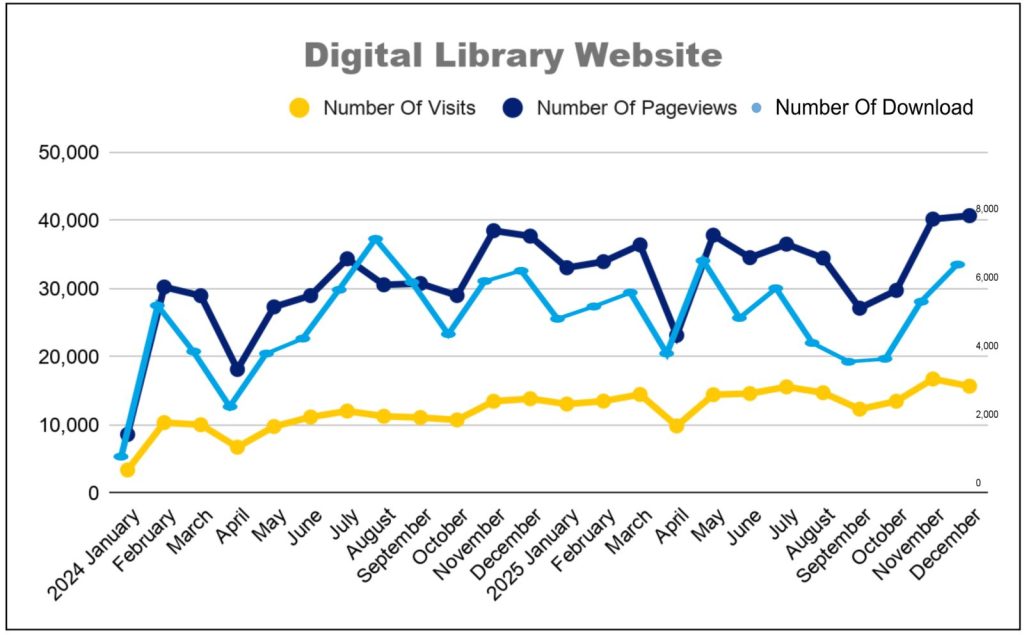
The Rermork Digital Library served as the primary distribution platform for resources developed through CLIP3. Usage data show sustained access to the platform over the project period, including regular downloads of teaching resources. These trends indicate continued demand for Khmer-language, curriculum-aligned early childhood education materials and ongoing use by teachers both within and beyond the immediate project area.
Importantly, growth in access and downloads occurred without paid promotion or advertising. All usage reflects organic discovery and sharing by teachers, schools, and education officials, suggesting a clear unmet need for accessible early childhood education resources in Khmer.
Graphs and tables included in this report illustrate changes in platform access and download activity over time. While these data do not indicate how materials were used in classrooms, they provide evidence of reach and continued engagement with the resources made available through the project.
Teacher engagement through digital communication channels
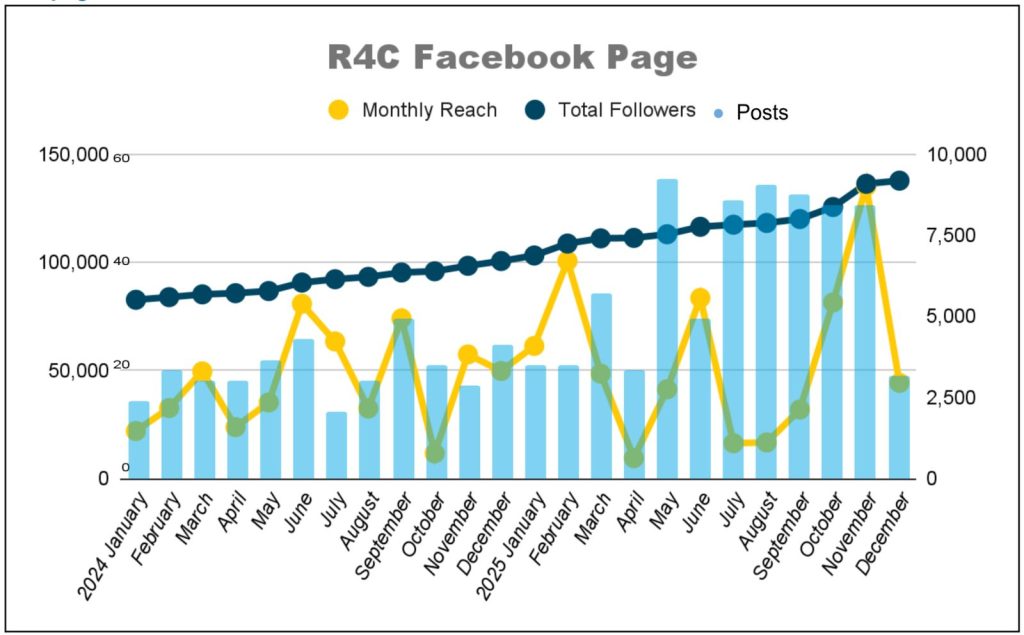
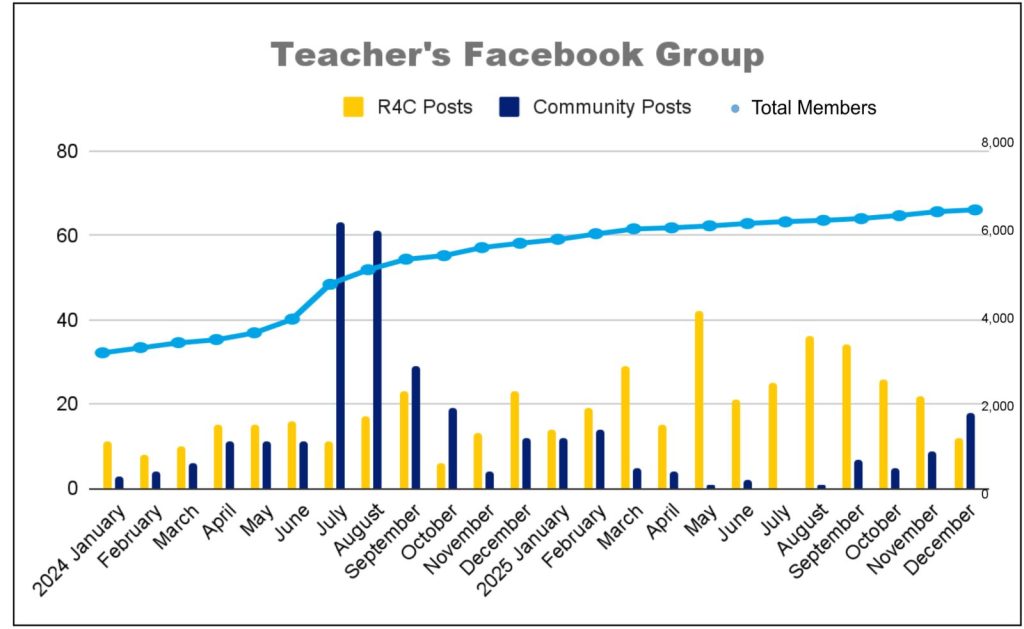
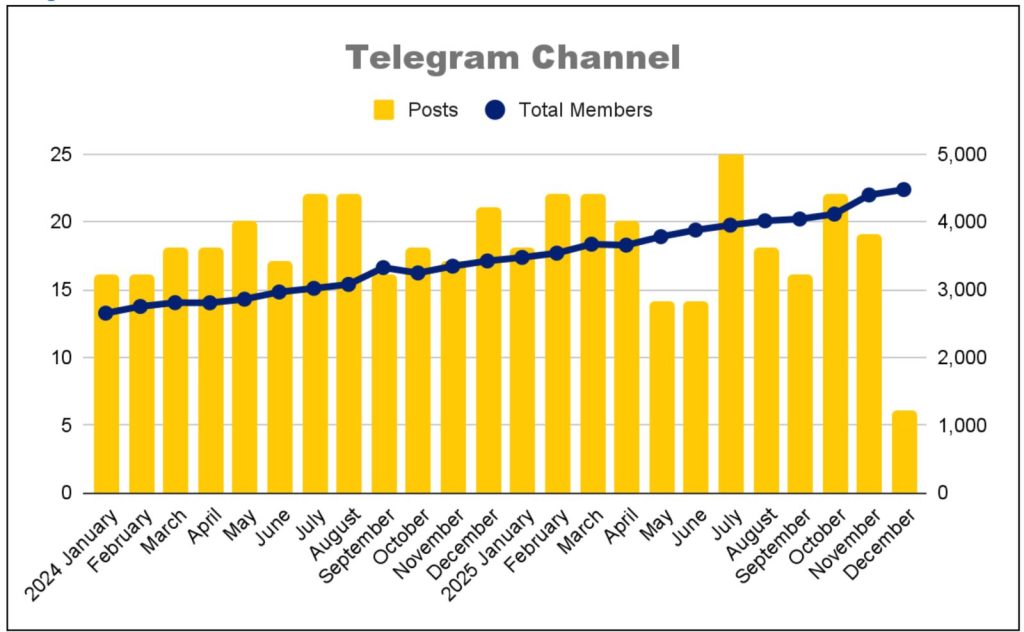
In addition to the digital library, teachers engaged with project activities through established online communication channels, including private Facebook and Telegram groups. Membership and activity within these groups increased during the project period. This growth occurred organically, without advertising or formal recruitment campaigns, and was driven primarily by peer sharing and word-of-mouth among teachers.
These channels functioned as informal support networks, reinforcing workshop learning and enabling ongoing collaboration among teachers.
YouTube and multimedia content access
Project-related video content hosted on YouTube provided an additional access point for resources and instructional material. Subscriber growth and view counts, as presented in the accompanying graphs, reflect organic engagement rather than promotional activity. No advertising or paid distribution was used to drive traffic to video content.
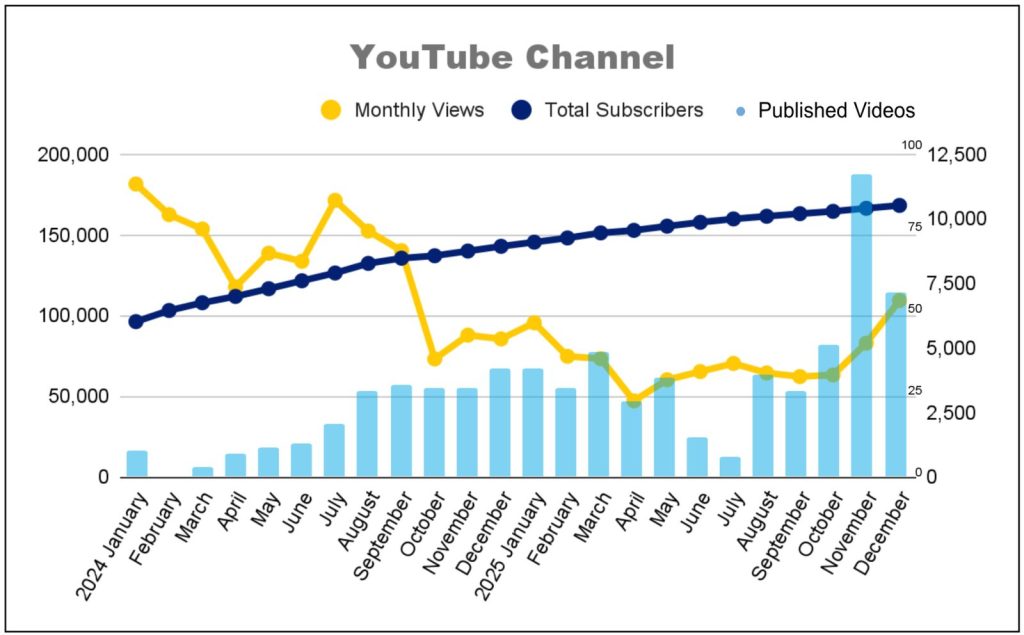
Interpreting platform data
Platform usage data should be interpreted as indicators of reach and access, not as direct evidence of changes in teaching practice or learning outcomes. The outcomes described in earlier sections of this report are based on teacher surveys, workshop feedback, follow-up visits, and observations during follow-up visits. Platform data complement this evidence by demonstrating that resources developed through CLIP3 were accessed, shared, and reused over time.
For consistency with previous CLIP reporting, graphs and tables illustrating platform growth, downloads, and engagement are included in this report. Detailed metrics are also reported through the Rotary Global Grant online reporting system, with related files as part of project reporting.
Challenges and Adaptive Management
As with any multi-year education project implemented across multiple schools, CLIP3 encountered operational and contextual challenges during delivery. These challenges were addressed through adaptive management and ongoing coordination with teachers, education authorities, and Rotary partners.
Variation in teacher digital skills
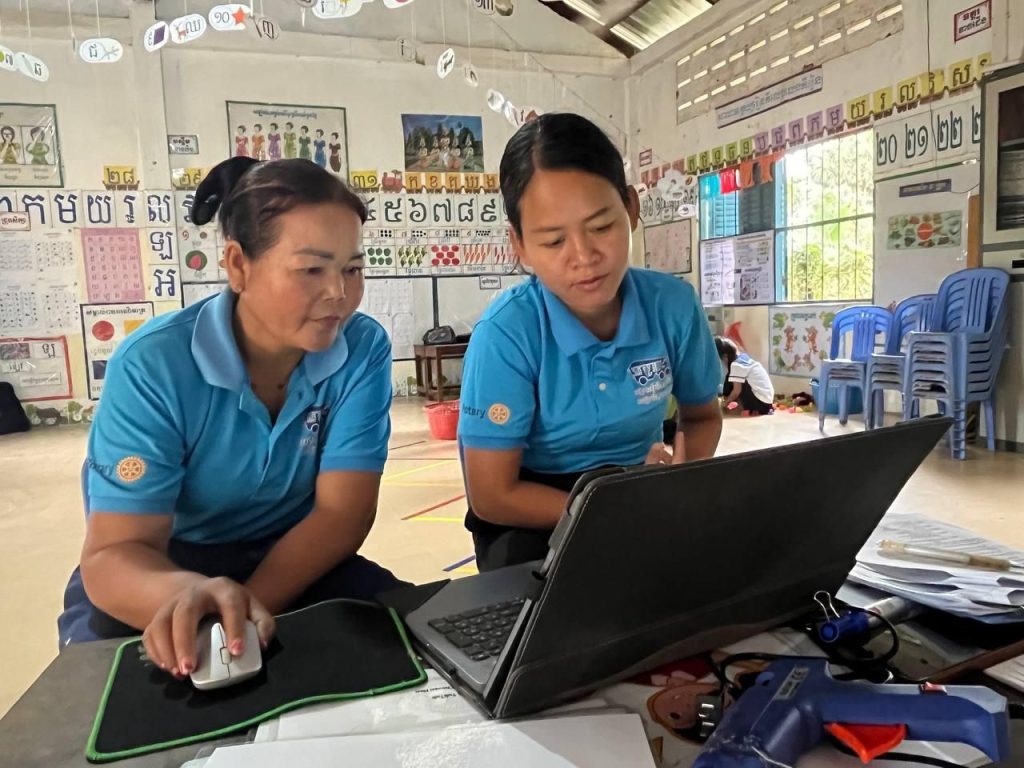
Teachers entered the project with differing levels of digital literacy, which affected the pace at which some participants could engage with digital resources and tools. To address this, workshop content was adjusted to include additional hands-on computer training and practical exercises. Basic computer training was led by members of the Rotary Club of Pursat, who also provided ongoing computer support throughout the project period. Training was paced to ensure that all teachers could meaningfully access and use the digital library and related resources, regardless of starting skill level.
Time constraints within school schedules
Teachers often faced limited time for training and preparation due to existing teaching responsibilities. Workshop structures and follow-up visits were adapted to focus on practical classroom application, enabling teachers to immediately apply new materials without requiring significant additional preparation time.
Resource adaptation to diverse classroom contexts
Classroom conditions and available materials varied across participating schools. Feedback gathered during follow-up visits highlighted the need for resources that could be adapted to different space, material, and class-size constraints. In response, resource development emphasized low-cost, flexible materials that could be modified by teachers using locally available supplies.
Coordination across multiple stakeholders
CLIP3 required coordination between teachers, POE and DOE, and Rotary partners. Differences in availability and scheduling occasionally affected participation in activities. Regular communication and joint planning meetings helped align expectations, adjust timelines where needed, and maintain consistent engagement across stakeholders.
Refinement of workshops over time
Teacher feedback and observations during follow-up visits indicated that some workshop content required adjustment to better match classroom realities. Workshops were refined iteratively across the project period, with changes made to sequencing, emphasis, and resource introduction to improve clarity and relevance.
Through ongoing feedback and adaptive management, challenges encountered during CLIP3 were used to strengthen project delivery rather than impede progress. This approach supported continued engagement, improved relevance of activities, and alignment with teacher and institutional needs.
Sustainability and Program Strengthening
Sustainability was a core consideration in the design and implementation of CLIP3. Rather than relying on one-time inputs, the project focused on strengthening teacher capacity, institutional alignment, and access to resources that remain available beyond the project period.
Teacher capacity as a foundation for sustainability
By focusing on teachers as the primary participants, CLIP3 aimed to support lasting improvements in classroom practice. Teachers continue to apply skills, methods, and resources introduced during the project with new cohorts of children each year. This approach reduces reliance on repeated external training and supports continuity of practice within schools.
Open-access resource availability
Resources developed through CLIP3 are hosted on the Rermork Digital Library, providing ongoing, free access to curriculum-aligned materials. Continued availability of these resources allows teachers to revisit, adapt, and reuse materials over time and enables access by educators beyond the immediate project area. Open access reduces barriers related to cost, distribution, and location.
Integration with government standards and practices
Active involvement of POE and DOE supported alignment with government curriculum and classroom environment standards. This alignment increases the likelihood that practices introduced through CLIP3 can be maintained within existing education frameworks rather than functioning as parallel or temporary initiatives.
Peer support and professional exchange
Teacher collaboration through workshops, follow-up visits, and established communication groups supported ongoing peer learning. These networks enable teachers to continue sharing ideas, materials, and classroom experiences after formal project activities conclude, reinforcing professional practice and problem-solving.
Program refinement through iterative learning
Across CLIP phases, feedback from teachers and education authorities has been used to refine workshop content, resource design, and implementation approaches. This iterative process strengthens the program model over time and supports adaptation to evolving needs without relying on major structural changes.
Together, these elements support the sustainability of CLIP3 by embedding skills, resources, and practices within teachers, schools, and existing education structures. The project’s emphasis on capacity-building and open access contributes to continued use and relevance beyond the project period.
Rotary Engagement and Acknowledgement
CLIP3 was implemented through close collaboration with Rotary partners at both international and local levels. Rotary’s involvement provided financial oversight, governance, and on-the-ground engagement that supported disciplined implementation and accountability throughout the project period.
The Rotary Club of Calgary Downtown served as the international sponsor, leading fundraising efforts, supporting grant oversight, and fulfilling reporting requirements to Rotary International. Their role ensured compliance with Rotary Global Grant requirements and supported transparent management of project funds.
The Rotary Club of Pursat acted as the local host and supporting Rotary club, providing in-country financial oversight and active participation in project activities. Members supported community assessments, attended workshops, assisted with training activities, and worked closely with schools, teachers, and education authorities. Their regular presence and involvement strengthened coordination and facilitated effective implementation at the local level.
Through this partnership, Rotary members contributed not only financial support but also practical engagement and local insight. Regular coordination was maintained through bi-monthly online meetings involving the Rotary Club of Calgary Downtown, the Rotary Club of Pursat, and the implementing organization, supporting shared responsibility for project delivery and ongoing communication. The collaboration between Rotary clubs, education authorities, and the implementing organization reinforced accountability to both beneficiaries and Rotary stakeholders.
Conclusion
CLIP3 represents the third phase of a multi-year program designed to strengthen early childhood education through sustained investment in teacher capacity, locally developed resources, and institutional alignment. Implemented in Pursat Province, the project applied a refined program model that emphasized practical classroom application, collaboration with education authorities, and open access to curriculum-aligned materials.
Evidence gathered throughout the project indicates measurable changes at the teacher level, including increased confidence, more consistent use of appropriate resources, and improved classroom practice. These outcomes reflect the value of repeated engagement, iterative refinement, and integration within existing education structures rather than reliance on short-term inputs.
By combining structured training, collaborative resource development, digital access, and ongoing support, CLIP3 established systems and practices that remain in place beyond the project period. The project demonstrates how a teacher-focused, resource-driven approach can contribute to more consistent early childhood education practice while remaining adaptable to local needs and constraints.
Together with its Rotary partners and education authorities, Rermork for Children implemented CLIP3 as a disciplined, accountable project that builds on prior phases and contributes to a growing body of practice in early childhood education. The lessons and structures developed through CLIP3 provide a strong foundation for continued program refinement and broader application.
Index
Project schools
| No. | Area | School | No. of Teachers | No. of Classes | Age | No. of Students (No. of Girls) |
|---|---|---|---|---|---|---|
| 1 | Pursat | Pursat school (independent preschool) | 4 | 4 | 3 years old | 38 (22) |
| 4 years old | 36 (19) | |||||
| 5 years old | 40 (17) | |||||
| 5 years old | 43 (19) | |||||
| 2 | Stung Toch school (preschool class) | 1 | 1 | 3 years old | 2 (2) | |
| 4 years old | 15 (7) | |||||
| 5 years old | 18 (8) | |||||
| 3 | Sokha Rum school (preschool class) | 1 | 1 | 5 years old | 28 (14) | |
| 4 | Kandieng | Preah Teat school (independent preschool) | 2 | 2 | 4 years old | 48 (18) |
| 5 years old | 58 (26) | |||||
| 5 | Toul Taprom school (preschool class) | 1 | 1 | 4 years old | 24 (16) | |
| 5 years old | 27 (16) | |||||
| 6 | Kbal Chheupok school (community school) | 1 | 1 | 3 years old | 6 (2) | |
| 4 years old | 8 (4) | |||||
| 5 years old | 11 (7) | |||||
| 7 | Bakan | Tropeang Chong school (independent preschool) | 3 | 3 | 3 years old | 41 (16) |
| 4 years old | 67 (34) | |||||
| 5 years old | 33 (12) | |||||
| 8 | Bong Knah school (preschool class) | 2 | 2 | 3 years old | 31 (15) | |
| 4 years old | 34 (22) | |||||
| 5 years old | 63 (31) | |||||
| 9 | Ohta Paong school (independent preschool) | 1 | 1 | 5 years old | 65 (32) | |
| 10 | Krakor | Bong Kontuot school (independent preschool) | 2 | 2 | 3 years old | 25 (11) |
| 5 years old | 34 (14) | |||||
| 11 | Po Tream school (preschool class) | 2 | 2 | 5 years old | 29 (11) | |
| 5 years old | 29 (16) | |||||
| 12 | Kbal Trach school (preschool class) | 1 | 1 | 5 years old | 37 (22) | |
| 13 | Kravanh | Lea Ch school (independent preschool) | 2 | 2 | 4 years old | 25 (12) |
| 5 years old | 28 (12) | |||||
| 14 | Ro Kat school (independent preschool) | 2 | 2 | 4 years old | 26 (10) | |
| 5 years old | 50 (35) | |||||
| 15 | Kom Peang school (community school) | 1 | 1 | 3 years old | 16 (10) | |
| 4 years old | 20 (12) | |||||
| 5 years old | 10 (7) | |||||
| Total | 26 | 26 | Total | 1,015 (514) | ||
| 3 years old | 159 (78) | |||||
| 4 years old | 340 (176) | |||||
| 5 years old | 516 (260) | |||||
Project Implementation
Main activities:
| No. | Activity | Duration | Start Date | Completion Date |
|---|---|---|---|---|
| 1 | Baseline survey The 1st classroom assessment | 8 days | Dec/04/2023 | Dec/14/2023 |
| 2 | Kick-off meeting The project intro workshop | 1 day | Dec/28/2023 | Dec/28/2023 |
| 3 | Project tools delivery | 7 days | Feb/01/2024 | Feb/16/2024 |
| 4 | The 1st workshop | 1 day | Feb/15/2024 | Feb/15/2024 |
| 5 | The 1st follow-up visits | 10 days | Mar/11/2024 | Mar/25/2024 |
| 6 | The 2nd workshop | 1 day | May/23/2024 | May/23/2024 |
| 7 | The 2nd follow-up visits | 11 days | Jun/03/2024 | Jun/21/2024 |
| 8 | The 3rd workshop | 1 day | Jul/04/2024 | Jul/04/2024 |
| 9 | The 3rd follow-up visits | 11 days | Jul/15/2024 | Jul/29/2024 |
| 10 | The 4th workshop | 1 day | Aug/22/2024 | Aug/22/2024 |
| 11 | The 4th follow-up visits Annual survey | 10 days | Sep/02/2024 | Sep/13/2024 |
| 12 | The project annual meeting | 0.5 day | Dec/05/2024 | Dec/05/2024 |
| 13 | The 5th workshop | 1 day | Feb/06/2025 | Feb/06/2025 |
| 14 | The 5th follow-up visits | 9 days | Feb/17/2025 | Feb/28/2025 |
| 15 | The 6th workshop | 1 day | May/22/2025 | May/22/2025 |
| 16 | The 6th follow-up visits The 2nd classroom assessment | 10 days | Jun/02/2025 | Jun/13/2025 |
| 17 | The 7th workshop | 1.5 day | Jul/23/2025 | Jul/24/2025 |
| 18 | The 7th follow-up visits Final survey | 10 days | Aug/11/2025 | Aug/22/2025 |
| 19 | The project closing meeting | 0.5 day | Oct/16/2025 | Oct/16/2025 |
The results of the 2nd classroom assessment (by region)
| School | The 1st results | The 2nd results | Difference from last time |
|---|---|---|---|
| Pursat school-1 (Independent preschool) | 33.59 | 34.00 | 0.41 up |
| Pursat school-2 (Independent preschool) | 33.00 | 35.67 | 2.67 up |
| Pursat school-3 (Independent preschool) | 16.75 | 33.67 | 16.92 up |
| Pursat school-4 (Independent preschool) | 16.32 | 32.00 | 15.68 up |
| Sokha Rum school (Preschool class) | 24.51 | 33.34 | 16.92 up |
| Stung Toch school (Preschool class) | 25.34 | 33.02 | 7.68 up |
| School | The 1st results | The 2nd results | Difference from last time |
|---|---|---|---|
| Preah Teat school-1 (Independent preschool) | 28.08 | 36.00 | 7.92 up |
| Preah Teat school-2 (Independent preschool) | 28.83 | 36.00 | 7.17 up |
| Toul Taprom school (Preschool class) | 26.08 | 35.00 | 8.92 up |
| Kbal Chheupok school (Community school) | 33.50 | 34.50 | 1.00 up |
| School | The 1st results | The 2nd results | Difference from last time |
|---|---|---|---|
| Tropeang Chong school-1 (Independent preschool) | 19.27 | 35.34 | 16.07 up |
| Tropeang Chong school-2 (Independent preschool) | 18.68 | 34.84 | 16.16 up |
| Tropeang Chong school-3 (Independent preschool) | 18.18 | 31.84 | 13.66 up |
| Bong Knah school-1 (Preschool class) | 21.36 | 34.34 | 12.98 up |
| Bong Knah school-2 (Preschool class) | 21.11 | 29.77 | 8.66 up |
| Ohta Paong school (Independent preschool) | 26.86 | 33.27 | 6.41 up |
| School | The 1st results | The 2nd results | Difference from last time |
|---|---|---|---|
| Bong Kontuot school-1 (Independent preschool) | 16.75 | 35.00 | 18.25 up |
| Bong Kontuot school-2 (Independent preschool) | 18.75 | 34.00 | 15.25 up |
| Po Tream school-1 (Independent preschool) | 12.36 | 35.00 | 22.64 up |
| Po Tream school-2 (Independent preschool) | 16.86 | 34.68 | 17.82 up |
| Kbal Trach school (Preschool class) | 18.84 | 27.44 | 8.60 up |
| School | The 1st results | The 2nd results | Difference from last time |
|---|---|---|---|
| Lea Ch school-1 (Independent preschool) | 32.18 | 35.75 | 3.57 up |
| Lea Ch school-2 (Independent preschool) | 29.68 | 35.75 | 6.07 up |
| Ro Kat school-1 (Independent preschool) | 25.00 | 35.75 | 10.75 up |
| Ro Kat school-2 (Independent preschool) | 27.18 | 35.09 | 7.91 up |
| Kom Peang school (Community school) | 30.61 | 34.75 | 4.14 up |
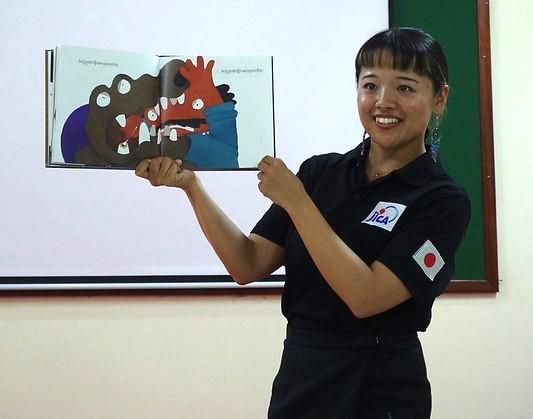
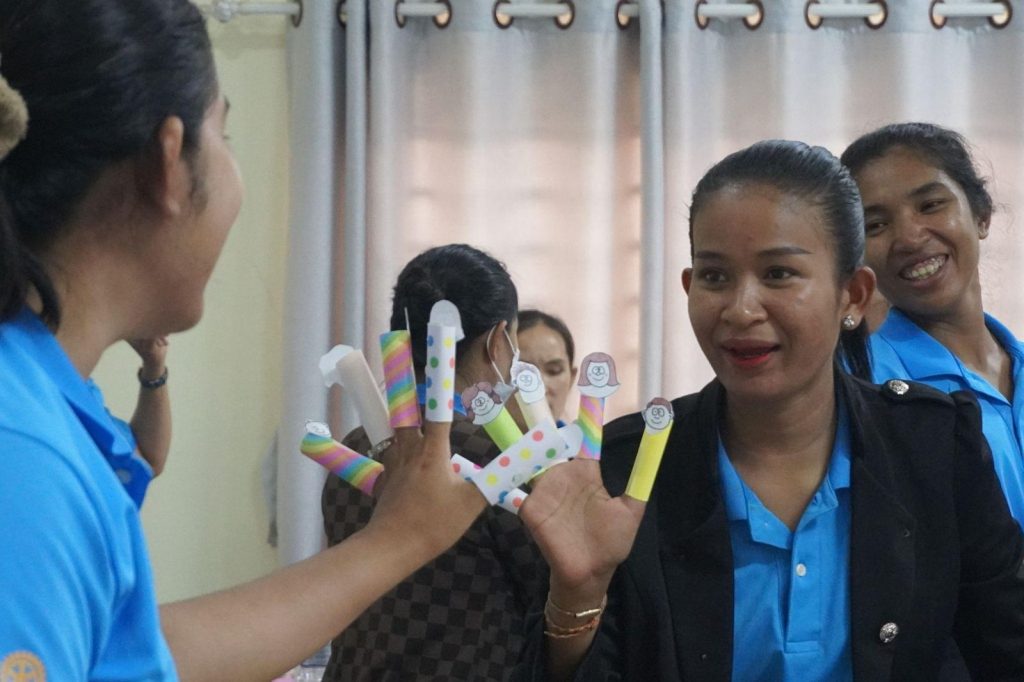
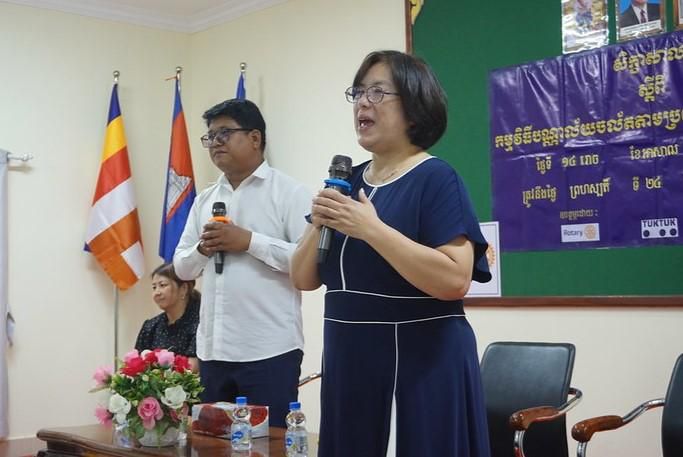
Workshop
Over the two-year period, a total of 8 workshops were conducted (project introduction plus 7 in-depth workshops), covering the following topics.
| Workshop | Topics |
|---|---|
| Project Intro |
|
| The 1st |
|
| The 2nd |
|
| The 3rd |
|
| The 4th |
|
| The 5th |
|
| The 6th |
|
| The 7th |
|
Resource Package Creation Status
CLIP3 includes the creation of four new original storybooks and their "Resource Packages*". We were able to create and publish four original storybooks and their corresponding resource packages over two years.
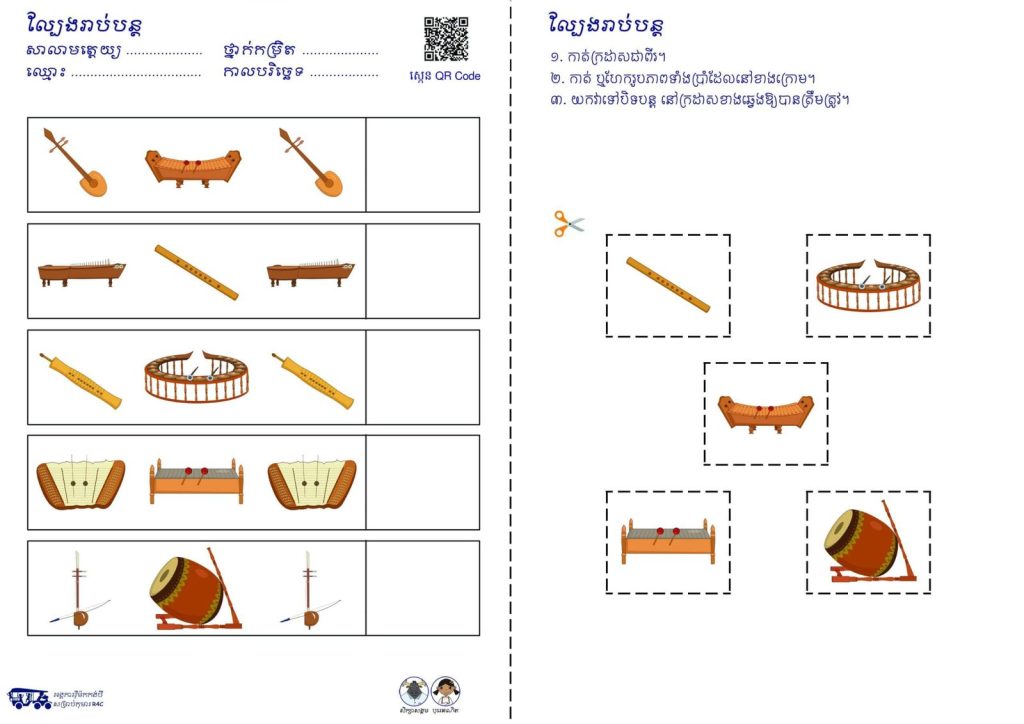
*Resource Package… A package of teaching materials that includes songs, activity games, board games, and worksheets related to the content of the picture book.
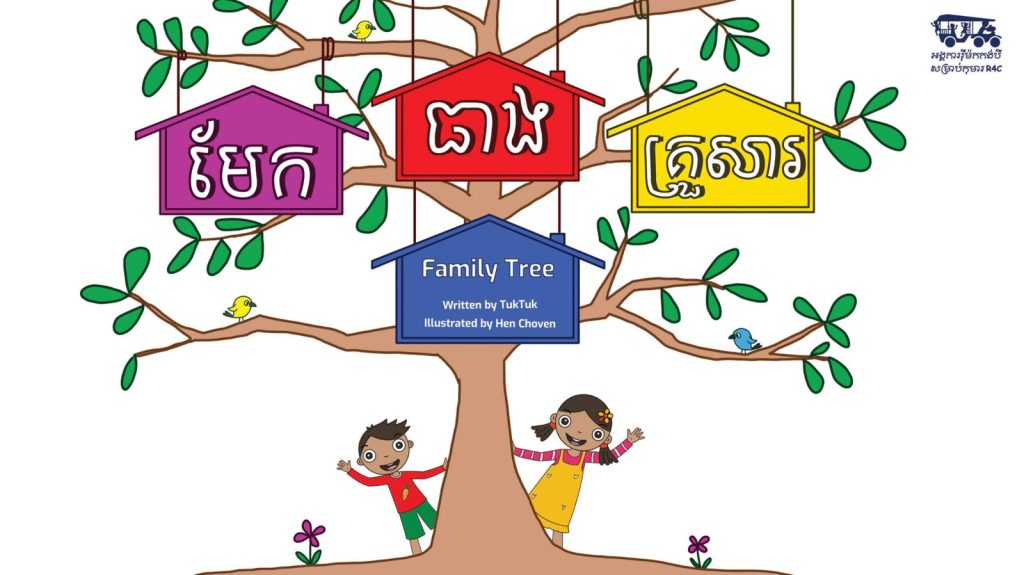
10th Storybook: Family Tree
- Storybook (Kamishibai, Animation, A4 printable version, Digital version)
- Poster
- 3 songs
- 7 activity games
- 1 board game
- 22 kinds of worksheets
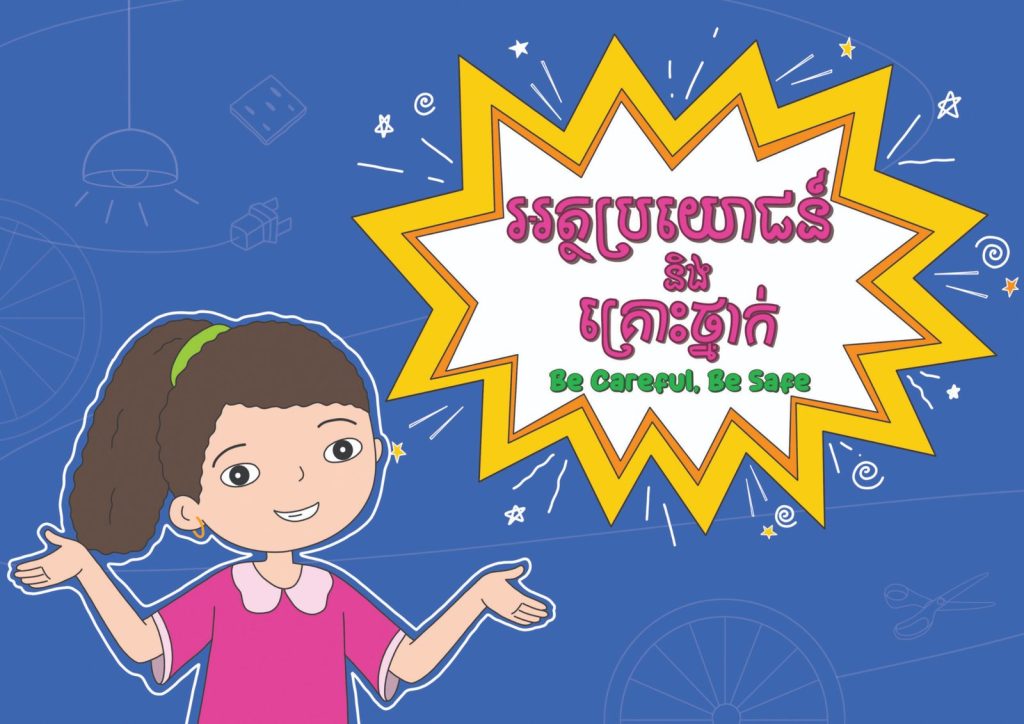
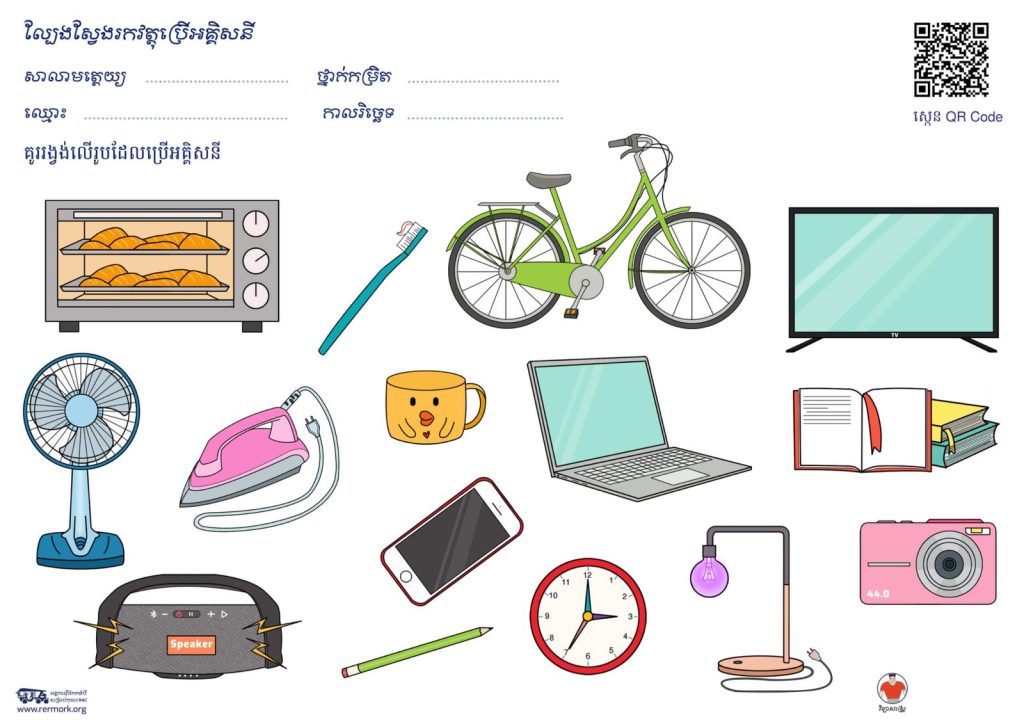
11th Storybook: Be Careful, Be Safe
- Storybook (Kamishibai, Animation, A4 printable version, Digital version)
- 1 song
- 7 activity games
- 1 board game
- 19 kinds of worksheets
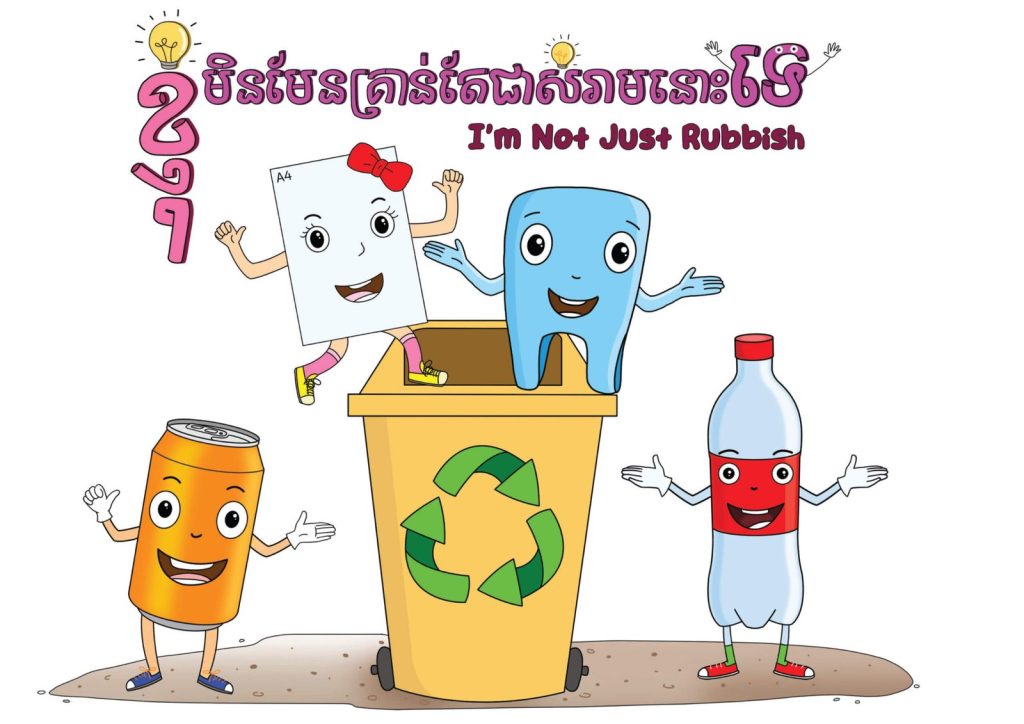
12th Storybook: I'm Not Just Rubbish
- Storybook (Kamishibai, Animation, A4 printable version, Digital version)
- 2 songs
- 10 activity games
- 2 board games
- 24 kinds of worksheets
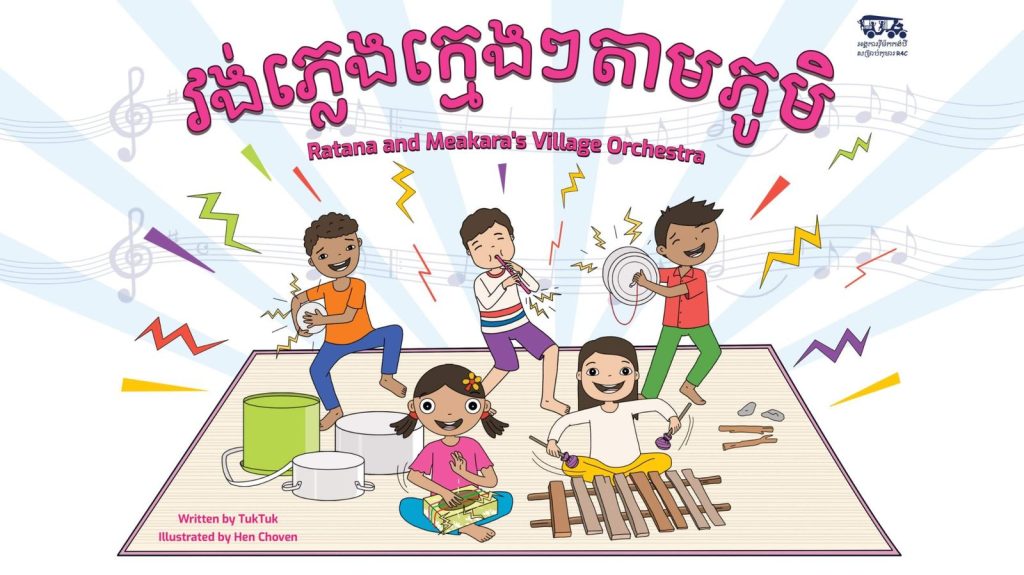
13th Storybook: Ratana and Meakara's Village Orchestra
- Storybook (Kamishibai, Animation, A4 printable version, Digital version)
- 2 songs
- 12 activity games
- 1 board game
- 24 kinds of worksheets
Platform Reach and Usage Trends
Rermork Digital Library
This is a free educational resource site for early childhood education launched in August 2022 by R4C. All materials can be downloaded free of charge without copyright restrictions. Teachers' own materials are also uploaded to this platform, aimed at empowering Cambodian early childhood education by Cambodian teachers themselves.
The top three most viewed materials in 2025 were activities, curriculums and books. Additionally, the most downloaded material in 2024 was a worksheet titled “ល្បែងគូរដានតាមស្រៈ(Trace-Vowel)” (667 downloads) and in 2025, "ព្យញ្ជនៈកាត ៣៣តួ (Khmer Consonant Cards)" was the most downloaded material (939 downloads).
| Duration | Unique visitors | Page Views | Download |
|---|---|---|---|
| Q1 | 23,801 | 67,800 | 10,940 |
| Q2 | 27,692 | 74,428 | 11,360 |
| Q3 | 34,421 | 95,664 | 19,514 |
| Q4 | 38,077 | 105,158 | 17,385 |
| Q5 | 41,056 | 103,416 | 16,485 |
| Q6 | 38,917 | 95,515 | 16,080 |
| Q7 | 42,643 | 98,110 | 14,356 |
| Q8 | 48,927 | 110,610 | 16,285 |
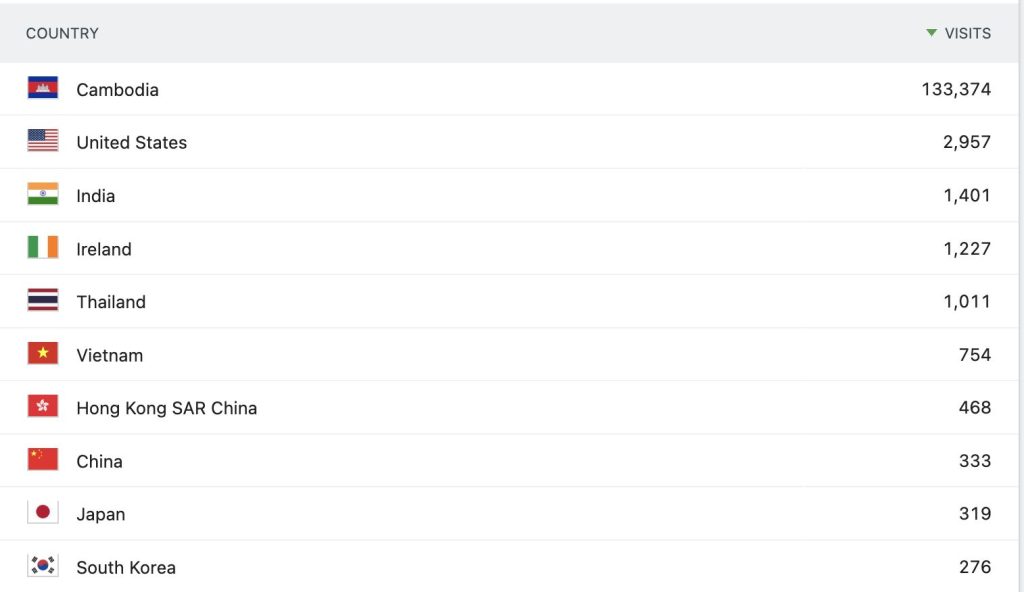
The breakdown of visitors
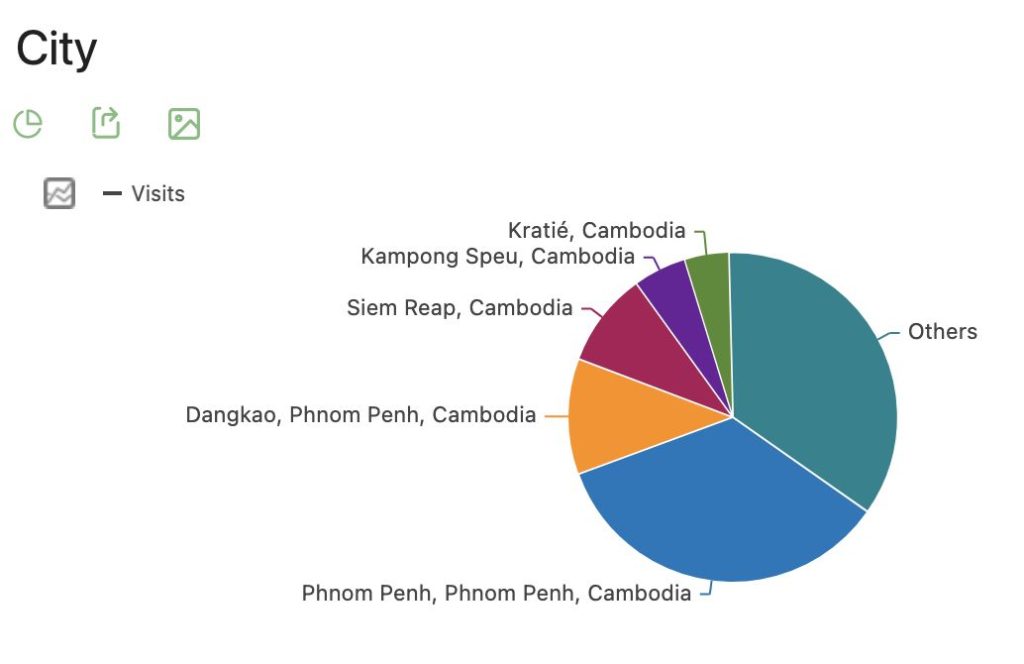
R4C Facebook
We are sharing updates on R4C's materials and activities three times a week. Visitors can download materials from here or browse the "Rermork Digital Library." Not only educators but also parents can access it.
The most shared item in 2024 was the worksheet "ល្បែងគំនូស (Trace Lines)" (350 shares, reaching 19,731 people*), and in 2025 was the Khmer number cards "កាត លេខខ្មែរ" (389 shares, reaching 34,008 people*)
| Duration | Posts | Reach* | New Followers | Total Followers |
|---|---|---|---|---|
| Q1 | 55 | 104,139 | 257 | 5,678 |
| Q2 | 69 | 106,719 | 364 | 6,042 |
| Q3 | 63 | 131,369 | 310 | 6,352 |
| Q4 | 66 | 95,236 | 353 | 6,705 |
| Q5 | 80 | 182,649 | 700 | 7,405 |
| Q6 | 110 | 110,653 | 356 | 7,761 |
| Q7 | 166 | 64,948 | 240 | 8,001 |
| Q8 | 126 | 260,885 | 1,182 | 9,183 |
*Reach… The number of people who saw any content from the Page or about our Page, including posts, stories, ads, social information from people who interact with our Page and more. Reach is different from impressions, which may include multiple views of the posts by the same people. This metric is estimated.
The breakdown of followers (As of 15th of Jan 2026)
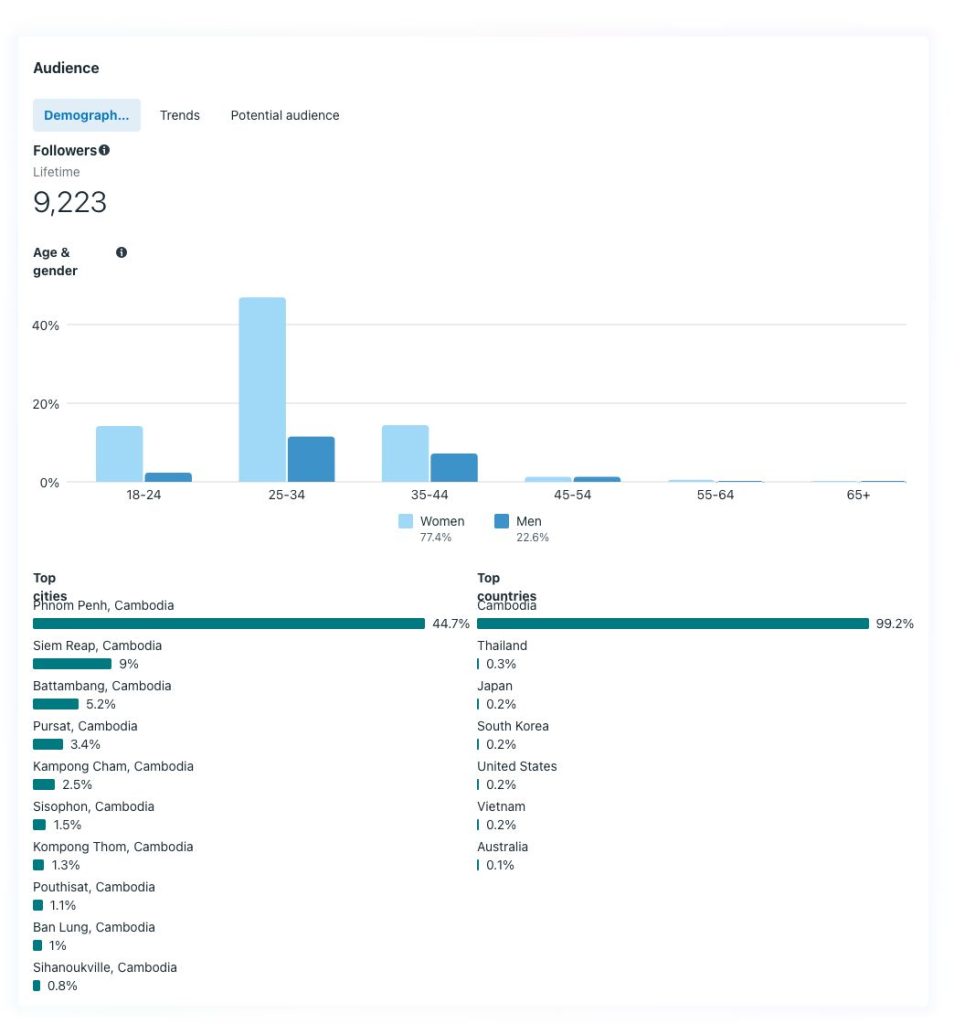
Public Facebook Group for Preschool Teachers
This is a Facebook group for educators. It serves as a platform where not only posts from R4C are shared, but also where teachers themselves can disseminate teaching material ideas and educational information.
| Duration | Posts by R4C | Posts by teachers | New Followers | Total Followers |
|---|---|---|---|---|
| Q1 | 29 | 13 | 447 | 3,899 |
| Q2 | 46 | 33 | 475 | 4,374 |
| Q3 | 51 | 153 | 1,211 | 5,585 |
| Q4 | 42 | 35 | 321 | 5,906 |
| Q5 | 62 | 31 | 293 | 6,199 |
| Q6 | 78 | 7 | 106 | 6,305 |
| Q7 | 95 | 8 | 99 | 6,404 |
| Q8 | 60 | 32 | 177 | 6,581 |
The breakdown of followers
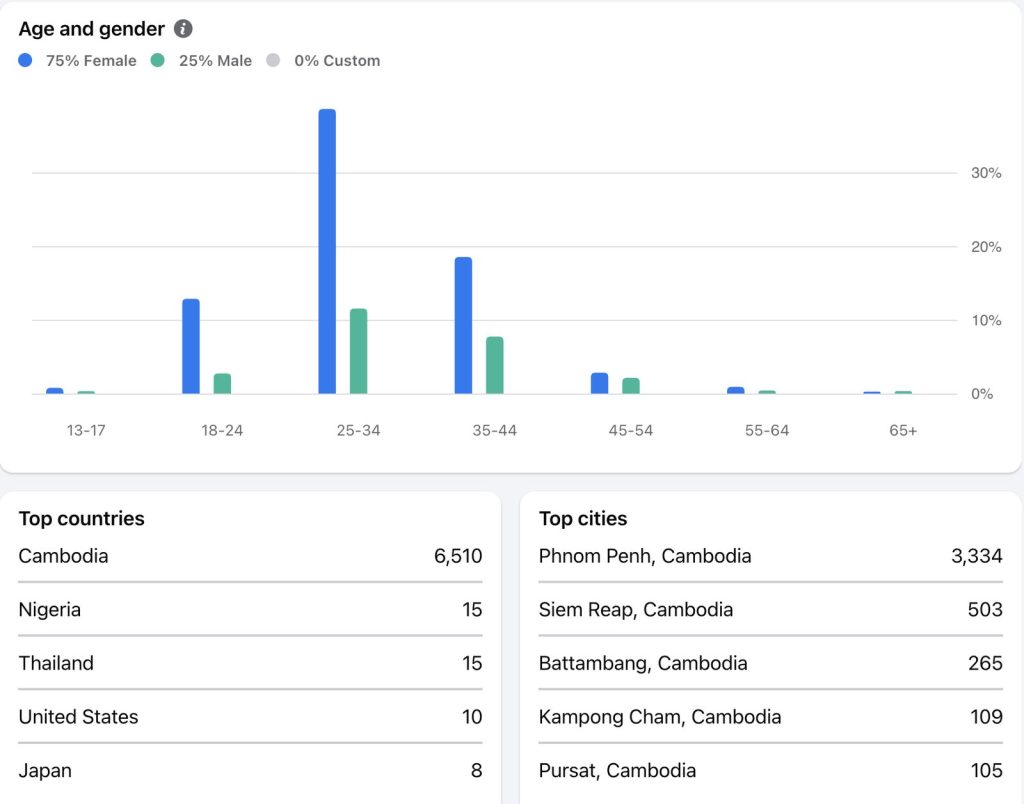
Telegram Channel
Similar to the Facebook page, we post R4C teaching materials and early childhood education information almost every day. Followers can download materials from here or browse the "Rermork Digital Library." Channel participants are not limited to teachers; parents can also join.
The most viewed resource was ‘បល្បែងគូសតាមស្នាមចុច-ក-អ (trace-consonants)’ with 2,900 views.
| Duration | Posts | New Followers | Total Followers |
|---|---|---|---|
| Q1 | 50 | 286 | 2,808 |
| Q2 | 55 | 157 | 2,965 |
| Q3 | 60 | 270 | 3,235 |
| Q4 | 56 | 188 | 3,423 |
| Q5 | 62 | 247 | 3,670 |
| Q6 | 48 | 209 | 3,879 |
| Q7 | 59 | 163 | 4,042 |
| Q8 | 47 | 434 | 4,476 |
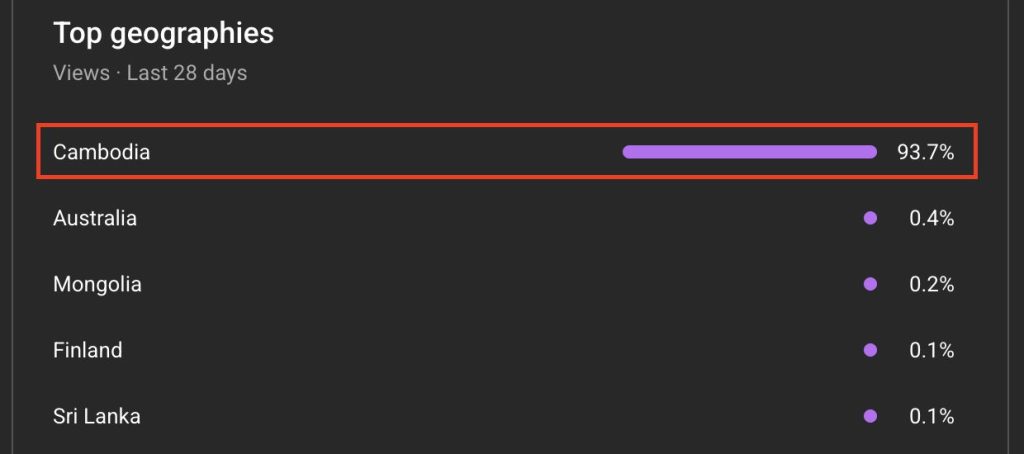
YouTube
We are posting video teaching materials created by R4C. Many of them include animations, song videos, and instructional videos on activity games, worksheets, and crafts.
The most viewed video this season was a song video titled "បទចម្រៀៀង ពេលសប្បាយ (If You Are Happy And You Know It Song)" with 168,356 views and this video was the most viewed in both 2024 and 2025.
| Duration | Published videos | Views | New Followers | Total Followers |
|---|---|---|---|---|
| Q1 | 11 | 497,829 | 1,172 | 6,751 |
| Q2 | 26 | 395,580 | 851 | 7,602 |
| Q3 | 70 | 464,142 | 873 | 8,475 |
| Q4 | 87 | 249,542 | 461 | 8,936 |
| Q5 | 98 | 243,842 | 519 | 9,455 |
| Q6 | 65 | 172,978 | 410 | 9,865 |
| Q7 | 63 | 197,317 | 334 | 10,199 |
| Q8 | 188 | 255,709 | 320 | 10,519 |
The breakdown of subscribers
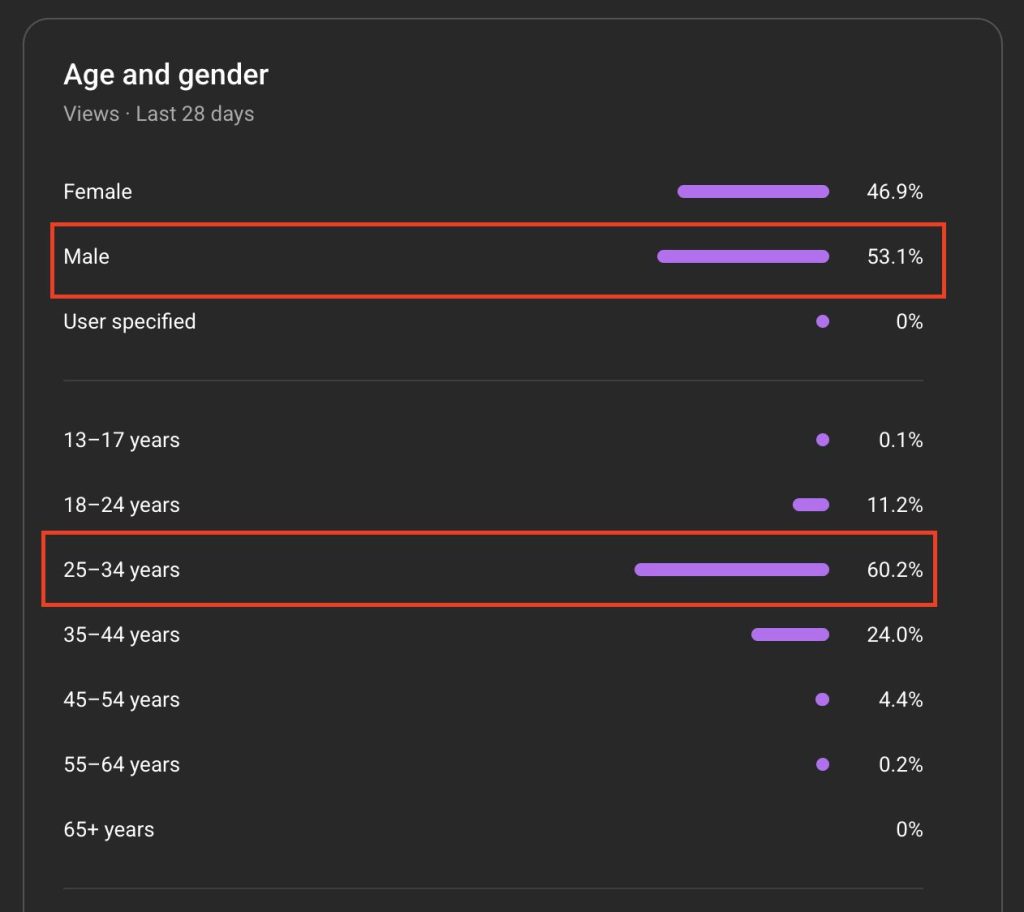
Help us keep TukTuk rolling
Your gift pays for workshops, books and the free Rermork Digital Library.