
Closing report · Pursat Province, Cambodia
CLIP2 final report: January 2022 to December 2023
Final report of our two-year Pursat preschool project, with seven workshops, classroom assessments, teacher survey results and online reach, 2022–2023.
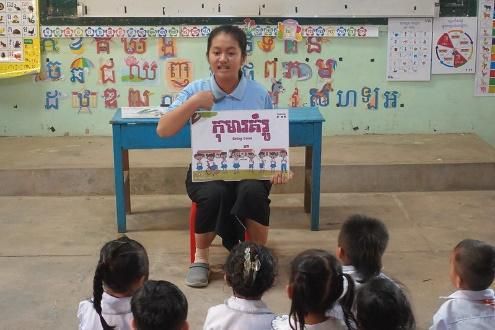
- 1,008preschool children in 10 target schools
- 7workshops held for the target teachers
- 5.6points average gain in classroom decoration score
- 1,810,854total views of our YouTube videos
Project Overview
There are 3 main objectives of this project:
- To create/prepare/distribute teacher resources for preschool teachers.
- To install technical equipment (AccessBoxes) in schools to store teacher resources for preschools; and
- To train teachers on the use of the Access Boxes as well as how to upload and download resources.
There are two main beneficiary types:
- The preschool teachers; and
- The preschool students.
Background: This project will take place in the Pursat Province of Cambodia. It will provide Early Childhood Education (preschool) support to rural schools in the Pursat area. Cambodia is still catching up after the total dissemination of its education system during the Civil War (Khmer Rouge). Recently the government has legislated that Early Childhood Education (preschool) be compulsory. There are not enough resources for teachers and many are struggling with what to do with so many children in their classrooms.
Rermork for Children (in conjunction with TukTuk Charity) has been creating resources for preschools and has been successful at delivering resources via their digital library, which is available on the internet, and the "Access Box" (computer device that acts as a Wi-Fi, so teachers download resources without being connected to the internet) and training teachers how to access, upload and download resources.
Participants
Provincial Office of Education (POE)
5 officers
- Director
- Department of Early Childhood Education
- Department of Primary Education
- Department of Education Auditing
- Department of Planning
District Office of Education (DOE)
8 officers (the director and the director of dept. early childhood education of each district)
- Pursat city
- Kandieng district
- Bakan district
- Krakor district
Targets
- 10 schools (3 independent schools, 5 preschool classes in primary schools, 2 community schools)
- 10 principals and 14 preschool teachers (2 principals are counted as preschool teachers too)
- 1,008 (498) students (Year-1: 490 (253), Year-2: 518 (245))
Project Implementation for the Whole Year
| Project | Duration | Status | Start date | Completion date |
|---|---|---|---|---|
| Launch project - (Kick-off meeting) | 1 day | Completed | 14/01/2022 | 14/01/2022 |
| Progress meeting | 1 day | Completed | 14/11/2022 | 14/11/2022 |
| Closing meeting | 1 day | Completed | 21/11/2023 | 21/11/2023 |
| Conduct project survey | ||||
| Baseline survey | 7 days | Completed | 05/01/2022 | 13/01/2022 |
| Progress survey | 12 days | Completed | 03/10/2022 | 18/10/2022 |
| End line survey | 9 days | Completed | 14/09/2023 | 28/09/2023 |
| Conduct 7 times workshop | ||||
| The 1st workshop | 1 day | Completed | 10/02/2022 | 10/02/2022 |
| The 2nd workshop | 1 day | Completed | 26/05/2022 | 26/05/2022 |
| The 3rd workshop | 1 day | Completed | 14/07/2022 | 14/07/2022 |
| The 4th workshop | 1 day | Completed | 15/09/2022 | 15/09/2022 |
| The 5th workshop | 1 day | Completed | 23/02/2023 | 23/02/2023 |
| The 6th workshop | 1 day | Completed | 11/05/2023 | 11/05/2023 |
| The 7th workshop | 1 day | Completed | 07/09/2023 | 07/09/2023 |
| Conduct 7 times follow-up visits | ||||
| The 1st follow-up visit | 7 days | Completed | 23/02/2022 | 04/03/2022 |
| The 2nd follow-up visit | 10 days | Completed | 13/06/2022 | 28/06/2022 |
| The 3rd follow-up visit | 9 days | Completed | 25/07/2022 | 05/08/2022 |
| The 4th follow-up visit | 10 days | Completed | 03/10/2022 | 21/10/2022 |
| The 5th follow-up visit | 8 days | Completed | 10/03/2023 | 24/03/2023 |
| The 6th follow-up visit | 10 days | Completed | 18/05/2023 | 31/05/2023 |
| The 7th follow-up visit | 9 days | Completed | 14/09/2023 | 28/09/2023 |
| Conduct 2 times classroom assessment | ||||
| The 1st classroom assessment | 10 days | Completed | 13/06/2022 | 28/06/2022 |
| The 2nd classroom assessment | 10 days | Completed | 18/05/2023 | 31/05/2023 |
| Provide hardware | ||||
| Speaker | 4 days | Completed | 21/01/2022 | 26/01/2022 |
| Cabinet | 4 days | Completed | 21/01/2022 | 26/01/2022 |
| Laminator | 1 day | Completed | 21/05/2022 | 26/05/2022 |
| Tablet | 1 day | Completed | 14/07/2022 | 14/07/2022 |
| Corner cutter | 1 day | Completed | 14/07/2022 | 14/07/2022 |
| Laminate sheets A4 | 1 day | Completed | 15/09/2022 | 15/09/2022 |
| Laminate sheets A3 | 1 day | Completed | 15/09/2022 | 15/09/2022 |
Detailed Activity Report
Training teachers how to access and use the resources
We conducted workshops seven times, as shown in the table below (Table 1). The targets were the director of the Early Childhood Education (ECE) department and inspection department of the POE, the director of the ECE department of the four DOE, and the fourteen preschool teachers.
| Workshop | Date | Contents |
|---|---|---|
| The 1st workshop | 10/02/2022 |
|
| The 2nd workshop | 26/05/2022 |
|
| The 3rd workshop | 14/07/2022 |
|
| The 4th workshop | 15/09/2022 |
|
| The 5th workshop | 23/02/2023 |
|
| The 6th workshop | 11/05/2023 |
|
| The 7th workshop | 07/09/2023 |
|
Participants were very pleased with the workshops, as they gained new skills and knowledge. They learned about effective classroom decoration, using computers for educational material creation, and storytelling techniques. The workshops also helped improve their computer skills, (3 of which covered computer skills), especially in creating worksheets. By the final workshop, many participants found worksheet creation easier, indicating their enhanced computer proficiency.
The project’s outreach to rural area preschools was particularly commended by a DOE staff member. In community schools managed by each commune, the two targeted teachers made positive use of our educational materials and practiced diligently with computers. Their teaching methods showed significant improvement compared to before using our resources. These teachers continue to independently use the materials and create worksheets, ensuring the project’s ongoing effectiveness even after the completion of the CLIP2 project.
Conduct project kick-off meeting and annual update meetings with PoE and 3 districts
In 2022, we initiated the project with a kick-off meeting and followed up with annual meetings. In November 2023, we conducted the project’s closing meeting. Attendees included officials from the Provincial Office of Education (POE) and Department of Education (DOE), covering a range of departments such as Early Childhood Education, Primary Education, Planning, and Inspection. We also welcomed principals and teachers from the target schools.
The purpose of these meetings was to share the results of the end-line survey (detailed in section 2.1.1 on Project Field Visits) and to summarize the overall project outcomes. Feedback from participants, both verbal and written, indicated high satisfaction with the project’s activities. Below is a highlight of the feedback that they expressed the efficiency of the project:
POE/DOE officers
- The teachers conducted teaching by following the curriculum and lesson schedule that the Ministry of Education encourages.
Requests for the CLIP3;
- Conduct the workshops for two or three days, not just one day for each time.
- Invite the director of each DOE to the workshops.
- Make a program to visit a model school that is managed well to exchange their experiences.
Principals
For teachers;
- They tried new teaching techniques such as creating teaching materials with computers and using new educational tools in their lessons, and then making fun lessons for their students.
For students;
- They could have more fun lessons with the new teaching materials such as storybooks, songs, worksheets and activity games.
Teachers
For teachers;
- They have had new teaching techniques.
- They could use computers to make teaching materials (worksheets, administrative documents, and classroom decorations).
For students;
- They could have more fun lessons with the new teaching materials such as storybooks, songs, unique worksheets and activity games.
The project received positive feedback for its significant impact on teaching and learning. Participants, including teachers and principals, appreciated the introduction of new teaching techniques and educational tools. They highlighted the use of computers for creating teaching materials such as worksheets, administrative documents, and classroom decorations. Moreover, the project enhanced the quality of lessons, making them more engaging and fun for students with the use of storybooks, songs, unique worksheets, and activity games. Overall, the project was deemed beneficial in improving teachers’ skills and enhancing students’ learning experiences.
Assess the teachers to choose a model teacher with DoE
In May 2023, we collaborated with Department of Education (DoE) staff to conduct the second classroom assessment. The goal was to evaluate the improvement in classroom decoration compared to the first assessment in 2022. Our objective was to enhance the classroom environments in all target schools over the two-year project.
The results showed notable progress, with an average increase of 5.6 points in classroom decoration scores across all target classrooms (refer to Table 2). This improvement indicated a significant rise in teachers’ interest in organizing and enhancing their classrooms. Many teachers displayed their handmade teaching tools and maintained a well-organized classroom. This second assessment was crucial in highlighting advancements in teachers’ understanding and implementation of effective classroom environments.
| School | The score of the 1st assessment | The score of the 2nd assessment | Difference |
|---|---|---|---|
| State school (3-year-old) △ | 20 | 23 | + 3 |
| State school (5-year-old) △ | 20 | 25 | + 5 |
| Prey Ny school ○ | 20 | 23 | + 3 |
| Lolok So school ○ | 16 | 23 | + 7 |
| Kandieng school (3-year-old) △ | 17 | 19 | + 2 |
| Kandieng school (4-year-old) △ | 13 | 21 | + 8 |
| Kandieng school (5-year-old) △ | 17 | 19 | + 2 |
| Bong Chhuk school ○ | 16 | 23 | + 7 |
| Kaev Chey school ○ | 13 | 19 | + 6 |
| Snam Preah school ○ | 18 | 23 | + 5 |
| Phnow school □ | 17 | 24 | + 7 |
| Tram Pair school □ | 19 | 26 | + 7 |
| Onlong Tnaot school △ | 20 | 29 | + 9 |
* △… Independent school, ○… Preschool class in primary school, □… Community school
* The total score is 30 points.
* The pass score is 30 out of 30. However, DOE staff are allowing them to pass above 20 points at this stage.
In the upcoming CLIP3 project, we will focus on enhancing the consistency of the classroom decoration assessments. During the recent evaluations, we noticed differences in points awarded by different assessors. To address this issue, we plan to collaborate with POE and DOE staff to clarify and standardize the evaluation criteria. This effort aims to ensure uniformity in the assessment process, providing fair and consistent results for all classrooms. Furthermore, to better prepare the teachers, we will distribute all classroom decoration materials at one time, enabling teachers to have a clearer understanding of the standards and expectations for their classroom setups.
Project field visits
We visited seven schools following each workshop to observe the use of computers, tablets, and Digital Library resources. Additionally, we conducted three surveys over two years. This section summarizes the end-line survey results from September 2023, focusing on the impact of the project on teaching methods.
Storybook
- All teachers reported using storybooks 1-3 times a week. Previously, some used them 4-6 times, indicating a slight decrease in frequency. Despite this, 1-3 times a week is still positive.
- Storybooks were obtained from our workshops, the Mobile Library project, (a now retired R4C project now run by local departments of education), and school libraries.
- Teachers used these books in class, often reading them during lessons.
Song
- 9 teachers used songs 4-6 times a week, and the remaining 4 teachers used 1-3 times a week. Previously, teachers who used songs 4-6 times were 6, and 1-3 times were 7 teachers, showing an increase from last year.
- They used both R4C’s original songs and the government songs re-created by R4C. YouTube was used more often than our website to play songs.
- Most teachers used their mobile phones for playing music because it’s easier to connect with their speakers (hence YouTube being more popular), but they used computers or tablets when they showed the dance movements.
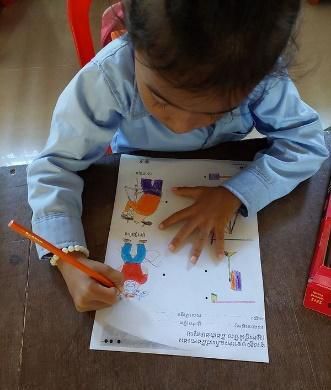
Worksheet
- 9 teachers used the worksheets 4-6 times a week and the remaining 4 were 1-3 times. Last year 10 teachers used the teaching tool 4-6 times a week and 3 1-3 times so the results are similar.
- They got the worksheets from our workshops, the website, and local drive that we installed on their computer or they made by themselves.
- The worksheets were used in science, society, mathematics, and Khmer. Although they could use worksheets for mentality, the teachers preferred to use activities for teaching this subject.
- Most of their school budget was spent on paper for printing worksheets, not only purchasing school supplies. However, most of the teachers of the target community schools and preschools connected to a primary school, receive donations from parents. Two teachers laminated worksheets so that they could use them several times, getting their students to copy to their notebooks directly. This situation has not improved in the two years, since it is also a governmental issue, but some teachers said their principals gave more budget than last year or worked hard to find some spare budget for the preschool class.
Video
- 2 teachers used videos for playing animations and songs 4-6 times a week while 11 teachers used them 1-3 times. Last year the result was 3 teachers, 4-6 times and 10 1-3 times.
- They played the videos from our website and YouTube.
- 11 teachers used the provided computers. The remaining 2 only tablets since they damaged their computers, (1 broken screen and 1 dropped in water). Teachers generally used their mobile phones as wifi hotspots where the internet was not available.
Activity game
- One teacher did activity games 4-6 times a week, 12 teachers were 1-3 times. Last year there were 3 teachers doing activities 4-6 times per week and 10, 1-3 times. We will ask the teachers as a group in our final CLIP meeting
- Activity game ideas were taken from DOE lesson plans, teachers’ own ideas, R4C workshops, R4C website, YouTube, and Facebook.
- The overall use of activities has decreased, even though there are additional activities provided since last year including printable in-class activities.
Craft
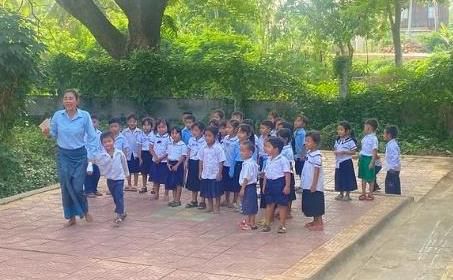
- All teachers did craft 1-3 times a week, the same as the last survey.
- There are many kinds of crafting, but their usage was dependent on the teachers’ interests. Teachers who enjoy crafting tend to offer more varieties of crafts, such as folding paper, sewing, and using beans or straws to create shapes. However, in classes taught by teachers who don’t enjoy crafting, the variety of crafts offered is limited, and students might be given worksheets to cut and paste paper.
Some teachers said they didn’t understand craft ideas so much or had difficulties preparing materials and making a safe environment, especially in classes with many students. We will work to promote the benefits and develop more simple crafts in the future.
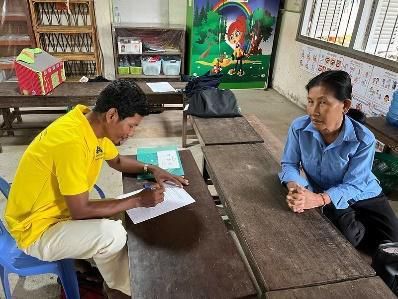
Additionally, we interviewed 12 first-grade teachers from target schools to assess the impact of preschool education. They reported that 68% of their 401 students had attended preschool, noting these students were better adapted to school routines and had foundational knowledge of letters and numbers. All teachers recommended preschool education.
Finally, due to technical issues, the AccessBox was removed from most schools. Teachers primarily used Wi-Fi shared from smartphones. No significant difference was noted in the use of computers and tablets, except for creating worksheets and documents.
Other Activities
Resource Package Creation
We created four new resource packages during the project’s two years (the 7th storybook ‘Being Good’, classroom decorations, the 8th storybook ‘We can – Just Differently’, and the 9th storybook ‘Which Sport Is It?’). Below are all the resources that were uploaded on our free teaching material website in 2022 and 2023.
| Resources | The number of resources |
|---|---|
| Book layouts | 21 |
| Book animations and puppet shows | 11 |
| Songs (MP3) | 43 |
| Songs (MP4) | 41 |
| Worksheet and activities | 647 |
| Instruction videos | 230 |
| Classroom decorations (ministry standard) | 163 |
| Illustrations | 114 |
| Published worksheets made by teachers | 239 |
Information Dissemination Via Social Media
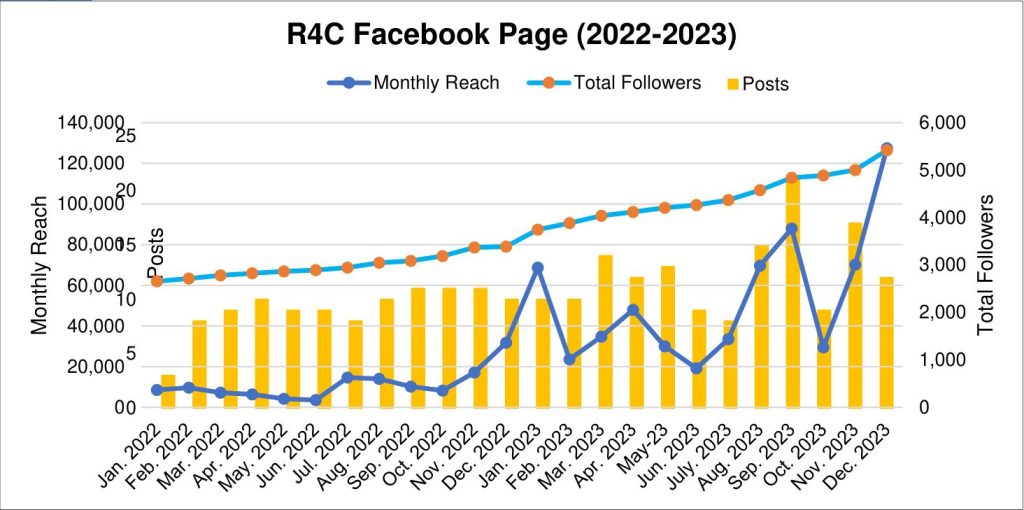
We run three open social media (Facebook, Telegram and YouTube) to share teaching resources for preschool teachers and parents.
- Those posts include daily activity reports, animations, songs, activities, worksheets, and workshop videos.
| Quarter | Posts | Reach* | New followers | Total Follows |
|---|---|---|---|---|
| Q1 | 20 | 21,556 | 453 | 2,699 |
| Q2 | 28 | 14,204 | 138 | 2,837 |
| Q3 | 29 | 30,700 | 243 | 3,080 |
| Q4 | 42 | 47,675 | 308 | 3,388 |
| Q5 | 34 | 104,667 | 643 | 4,031 |
| Q6 | 34 | 75,085 | 235 | 4,266 |
| Q7 | 44 | 147,476 | 573 | 4,839 |
| Q8 | 38 | 180,118 | 582 | 5,421 |
| Total | 269 | 425,769* | 3,175 | 5,421 |
*Reach…The number of people who saw any content from the Page or about our Page, including posts, stories, ads, social information from people who interact with our Page and more. Reach is different from impressions, which may include multiple views of the posts by the same people. This metric is estimated.
* The total number of ‘Reach’... This total number is also estimated, thus this number is not purely additive of each month’s result.
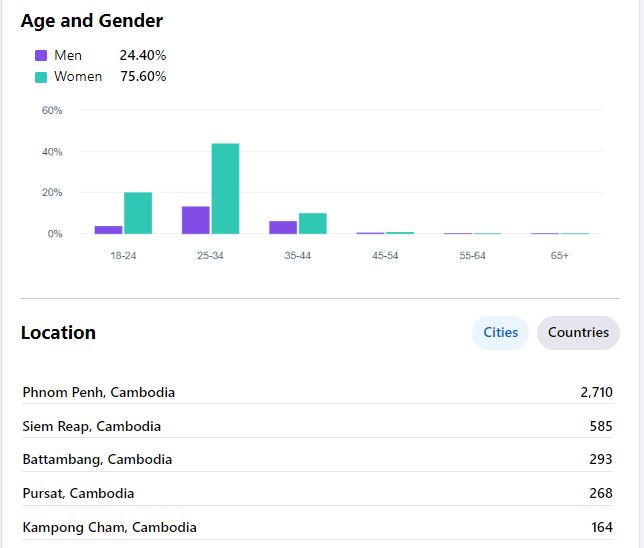
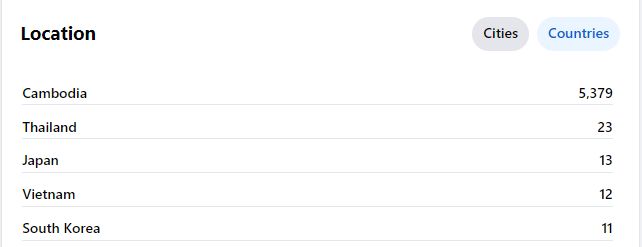
- Followers information
| Quarter | R4C Posts | Community Posts | New Members | Total Members |
|---|---|---|---|---|
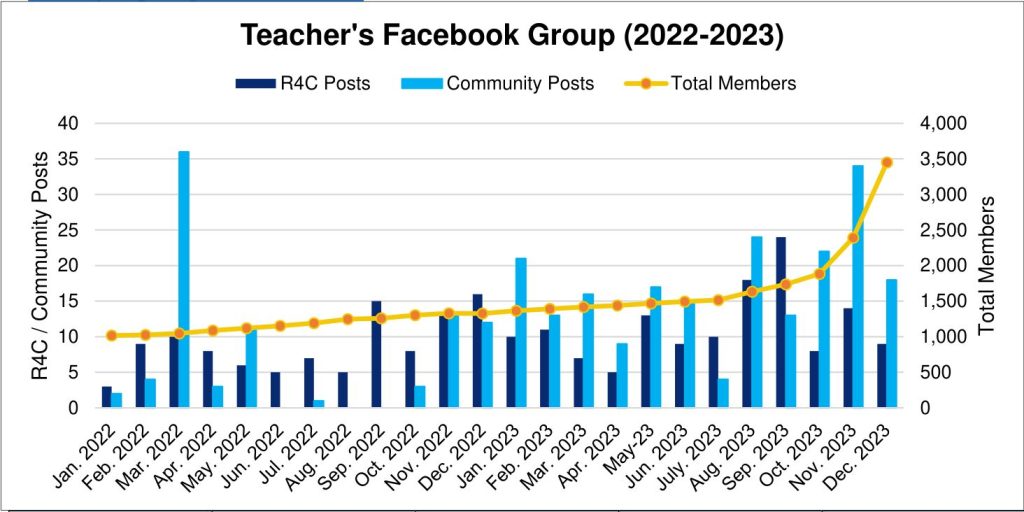
| Q1 | 22 | 23 | 215 | 1,030 |
| Q2 | 21 | 13 | 101 | 1,131 |
| Q3 | 29 | 1 | 121 | 1,252 |
| Q4 | 51 | 24 | 75 | 1,327 |
| Q5 | 27 | 48 | 90 | 1,417 |
| Q6 | 27 | 41 | 79 | 1,496 |
| Q7 | 52 | 41 | 241 | 1,737 |
| Q8 | 31 | 74 | 1,715 | 3,452 |
| Total | 260 | 265 | 2,637 | 3,452 |
- Members information
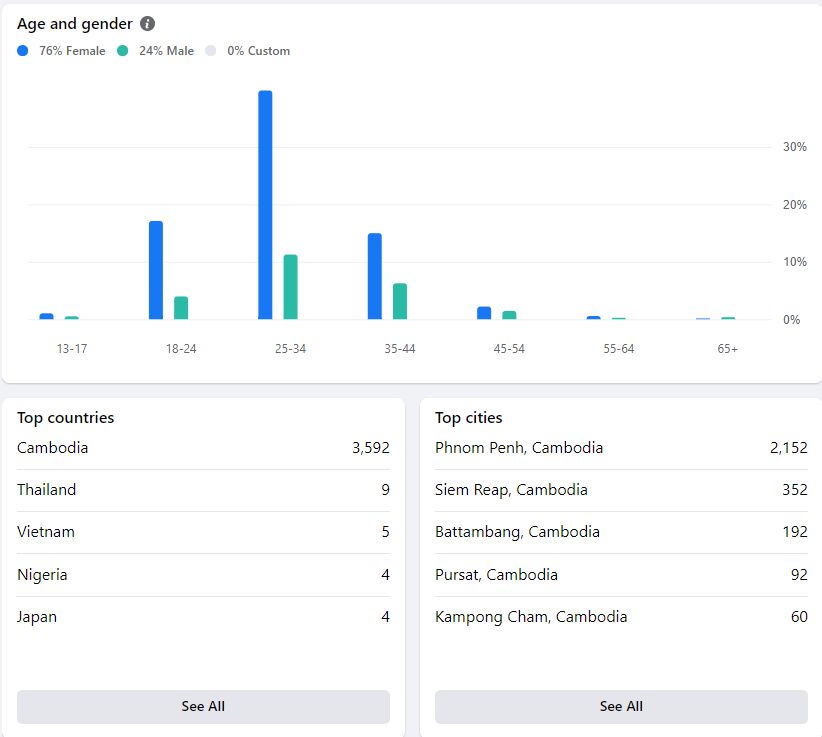
Telegram (messaging app)
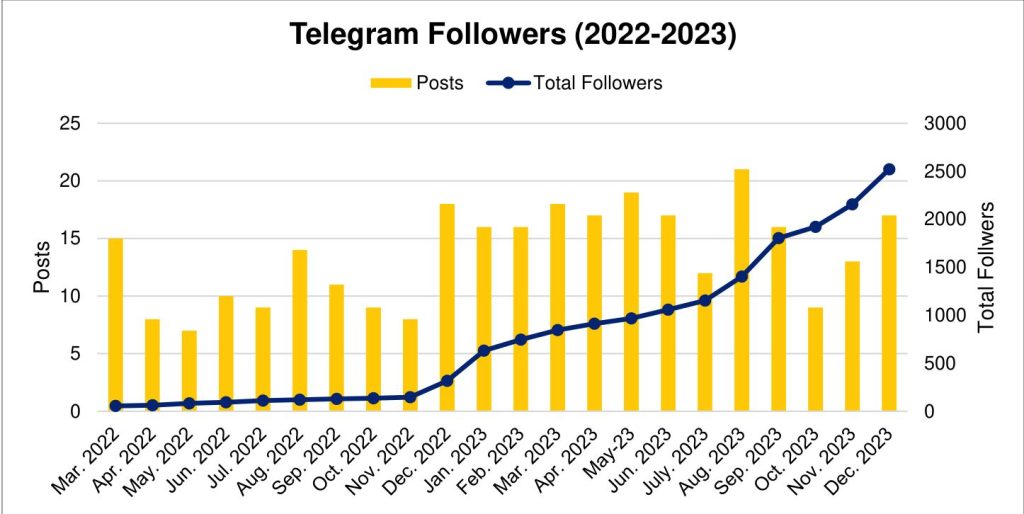
- In February, we created a public channel for not only target teachers but also other Cambodian teachers and parents. You can see the R4C’s teaching resources, such as storybooks, music, worksheets, etc., in it regularly. Other information related to education for preschool children is posted.
| Quarter | Posts | New Members | Total Members |
|---|---|---|---|
| Q1 | 22 | 9 | 103 |
| Q2 | 25 | 38 | 239 |
| Q3 | 34 | 35 | 362 |
| Q4 | 35 | 189 | 601 |
| Q5 | 50 | 529 | 847 |
| Q6 | 53 | 211 | 1,058 |
| Q7 | 49 | 746 | 1,804 |
| Q8 | 39 | 718 | 2,522 |
| Total | 307 | 2,475 | 2,522 |
- The video that has the most top views got 216,721 views in these two years.
- The most viewed playlists were ‘Government Song’ (61%) and ‘TukTuk original song’ (26%). Songs took up 90% of the number of views.
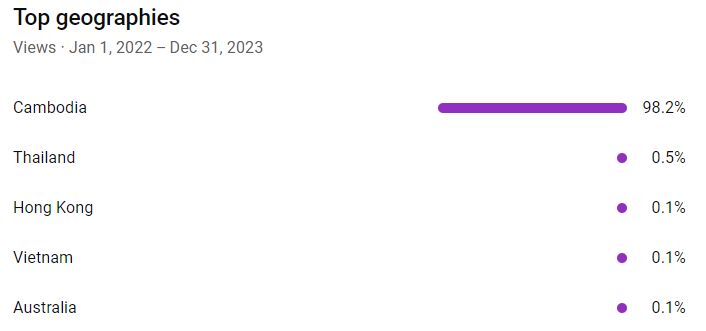
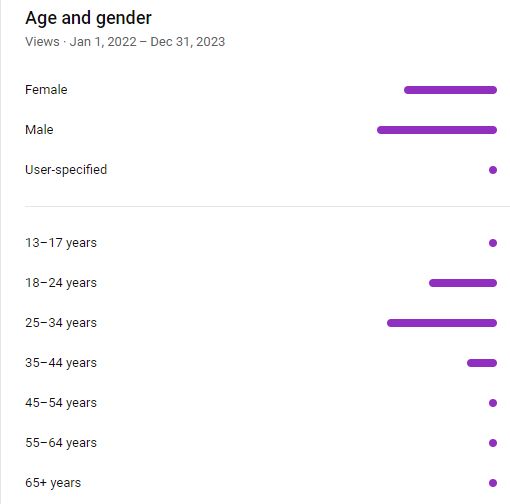
- Note that the YouTube data for gender may be skewed due to sharing phones and not having individual accounts.
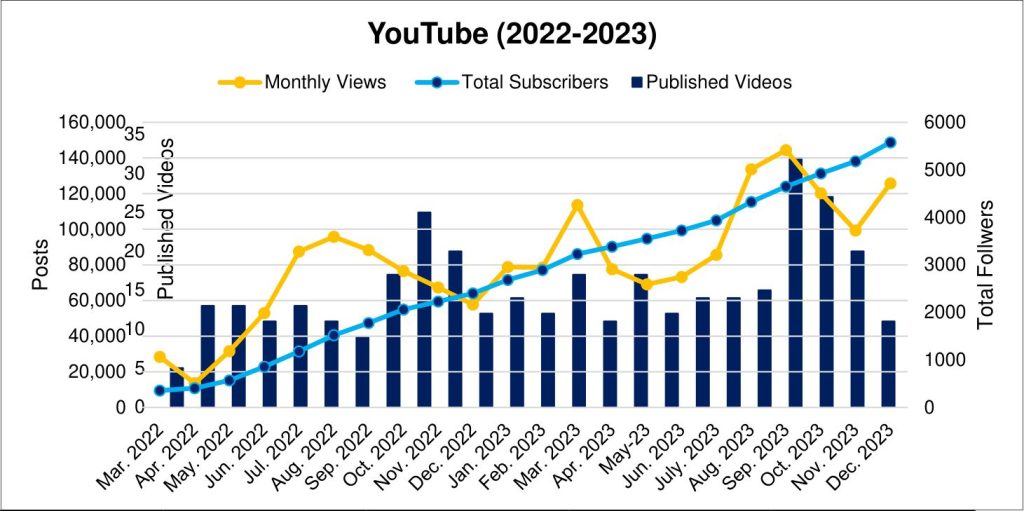
| Quarter | Published Videos | New Subscribers | Total Subscribers | Total Views (all videos) |
|---|---|---|---|---|
| Q1 | 32 | 250 | 355 | 39,328 |
| Q2 | 36 | 503 | 858 | 98,193 |
| Q3 | 53 | 919 | 1,777 | 271,669 |
| Q4 | 47 | 617 | 2,394 | 196,935 |
| Q5 | 40 | 782 | 3,176 | 255,720 |
| Q6 | 43 | 547 | 3,723 | 221,577 |
| Q7 | 61 | 925 | 4,648 | 364,214 |
| Q8 | 58 | 931 | 5,579 | 345,312 |
| Total | 365 | 5,444 | 5,579 | 1,810,854 |
- Followers information
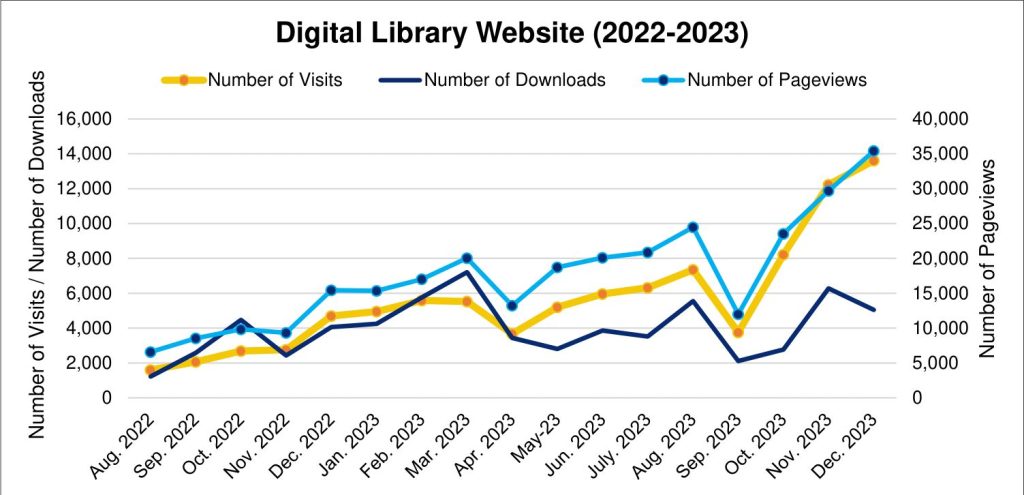
Free Educational Material Distribution Website
We launched this website in August 2022. The viewers can download those teaching tools for free and without royalty. This website access record shows access by people who visit the page from their devices, and it includes non-target teachers and parents but also foreigners.
| Quarter | Number of Visits | Number of Pageviews | Number of Downloads |
|---|---|---|---|
| Q3 | 3,658 | 15,127 | 3,806 |
| Q4 | 9,949 | 34,230 | 10,904 |
| Q5 | 15,430 | 49,828 | 16,962 |
| Q6 | 14,868 | 52,182 | 10,188 |
| Q7 | 17,425 | 57,351 | 11,189 |
| Q8 | 34,070 | 88,643 | 14,100 |
| Total | 96,218 | 300,198 | 67,401 |
We could not find out the accurate numbers of the most viewed and downloaded resources after changing the analysis software for the website in September. However, 90% of all users were accessing the website from Cambodia. It looks like classroom decorations and worksheets were the most searched and downloaded content.
Measuring Success
| Project | Collection method | Frequency | Beneficiaries |
|---|---|---|---|
| Number of beneficiaries of the project | |||
| Number of provincial government officers | Public records | Every year | 5 |
| Number of district government officers | Public records | Every year | 8 |
| Number of principals | Public records | Every year | 10 |
| Number of benefiting teachers | Public records | Every year | 12 |
| Number of benefiting school-age children | Public records | Every three month | 1,008 |
| Number of schools that received hardware | |||
| Speaker | Direct observation | At project start | 5 |
| Cabinet | Direct observation | At project start | 5 |
| Laminator | Direct observation | At project start | 8 |
| Tablet | Direct observation | At project start | 13 |
| Laminate sheets A4 | Direct observation | At project start | 13 |
| Laminate sheets A3 | Direct observation | At project start | 13 |
| Number of teachers who took workshops | |||
| The 1st workshop | Direct observation | Feb 2022 | 19 |
| The 2nd workshop | Direct observation | May 2022 | 19 |
| The 3rd workshop | Direct observation | July 2022 | 19 |
| The 4th workshop | Direct observation | Sept 2022 | 19 |
| The 5th workshop | Direct observation | Feb 2023 | 19 |
| The 6th workshop | Direct observation | May 2023 | 19 |
| The 7th workshop | Direct observation | Sept 2023 | 19 |
| Number of teachers who took regular interviews | |||
| The 1st follow-up visit | Focus groups/interviews | After each workshop | 14 |
| The 2nd follow-up visit | Focus groups/interviews | After each workshop | 14 |
| The 3rd follow-up visit | Focus groups/interviews | After each workshop | 13 |
| The 4th follow-up visit | Focus groups/interviews | After each workshop | 13 |
| The 5th follow-up visit | Focus groups/interviews | After each workshop | 13 |
| The 6th follow-up visit | Focus groups/interviews | After each workshop | 13 |
| The 7th follow-up visit | Focus groups/interviews | After each workshop | 13 |
| Number of teachers that took school assessment | |||
| The 1st school assessment | Focus groups/interviews | June 2022 - 1 time | 13 |
| The 2nd school assessment | Focus groups/interviews | June 2023 - 1 time | 13 |
Conclusion
Through the CLIP2 project, the 14 target teachers received a diverse range of teaching materials and methods in each workshop. Their feedback indicated high satisfaction, suggesting that the activities were valuable and met their needs. Post-COVID, opportunities for supplemental teacher training were limited, but we successfully conducted planned activities and created teaching materials based on teachers’ requests and feedback. Computer sessions, held three times, were particularly well-received and deemed effective by the teachers. The POE staff also viewed the project positively, noting its contribution to enhancing teachers’ computer skills, aligning with the Ministry of Education, Youth and Sports’ goal of integrating technology into teaching.
For our team, the project activities provided excellent opportunities to refine our resources. Our social media following has grown steadily over the past two years, with our materials being used by teachers in our target audience and beyond, in other provinces. Our website has become a hub for sharing teaching resources, and we’ve seen positive reception to resources created and shared by teachers, which align well with the needs of other educators. Our ongoing goal is to create resources that follow the government’s curriculum and respond to teachers’ requests, expanding our website’s reach and publishing more resources.
We are deeply grateful to the Rotary Club of Calgary Downtown and the Rotary Club of Pursat for their management and financial support, which made this enriching experience with the target teachers, including POE and DOE staff, possible over two years. We are also thrilled about the upcoming CLIP3 project in 2024-2025 with new teachers in Pursat Province. This opportunity stems from the understanding of our project’s effectiveness and benefits to Cambodia’s early childhood education, as well as the dedication of Rotary Club members in promoting our work. We extend our heartfelt thanks to all the supporters for their unwavering support and look forward to collaborating again in the next two years.
Help us keep TukTuk rolling
Your gift pays for workshops, books and the free Rermork Digital Library.