
Quarterly report · Pursat Province, Cambodia
CLIP3 quarterly report: April to June 2024
The second workshop with computer lessons and new storybook materials, follow-up visits to 26 classes, and online reach in Pursat, April to June 2024.
- 1,154children in the 26 partner classes
- 41people at the 2nd workshop
- 99,376views of the top YouTube song video
- 27,692unique visitors to Rermork Digital Library
Project Overview
Cambodia is still in the process of rebuilding its education system, which failed during the civil war of the 1970s. In the field of early childhood education, the country faces the following challenges:
- Lack of teaching resources in Khmer to use in classrooms.
- Teachers lack the computer skills to create resources.
- Teachers lack experience in some teaching techniques to perform efficient online research.
- Available Khmer resources can be expensive, and schools, especially in rural areas, cannot afford to purchase them.
- Many of the available teaching materials may not align with the curriculum.
- Schools have very small or no budget for preschool teachers.
These issues occurring in the early childhood education stage, which is the foundation for a child's development, will affect the child's future growth process. Teachers are faced with these issues on a daily basis and wonder how to deal with them.
This project covers five regions in Pursat Province, located in the northwestern part of Cambodia. We at Rermork for Children (R4C) (in conjunction with TukTuk Charity), with 26 classes of 15 schools as partner schools, are working with provincial and district education department staff, preschool teachers, and members of the Rotary Club of Pursat (RCP) to empower teachers and parents, and increase educational opportunities for disadvantaged communities in early childhood education. The following activities will be undertaken over a two-year period to achieve the goal.
CLIP Project Goals
Empower teachers and parents, and increase educational opportunities for disadvantaged communities in early childhood education.
Five steps to achieve the goal
- Create teaching resources (storybooks, songs, activity games, board games, worksheets, etc.) in Khmer language, using local Cambodian artists, and aligning the government curriculum and Cambodian culture include options that require no printing or materials to remove economic boundaries. And distribute them to the target education offices and teachers.
- Enhance the “Rermork Digital Library”, a free educational material website for preschools developed by R4C (TukTuk Charity), to make it easier to use and to enrich its contents.
- Train teachers in seven workshops, not only on how to use the resources but also how to create their own resources. Laptops are supplied, and computer skills training will be conducted by the RCP.
- Make a platform for sharing teaching materials by uploading resources created by the teachers themselves on the "Rermork Digital Library", so that teachers nationwide can access these materials.
- Engage education bureau staff from the targeted provinces and districts to disseminate materials to schools beyond the project scope, as well as encourage educators to share materials with parents of the children, we aim to increase access to educational materials for a wider audience beyond the project's reach.
Through this project, we aim to ultimately have the targeted educators give back what they have learned to their respective communities, becoming leaders in further enhancing early childhood education nationwide. However, it is crucial not to forget that the primary beneficiaries of this project are the children. We hope that through the lessons of the educators who have undergone the project activities, children will find school an engaging place, leading to increased attendance and nurturing them into future leaders who actively engage in all endeavors.
About Project
The name of the project
Cambodia Literacy Integrative Project (CLIP)
- January – December 2021: CLIP1
- January 2022 – December 2023: CLIP2
- December 2023 – December 2025: CLIP3
Project implementing organization
Rermork For Children (R4C) (in conjunction with TukTuk Charity), Rotary Club of Pursat (RCP) (managed and funded by Rotary Club of Calgary Downtown)
Target areas
Pursat Province, Cambodia (Pursat City, Kandieng District, Bakan District, Krakor District, and Kravanh District)
Participants
Total 67 members
- Provincial and district education officials: 6 officers
- Provincial Office of Education (POE): 5 officers
- Director
- Department of Early Childhood Education
- Department of Primary Education
- Department of Education Audit
- Department of Plan
- District Office of Education (DOE): 15 officers
- Three people from the five target regions participated; the director of the DOE, the school education division staff, and the early childhood education division staff
- Principals: 15 teachers
- Preschool teachers: 26 teachers
Target Schools
There are a total of 26 classes in 15 schools (26 teachers, 1,154 students)
*There are three types of preschools in Cambodia; independent preschools, preschool classes attached to primary schools, and community schools overseen by the Ministry of Education but operated by the local community.
The CLIP3 covers a total of 15 schools; 7 independent preschools, 6 preschool classes, and 2 community schools.
| No. | Area | School | No. of Teachers | No. of Classes | Age | No. of Students (No. of Girls) |
|---|---|---|---|---|---|---|
| 1 | Pursat | Pursat school (independent preschool) | 4 | 4 | 3 years old | 45 (31) |
| 4 years old | 42 (18) | |||||
| 5 years old | 38 (21) | |||||
| 5 years old | 42 (17) | |||||
| 2 | Stung Toch school (preschool class) | 1 | 1 | 3 years old | 4 (2) | |
| 4 years old | 22 (11) | |||||
| 5 years old | 16 (5) | |||||
| 3 | Sokha Rum school (preschool class) | 1 | 1 | 4 years old | 17 (11) | |
| 5 years old | 21 (10) | |||||
| 4 | Kandieng | Preah Teat school (independent preschool) | 2 | 2 | 4 years old | 46 (26) |
| 5 years old | 53 (26) | |||||
| 5 | Toul Taprom school (preschool class) | 1 | 1 | 4 years old | 21 (15) | |
| 5 years old | 40 (21) | |||||
| 6 | Kbal Chheupok school (community school) | 1 | 1 | 2 years old | 2 (1) | |
| 3 years old | 3 (2) | |||||
| 4 years old | 12 (6) | |||||
| 5 years old | 7 (3) | |||||
| 7 | Bakan | Tropeang Chong school (independent preschool) | 3 | 3 | 3 years old | 42 (22) |
| 4 years old | 72 (35) | |||||
| 5 years old | 101 (45) | |||||
| 8 | Bong Knah school (preschool class) | 2 | 2 | 3 years old | 34 (19) | |
| 4 years old | 37 (22) | |||||
| 5 years old | 73 (38) | |||||
| 9 | Ohta Paong school (independent preschool) | 1 | 1 | 5 years old | 53 (23) | |
| 10 | Krakor | Bong Kontuot school (independent preschool) | 2 | 2 | 3 years old | 34 (20) |
| 5 years old | 25 (13) | |||||
| 11 | Po Tream school (preschool class) | 2 | 2 | 5 years old | 25 (13) | |
| 5 years old | 25 (17) | |||||
| 12 | Kbal Trach school (preschool class) | 1 | 1 | 5 years old | 25 (11) | |
| 13 | Kravanh | Lea Ch school (independent preschool) | 2 | 2 | 4 years old | 25 (12) |
| 5 years old | 35 (18) | |||||
| 14 | Ro Kat school (independent preschool) | 2 | 2 | 4 years old | 35 (23) | |
| 5 years old | 40 (15) | |||||
| 15 | Kom Peang school (community school) | 1 | 1 | 3 years old | 13 (9) | |
| 4 years old | 20 (13) | |||||
| 5 years old | 9 (5) | |||||
| Total | 26 | 26 | Total | 1,154 (654) | ||
| 3 years old | 117 (106) | |||||
| 4 years old | 349 (192) | |||||
| 5 years old | 628 (301) | |||||
Project Implementation
Main activities
| No. | Activity | Duration | Start Date | Completion Date |
|---|---|---|---|---|
| 1 | The 2nd workshop | 1 day | May/23/2024 | May/23/2024 |
| 2 | The 2nd follow-up visits | 11 days | Jun/03/2024 | Jun/21/2024 |
The 2nd workshop
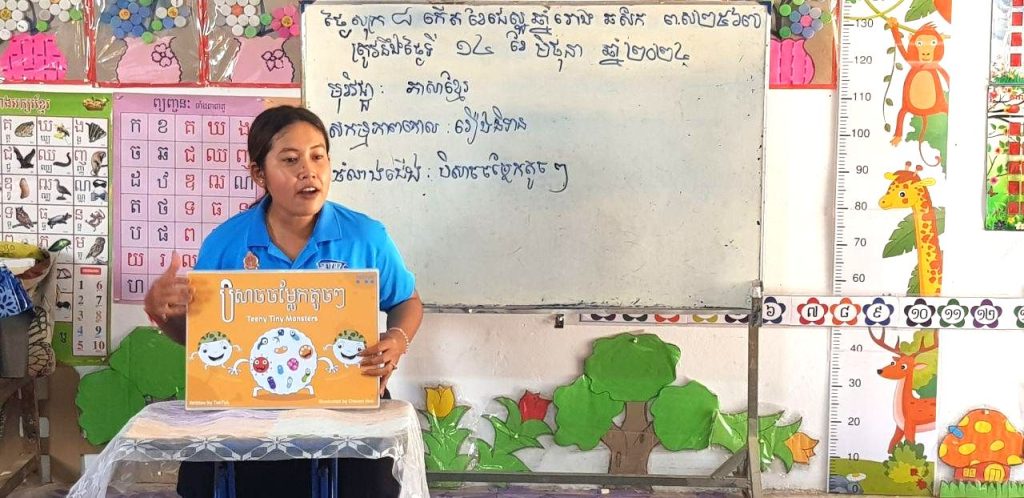
In this workshop, we conducted computer lessons by the Rotary Club of Pursat (RCP), introduced R4C's storybooks "Who Painted The Sky?" and "Teeny Tiny Monsters," and created lesson plans using these books.
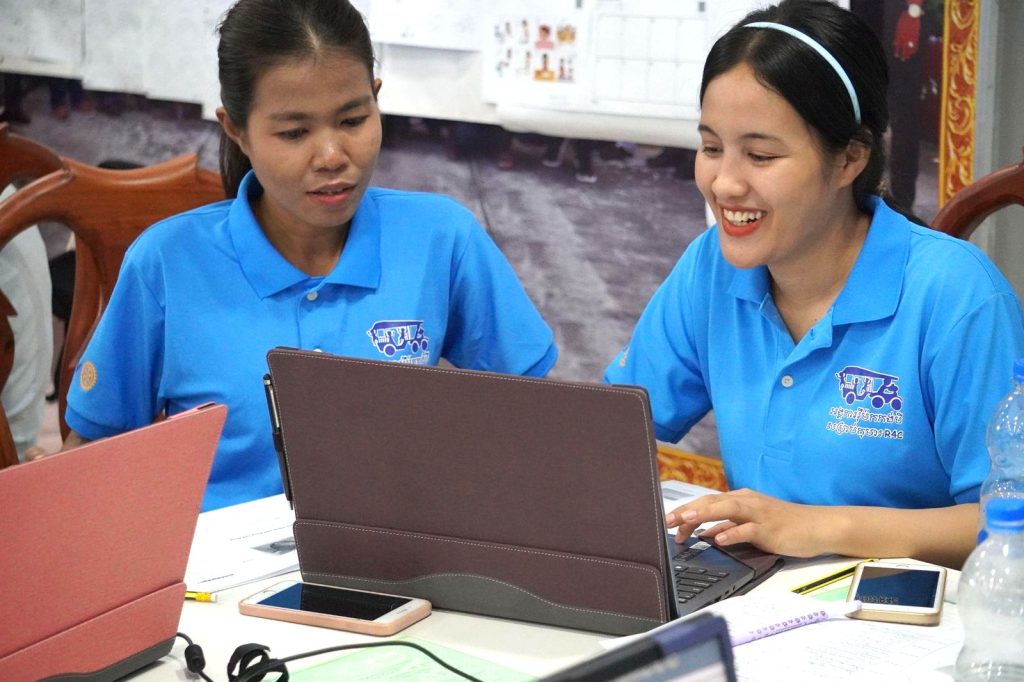
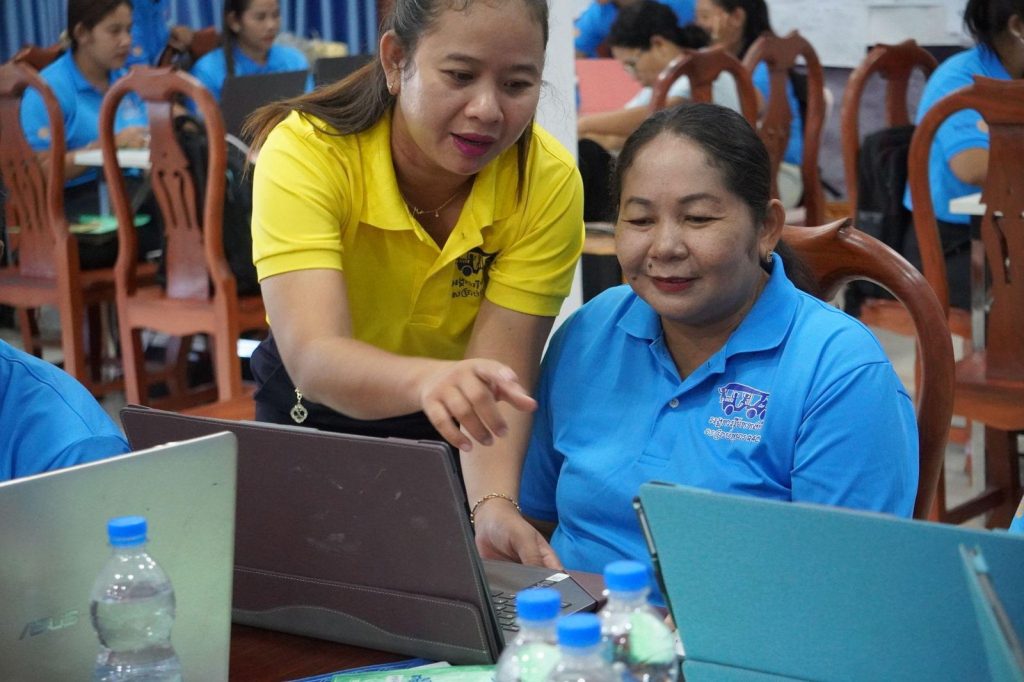
The computer lessons by the Rotary Club of Pursat (RCP) will be conducted over all four workshops in the first year of the project. In this second workshop, we delved deeper into the content explained previously. The basics included using the mouse, creating folders, copying, cutting, pasting files, deleting files, and restoring them. While many teachers seemed to have become more accustomed to computer operations since the last session, some still needed practice with double-clicking, right-clicking, and left-clicking using the mouse.
We observed teachers teaching each other within their groups, creating an environment where they could learn from each other regardless of teaching experience or age. This collaborative learning is a positive development. In the upcoming computer lessons, we will move on to using Word. Since this will be a more advanced topic, we plan to pair teachers who are proficient in computer skills with those who are not, ensuring everyone can grasp the content.
Given that the workshops occur approximately every two months, this alone is insufficient for mastering computer skills. Therefore, the teachers need to practice on their own, and some have even started attending computer classes independently. With only two workshops remaining this year and a course on creating worksheets on the computer scheduled for next year, mastering the basic operations by the end of this year is essential. To achieve this, we are working with RCP to design efficient computer lessons.
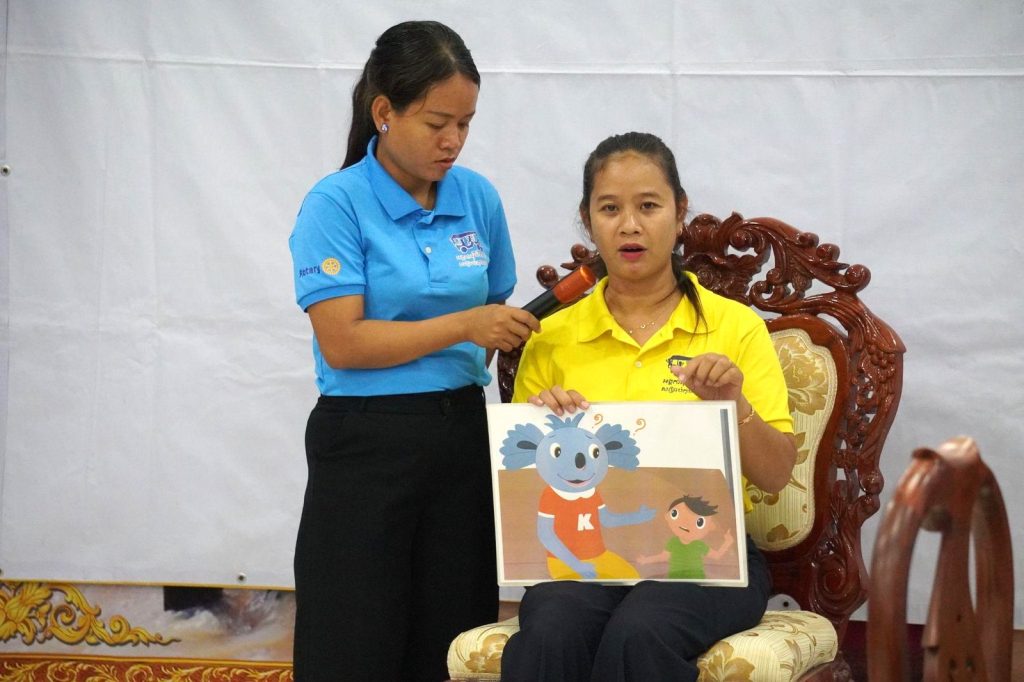
In this workshop, as a new initiative, we invited a teacher who was part of the CLIP2 project conducted from 2022 to 2023. She shared her experiences with the project and how she uses R4C’s materials. For the teachers in the CLIP3 project, hearing from someone who has actually participated in the same project and uses R4C’s materials likely made it easier to envision the applications.
Additionally, she demonstrated storytelling using Kamishibai, just as she does in her classroom, and offered suggestions on how to use the materials. This made the workshop content even more enriching.
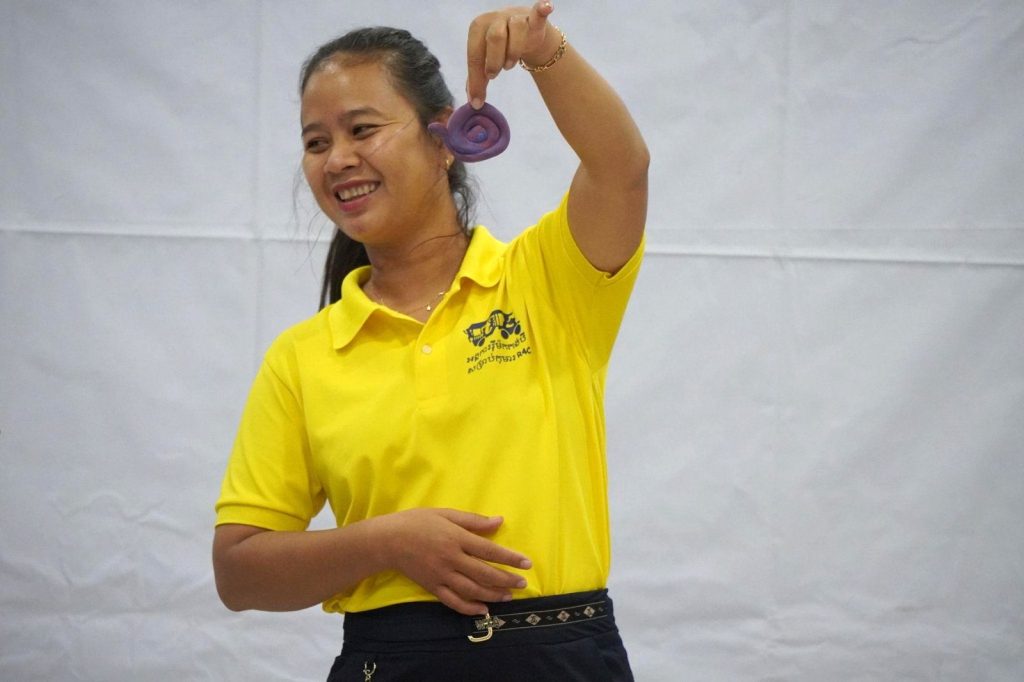
In the introduction of the materials for "Who Painted The Sky?" and "Teeny Tiny Monsters," we were able to demonstrate more materials than in the previous session. "Who Painted The Sky?" is a story themed around colors, and its related materials include an experiment to observe color changes, which we tried out with the teachers. Seeing and trying it in person likely helped them understand what can be done with everyday items and the impact it can have on the children, more so than just reading about it and doing it on their own.
Additionally, for the introduction of activity games, a teacher who had actually used the game in their class explained it to the others, helping them imagine that they could do it themselves. We also had the teachers try out the worksheets, which clarified the methods for them.
In the post-workshop survey, most feedback indicated that the materials were easy to understand, and there were many comments expressing a desire to incorporate the particularly engaging materials into their lessons. It became clear that allowing the teachers to try and enjoy the materials themselves enhances their understanding.
However, during the introduction of the songs, some felt that the explanation of the choreography was too brief and requested more detailed instructions. We plan to address this in the next workshop to make the content even more comprehensive and effective.
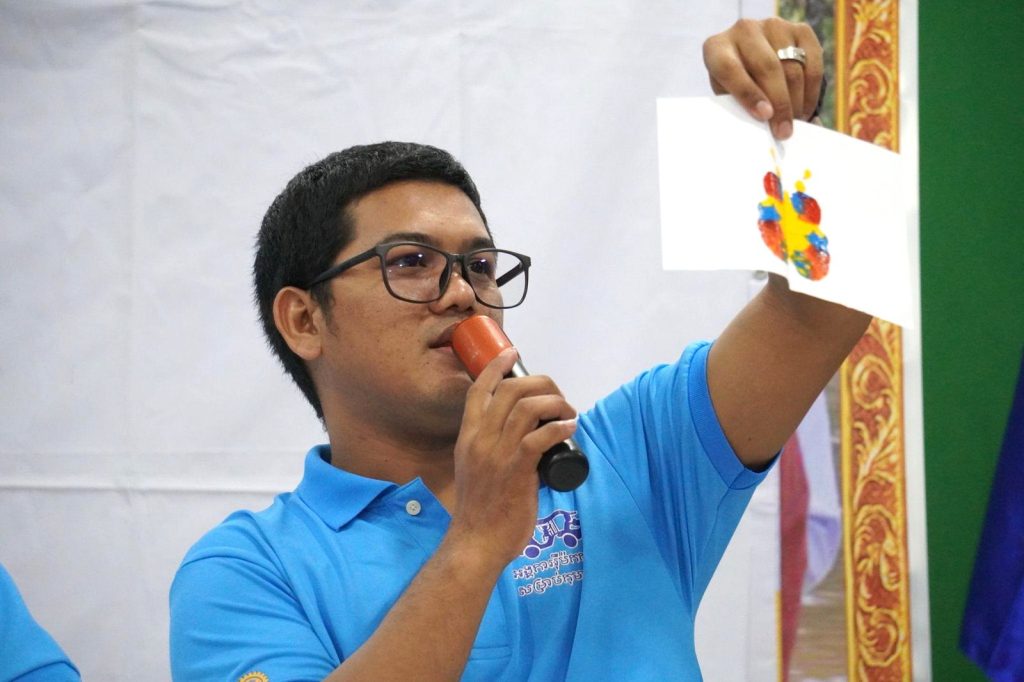
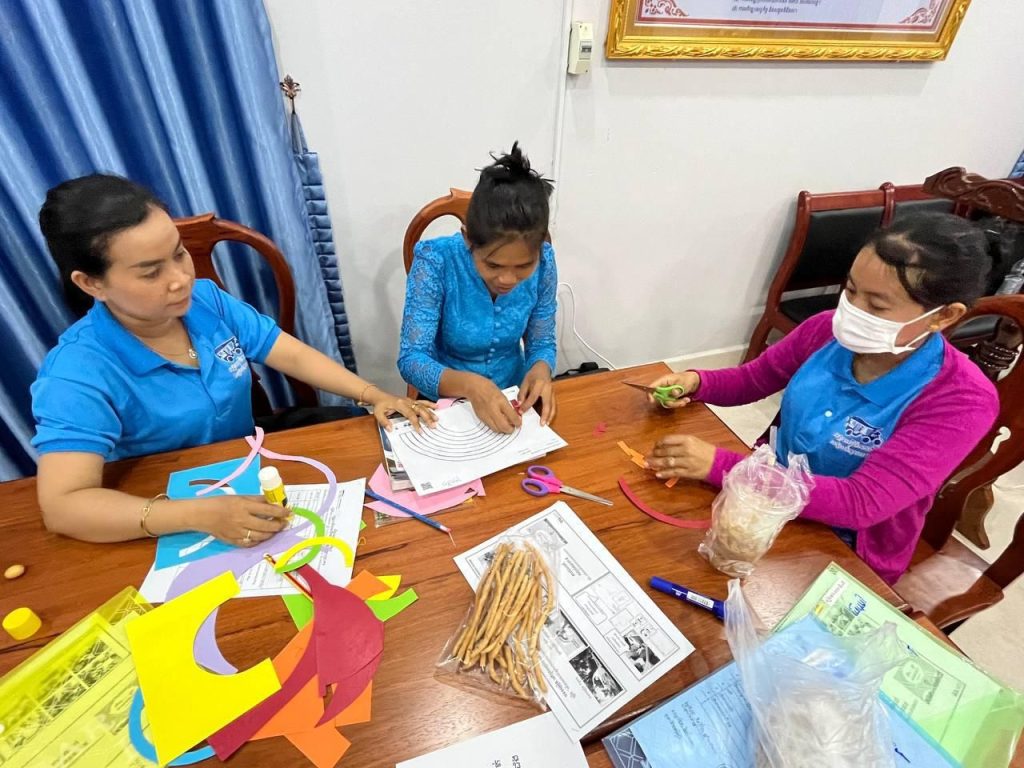
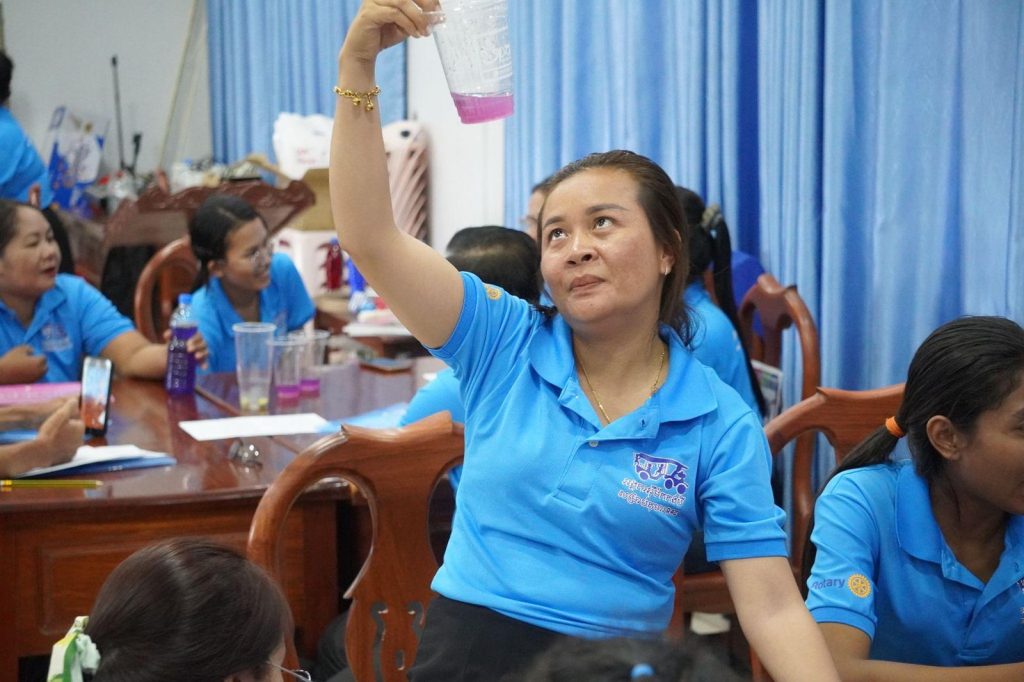
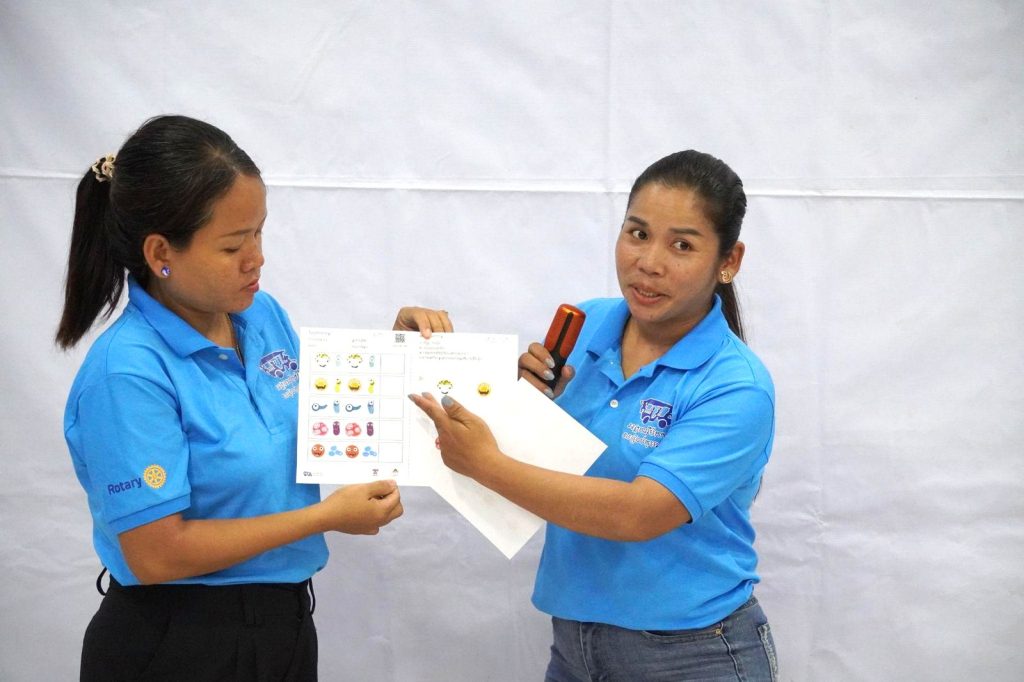
As a summary of the materials introduction, we had the teachers create lesson plans based on the preschool curriculum set by the Cambodian Ministry of Education. They used the two introduced storybooks and their related materials to design a day's lesson. Each group combined their original lesson ideas with R4C materials, constructing lessons around themes like "colors," "rainbows," and "hygiene." Since our goal is to have R4C materials used as supplementary resources, it was insightful to see how the teachers integrated them with their own ideas.
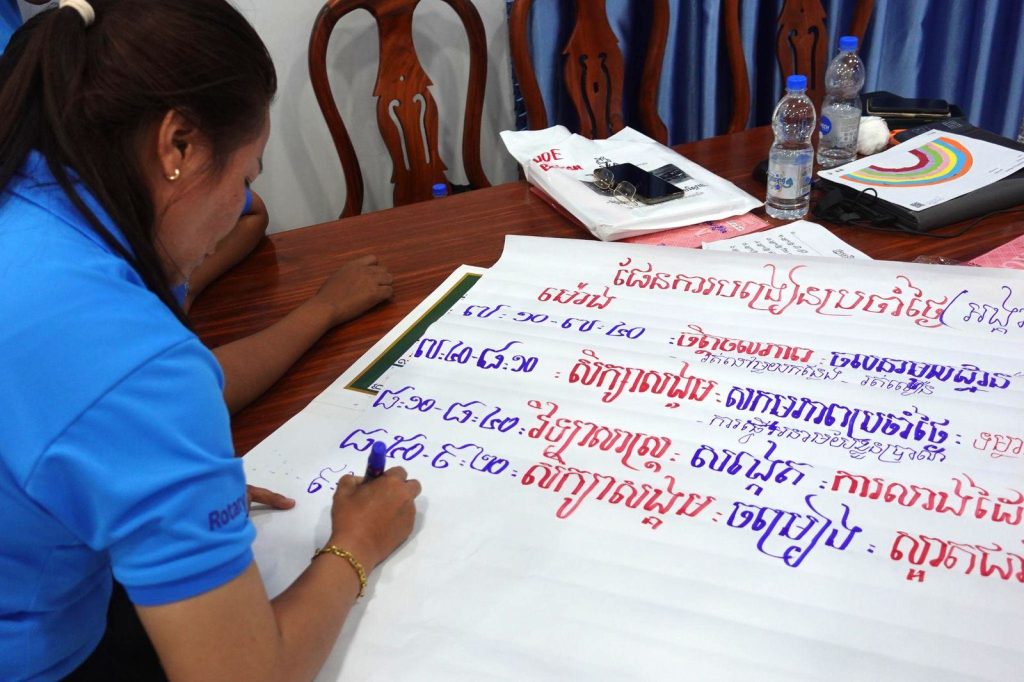
In this workshop, while we were able to enhance the content compared to the previous one, there were areas for improvement. We aim to provide a workshop environment that feels "homely" and encourages all teachers to share their opinions comfortably. With a mix of veteran and novice teachers, it's important to draw out each teacher's thoughts and make them feel that updating lesson ideas and exchanging opinions are enjoyable. We will keep these points in mind as we plan the next workshop.
The 2nd follow-up visits
As part of the project, we follow up with visits to the target schools after each workshop to review the workshop content. During this follow-up visit, we asked additional questions to the pre-visit survey and observed the classes.
First, in the pre-visit survey, we asked the teachers about their situation one to two weeks after the second workshop. We inquired about their use of computers, their utilization of the "Rermork Digital Library," and their use of R4C materials in their lessons.
Regarding computer usage, most teachers reported using computers four to six times per week this term. Their primary uses included searching for teaching materials and creating lesson plans using Google Chrome, as well as browsing the "Rermork Digital Library" for resources. When asked about what they would like to learn in future computer lessons, many expressed interest in learning how to use Word and Excel, create worksheets, and develop materials using PowerPoint. Currently, some teachers are independently attending local computer classes and transitioning from handwritten to computer-generated lesson plans. These efforts show their dedication to improving their computer skills.
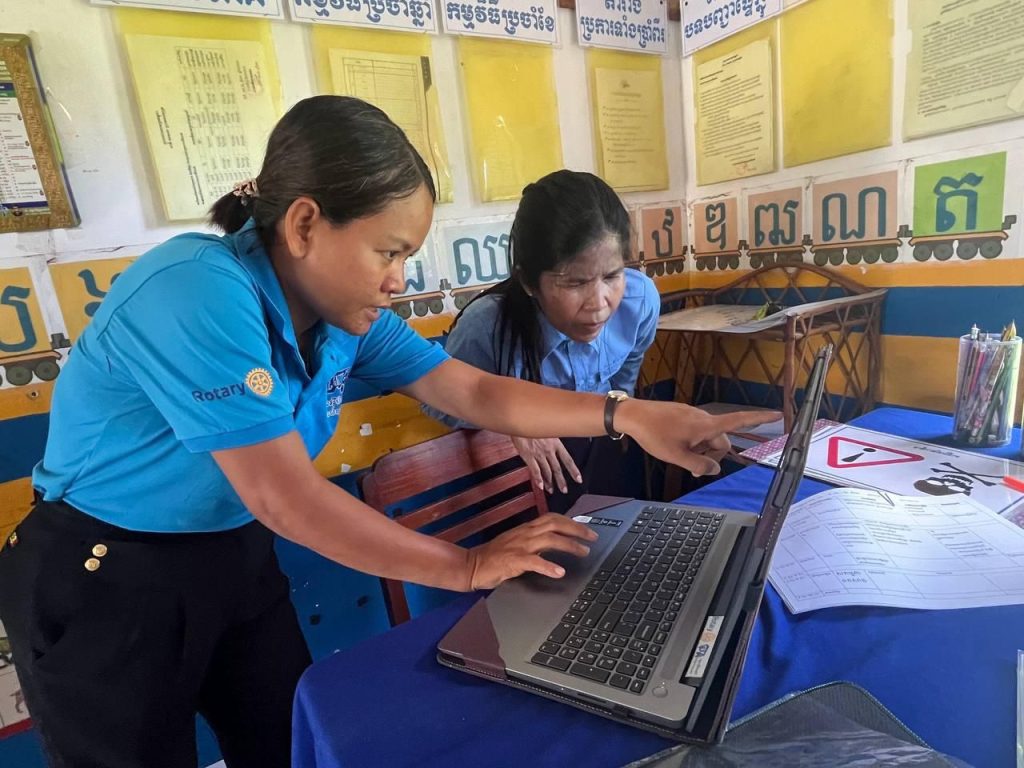
Regarding the usage of the "Rermork Digital Library," most teachers reported using it four to six times per week on both computers and smartphones. Among the various resources, songs were viewed the most frequently, while storybooks (animations) were downloaded the most. This indicates that the website is being used primarily for the "Khmer" domain.
Regarding the questions about lessons using R4C materials, it was interesting to note that the materials used varied across different domains. Songs were frequently used in "Psychomotor Skills," illustrations in "Science," storybooks in "Society," worksheets in "Mathematics," and storybooks again in "Khmer." Additionally, compared to the first quarter, the usage of all materials increased, indicating that teachers are actively incorporating our materials into their lessons.
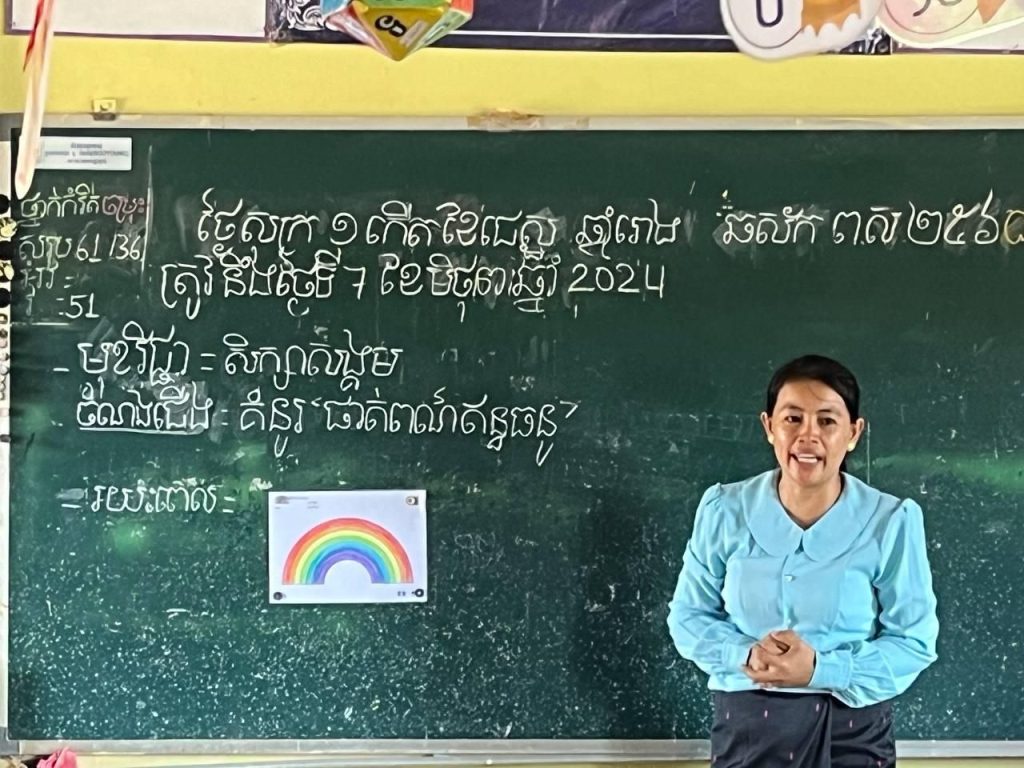
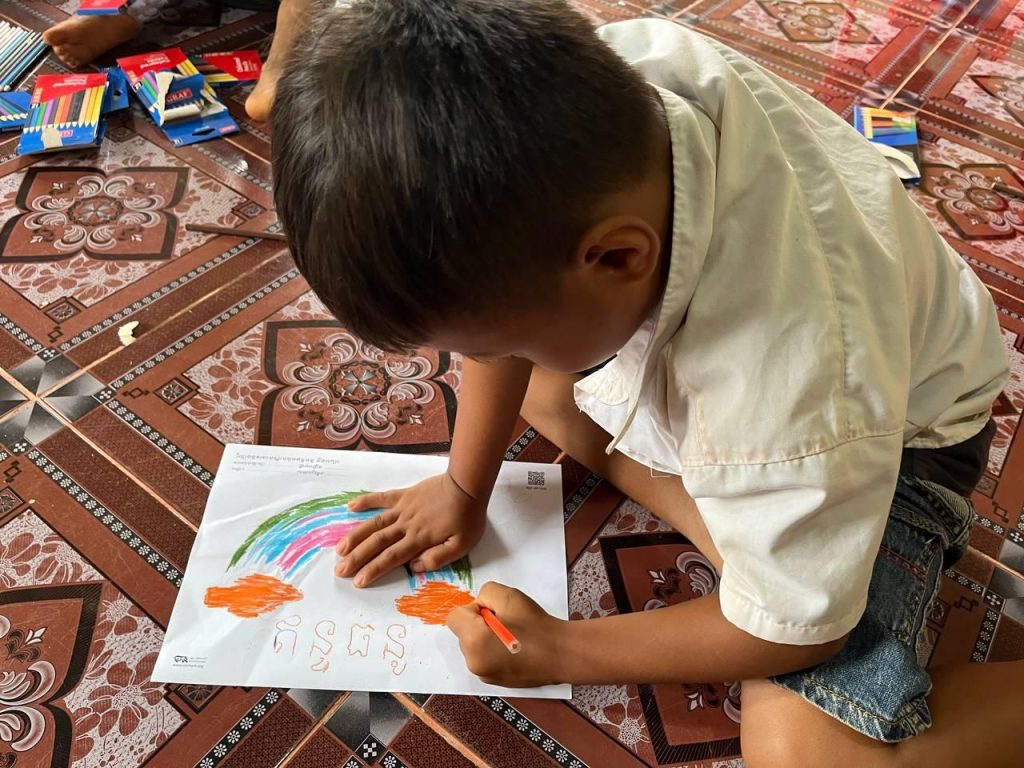
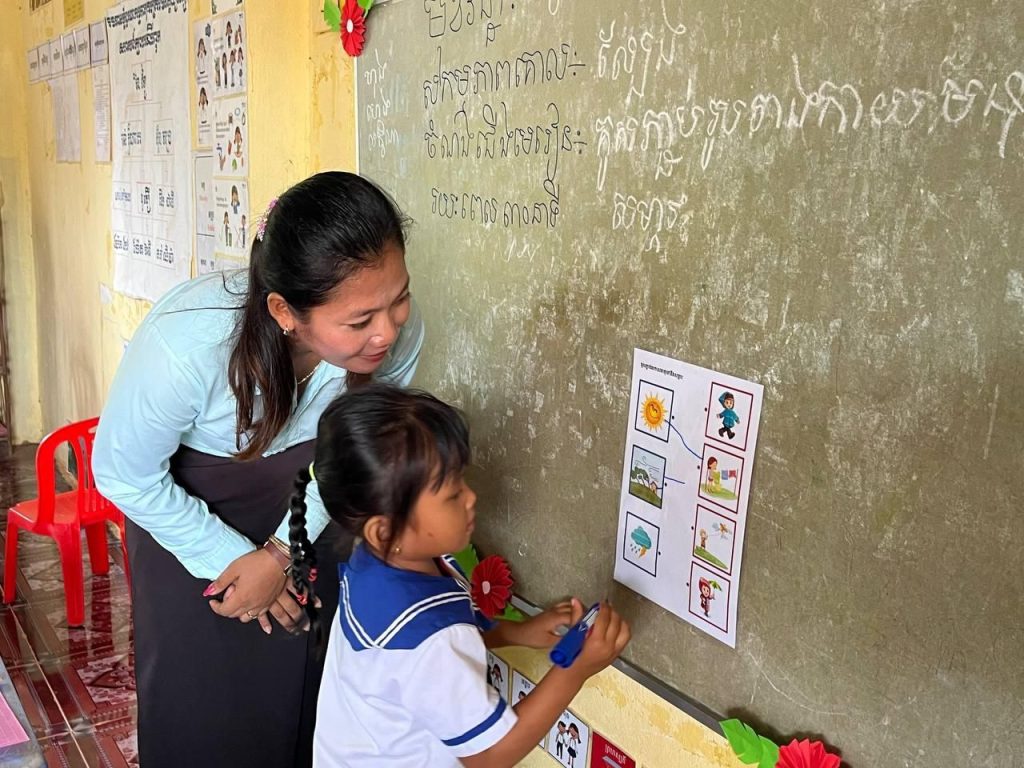
During this follow-up visit, we observed classes from 26 different sessions. During our visit, many teachers were using worksheets in their lessons. However, we also witnessed some teachers engaging students with storytelling, activity games, and board games. It was a valuable opportunity for us to see firsthand how our educational materials are being utilized.
Additionally, we noticed that there were few classes where teachers had created their own teaching materials. When we inquired about the reasons behind this, we learned that some teachers feel uncomfortable with crafting materials themselves, while others cited budget constraints preventing them from purchasing materials. Nevertheless, there are numerous ways to create simple toys using everyday items that can easily capture children's interests and curiosity. In order to introduce these methods, we plan to incorporate a crafting program in the next workshop to provide more opportunities for teachers to become familiar with crafting and to encourage them to utilize these resources more readily. The results are as follows;
*↑↓→ indicates changes from the previous results.
| Questions | Answers |
|---|---|
| Computer | |
| How many times per week did you use the computer? |
|
| What software did you use? (Multiple answers allowed) |
|
| Which software did you use the most? |
|
| What did you use the mentioned software for? |
|
| Was there anything else you would like to learn about the computer lesson from the 1st workshop? |
|
| Was there any issue with the project-provided equipment? |
|
| “Rermork Digital Library” | |
| How many times did you use the "Rermork Digital Library" per week on your computer and smartphone? | Computer
Smartphone
|
| Which materials did you browse? (Multiple answers allowed) |
|
| Which material did you browse the most? |
|
| In which areas did you refer to the website? (Multiple answers allowed) |
|
| Which materials did you download? (Multiple answers allowed) |
|
| Did you introduce the website to other teachers or parents? |
|
| Were there any improvements or issues you would like to address in using the website? |
|
| Lessons | |
| Did you use R4C teaching materials? |
|
| What materials did you use in each domain? (Multiple answers allowed) | |
| Psychomotor Skills |
|
| Science |
|
| Society |
|
| Mathematics |
|
| Khmer |
|
| Did you create teaching plans using R4C materials? |
|
| (For those who didn’t create teaching plans) Why didn’t you create teaching plans? |
|
| Do you have any questions about R4C teaching materials, workshops, or social media? |
|
Resource Package Creation Status
CLIP3 includes the creation of four new original storybooks and their "Resource Packages*". This term, we have completed the creation of the 10th book, "Family Tree," and have started working on the 11th book. Currently, we are in the process of drawing illustrations for the book. While we have ideas for each resource, we have not yet progressed to translating them into Khmer or actually creating the materials. Our goal is to complete all the materials by the end of the third quarter.
*Resource Package… A package of teaching materials that includes songs, activity games, board games, and worksheets related to the content of the picture book.
| Category | Resource | Status | Due Date |
|---|---|---|---|
| The 10th storybook “Family Tree” | |||
| Complete | |||
| The 11th storybook “Be Careful, Be Safe” | |||
| Book | Story translation | Complete | |
| Storyboard creation | In preparation | July 2024 | |
| Song | Lyrics and dance movement idea | Complete | |
| Activity game | Activity game idea | Complete | |
| Board game | Game board idea | Complete | |
| Worksheet | Worksheet idea | Complete | |
Measuring Success
| Project | Collection method | Frequency | Beneficiaries |
|---|---|---|---|
| Number of beneficiaries of the project | |||
| Number of institutions participating in the program | Direct observation | Every three month | 15 |
| Number of education officials | Direct observation | Every three month | 26 (Provincial officer) 1, (District officer) 5, (POE) 5, (DOE) 15 |
| Number of teachers receive direct coaching and access to the digital library via technology solutions | Direct observation | Every three month | 26 |
| Number of benefiting school-age children | Direct observation | Every three month | 1,154 |
| Number of teachers who took surveys | |||
| Baseline survey | Direct observation | Once conducted | 26 |
| Number of teachers who took classroom assessments | |||
| The 1st classroom assessment | Direct observation | Once conducted | 26 |
| Number of teachers who took workshops | |||
| The pre-project workshop | Direct observation | Once conducted | 40 (POE) 2, (DOE) 10, (Preschool teacher) 26, (Volunteer teacher) 2 |
| The 1st workshop | Direct observation | Once conducted | 40 (POE) 2, (DOE) 10, (Preschool teacher) 26, (Volunteer teacher) 2 |
| The 2nd workshop | Direct observation | Once conducted | 41 (POE) 2, (DOE) 10, (Preschool teacher) 26, (Volunteer teacher) 3 |
| Number of teachers who took regular interviews | |||
| The 1st follow-up visit | Direct observation | Once conducted | 26 |
| The 2nd follow-up visit | Direct observation | Once conducted | 26 |
| Information dissemination via social media | |||
| Number of Facebook followers | Direct observation | Every month | 6,042 |
| Number of teachers in a private Facebook group | Direct observation | Every month | 4,374 |
| Number of teachers in private Telegram group | Direct observation | Every month | 2,965 |
| Number of subscribers to the YouTube channel | Direct observation | Every month | 7,602 |
| Number of unique visitors to the Rermork Digital Library website | Direct observation | Every month | 27,692 |
Next Schedule (July – September 2024)
- Create the 11th storybook and the resource package
- The 3rd workshop (July)
- The 3rd follow-up visit (July)
- The 4th workshop (August)
- The 4th follow-up visit (September)
Help us keep TukTuk rolling
Your gift pays for workshops, books and the free Rermork Digital Library.
Achievement in Social Media Service and “Rermork Digital Library”
We run three open social media (Facebook, Telegram and YouTube) to share teaching resources for preschool teachers and parents.
R4C Facebook
We are sharing updates on R4C's materials and activities three times a week. Visitors can download materials from here or browse the "Rermork Digital Library." Not only educators but also parents can access it. The most shared item this term was the worksheet "ល្បែងគូររង់និងគូសភ្ជាប់ព្យញ្ជនៈ (Mark-And-Match-Alphabet)" (323 shares, reaching 23,478 people*).
*Reach… The number of people who saw any content from the Page or about our Page, including posts, stories, ads, social information from people who interact with our Page and more. Reach is different from impressions, which may include multiple views of the posts by the same people. This metric is estimated.
The breakdown of followers;
Public Facebook Group for Preschool Teachers
This is a Facebook group for educators. It serves as a platform where not only posts from R4C are shared, but also where teachers themselves can disseminate teaching material ideas and educational information. The most shared post this season was illustrations posted by a follower (76 shares, reaching 4,267 people).
The breakdown of followers;
Telegram Channel
Similar to the Facebook page, we post R4C teaching materials and early childhood education information almost every day. Followers can download materials from here or browse the "Rermork Digital Library." Channel participants are not limited to teachers; parents can also join. The most viewed post this season was a format for several types of dice with 2,461 views.
YouTube
We are posting video teaching materials created by R4C. Many of them include animations, song videos, and instructional videos on activity games, worksheets, and crafts. The most viewed video this season was a song video titled "បទចំរៀង ពេលសប្បាយ (If You Are Happy And You Know It Song)" with 99,376 views.
The breakdown of subscribers;
Rermork Digital Library
This is a free educational resource site for early childhood education launched in August 2022 by R4C. All materials can be downloaded free of charge without copyright restrictions. Teachers' own materials are also uploaded to this platform, aimed at empowering Cambodian early childhood education by Cambodian teachers themselves.
The top three most viewed materials this term were worksheets, illustrations, and classroom decorations. While storybooks were prominent in the previous term, illustrations were highly viewed in this term. Additionally, the most downloaded material was a worksheet titled "ល្បែងគូសតាមស្នាមចុច-ក-អ (Tracing Consonants)" (163 downloads).
The breakdown of visitors;